

Infrared Thermal Scanning for Electrical Systems: What Every Factory Owner in the Philippines Needs to Know
The Invisible Risk Inside Every Factory
If you manage or own a manufacturing facility in the Philippines, you probably spend a significant amount of time thinking about uptime. You think about machine maintenance, preventive replacement schedules, raw material supply, and workforce management. You probably have systems for all of it.
But here is a question most factory managers cannot answer with confidence: when was the last time someone checked whether the heat inside your main distribution panel was within safe limits?
Not the temperature of the room. Not the ambient temperature measured by a wall thermometer. The temperature of the actual electrical connections inside your panel — the terminals, bus bars, circuit breakers, and contactors that distribute power to every machine in your facility.
For most facilities in the Philippines, the honest answer is: never. Or years ago. And that is precisely the problem that infrared thermal scanning for electrical systems was designed to solve.
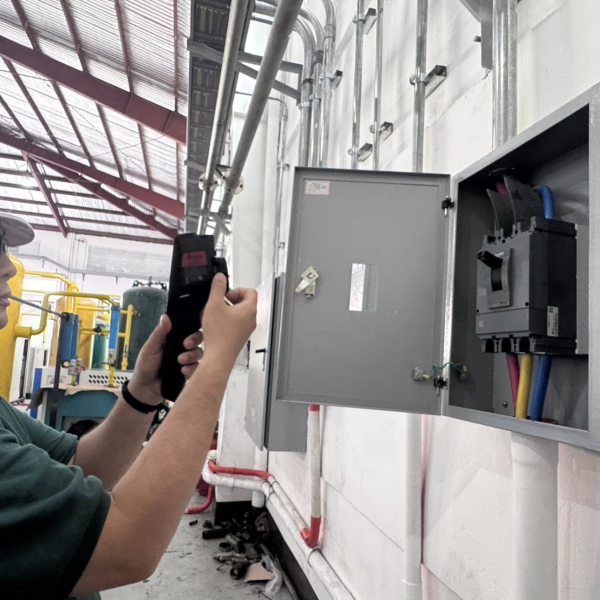
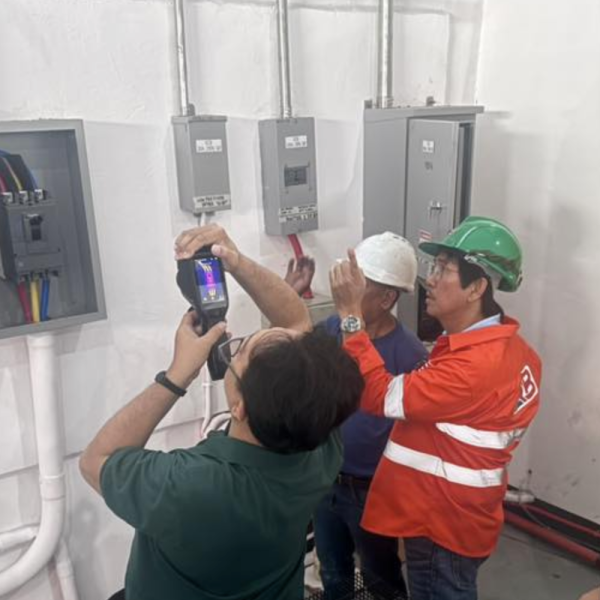
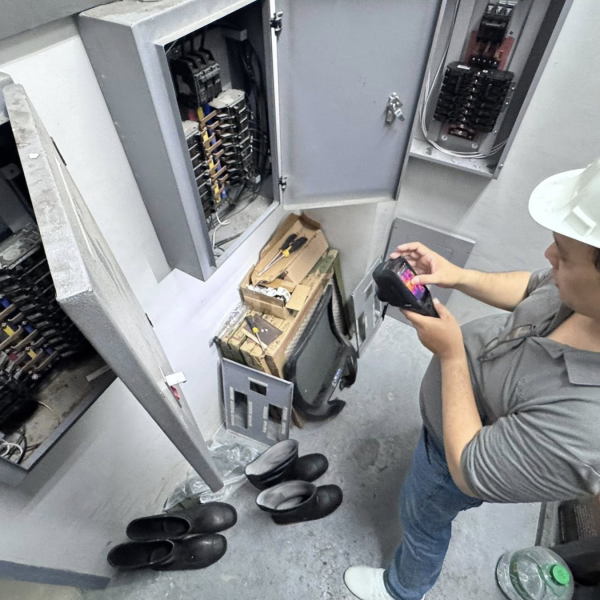
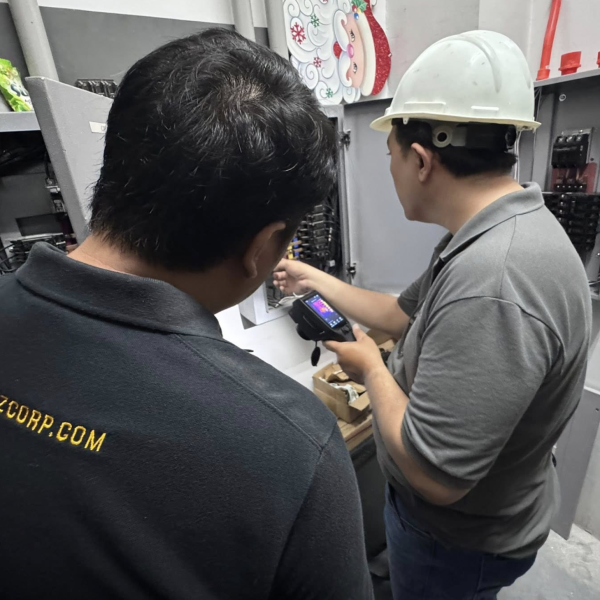
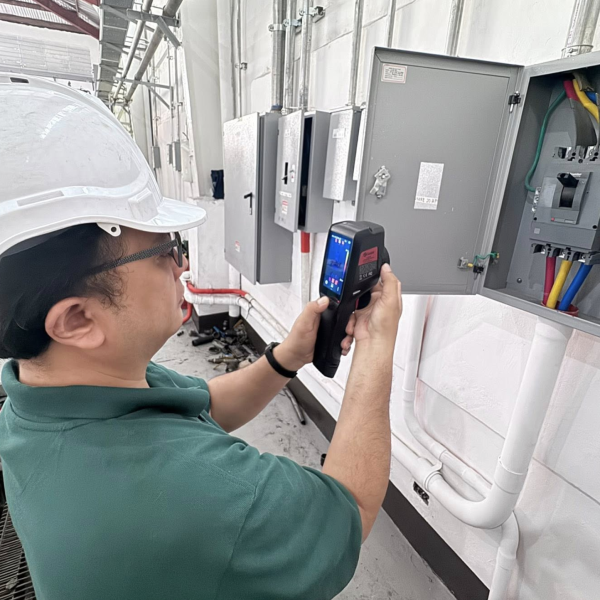
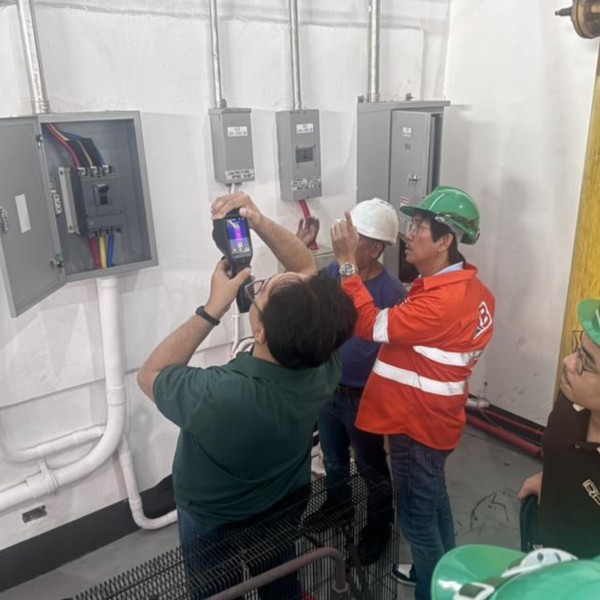
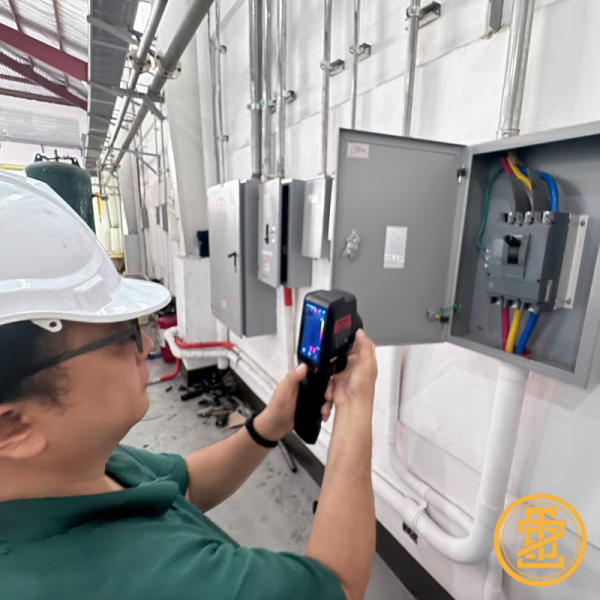
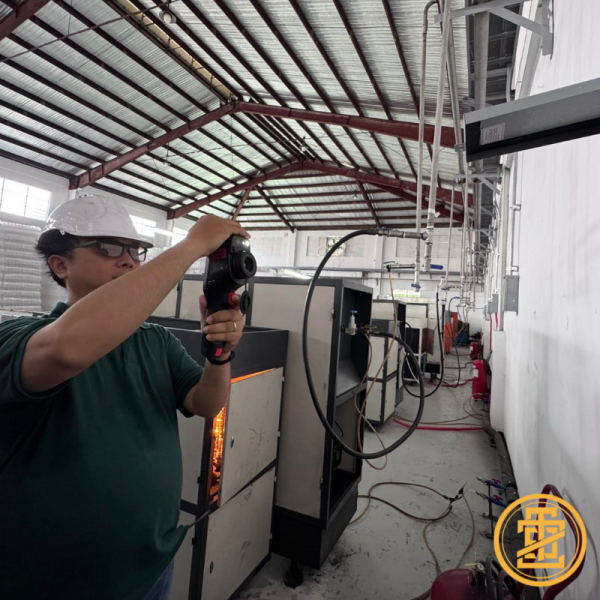
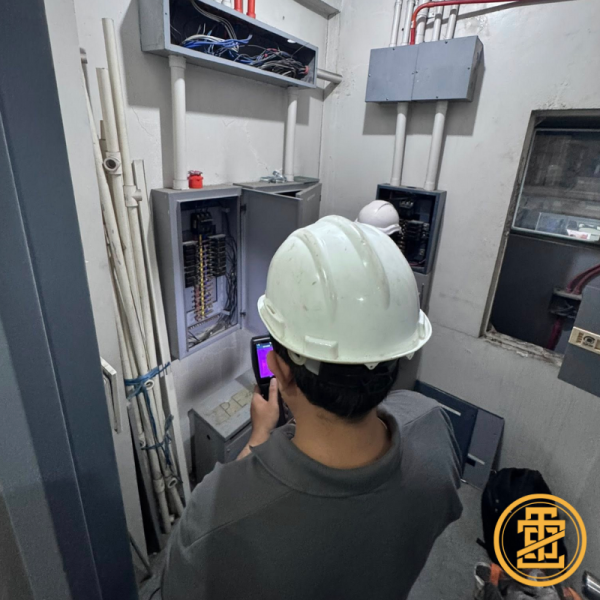
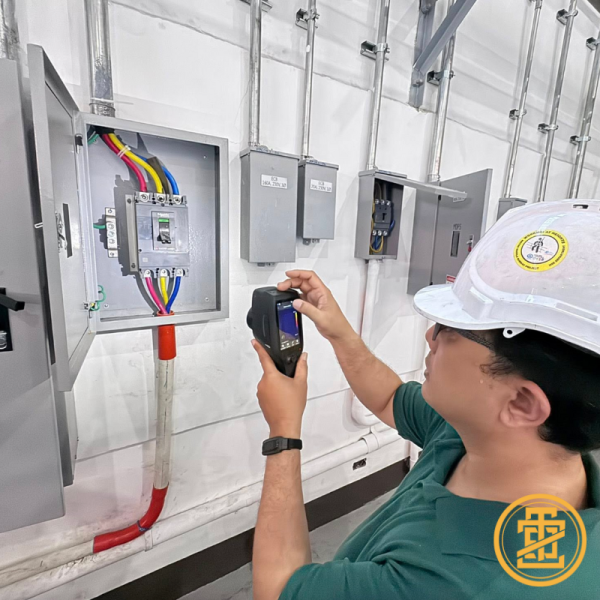
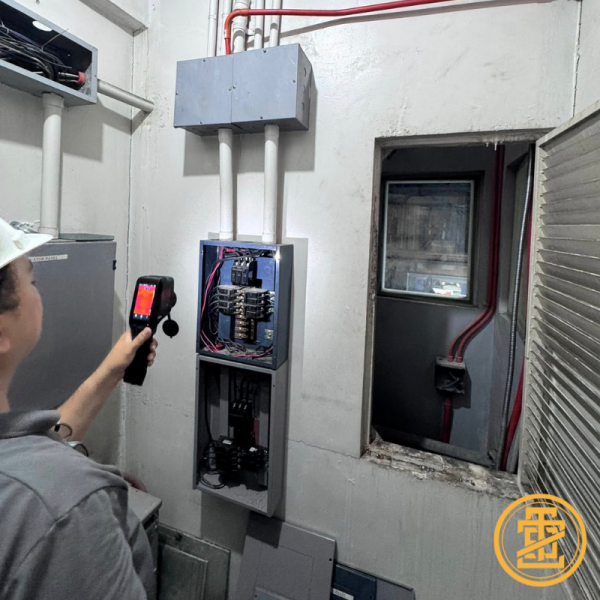
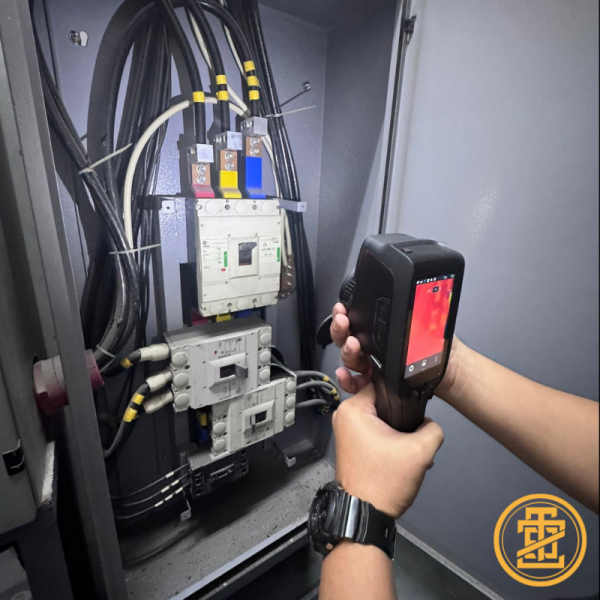
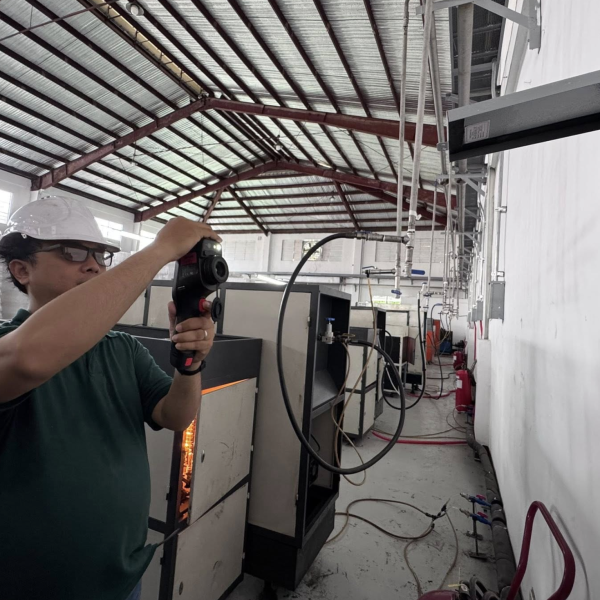
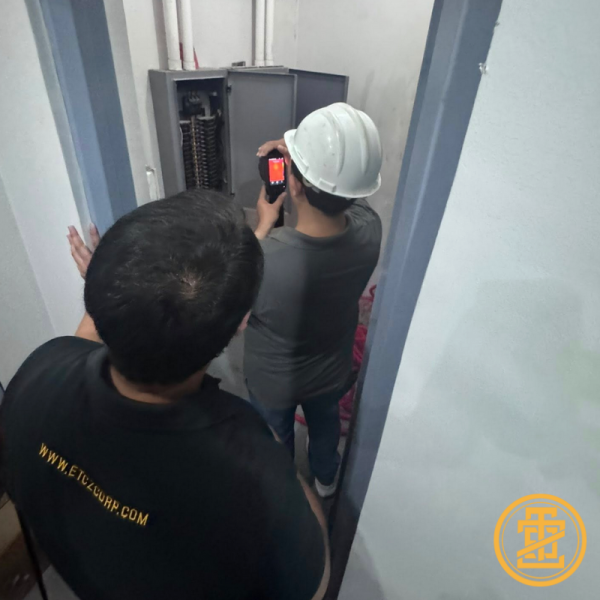
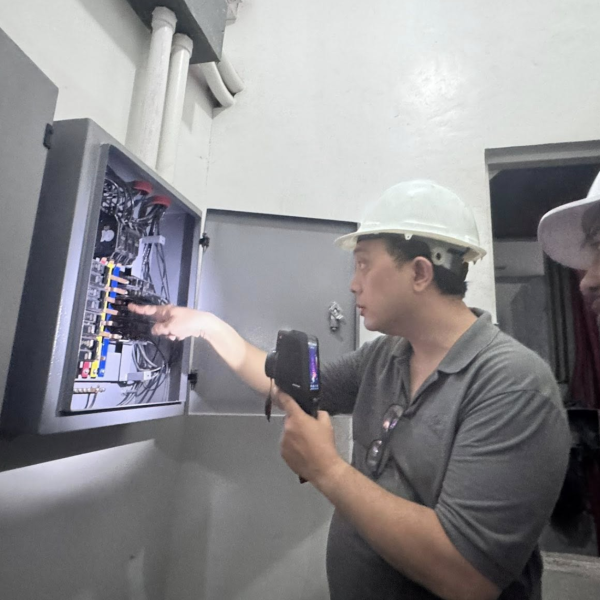
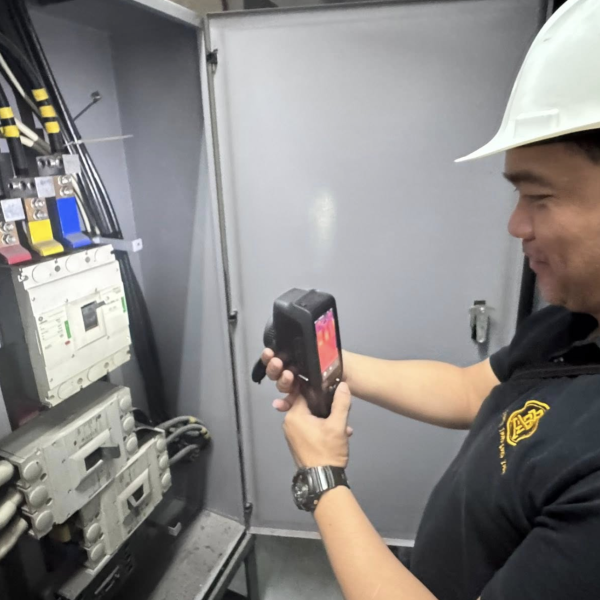
What Is Infrared Thermal Scanning for Electrical Systems?
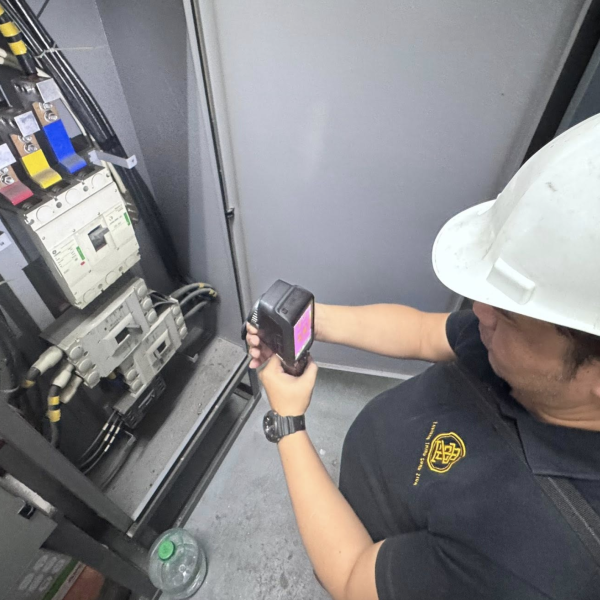
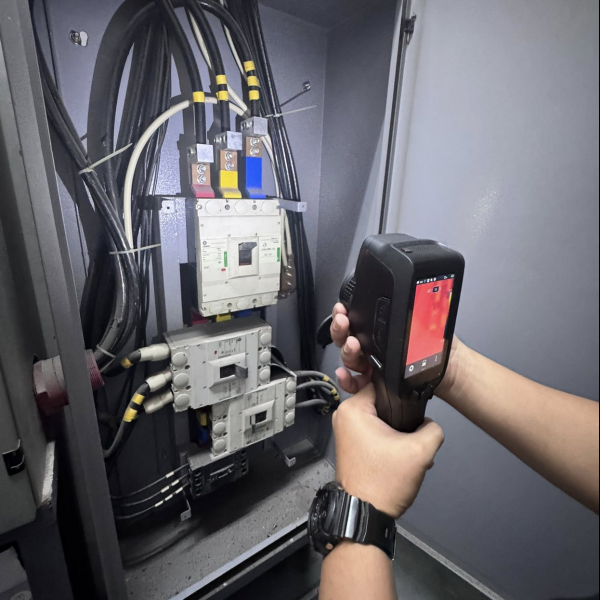
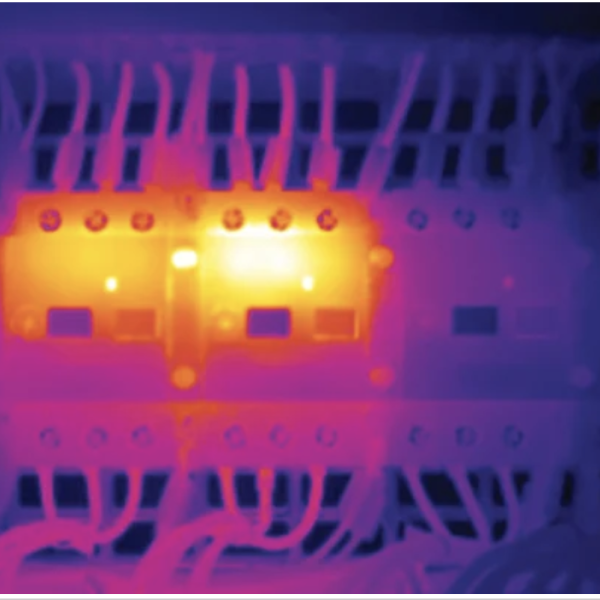
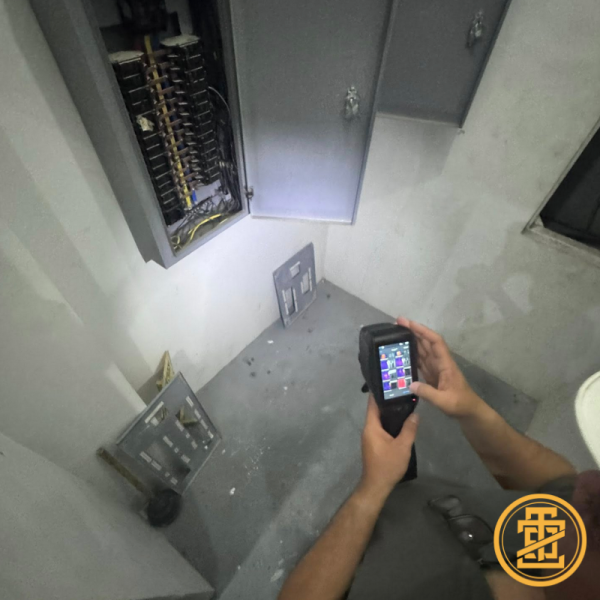
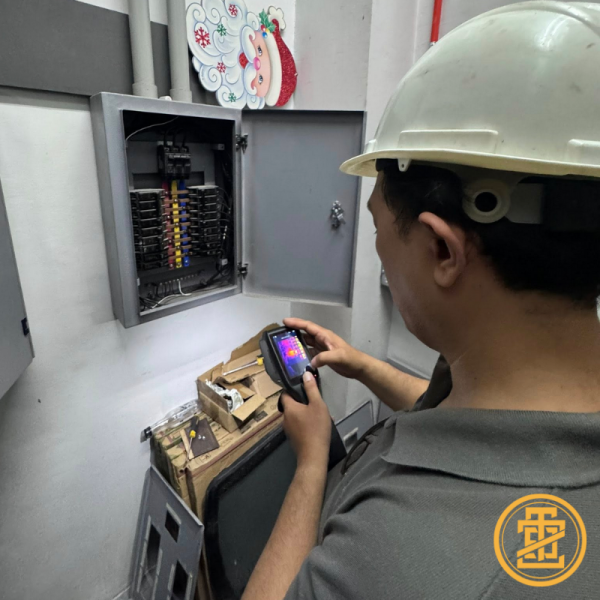
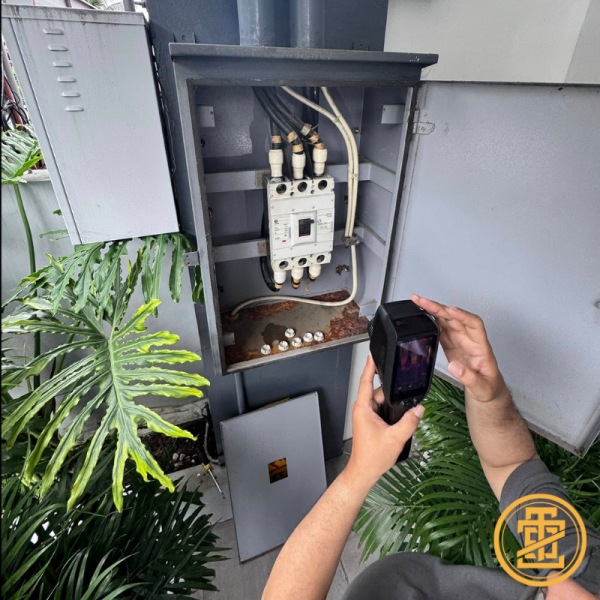
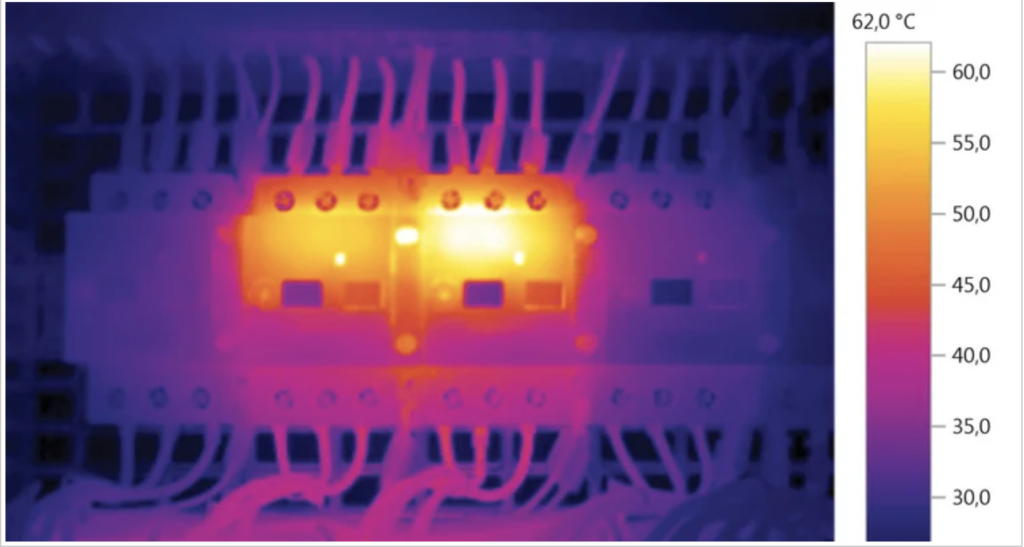
Infrared thermal scanning — also called electrical thermography or infrared inspection — uses specialized cameras that detect heat rather than light. These cameras capture a thermal image of your electrical system components, revealing temperature variations that indicate developing problems.
The physics are reliable and well-understood: increased electrical resistance generates heat. Resistance increases wherever there is a loose connection, a corroded terminal, an overloaded circuit, a failing breaker, or degraded insulation. The amount of heat generated corresponds directly to the severity of the problem. An infrared camera documents this precisely, giving a trained engineer a clear picture of every anomaly in your system.
The Critical Difference: Live Inspection, No Shutdown
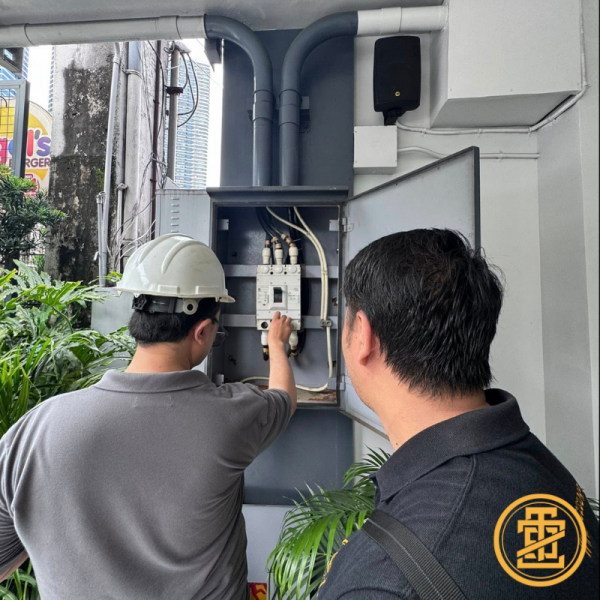
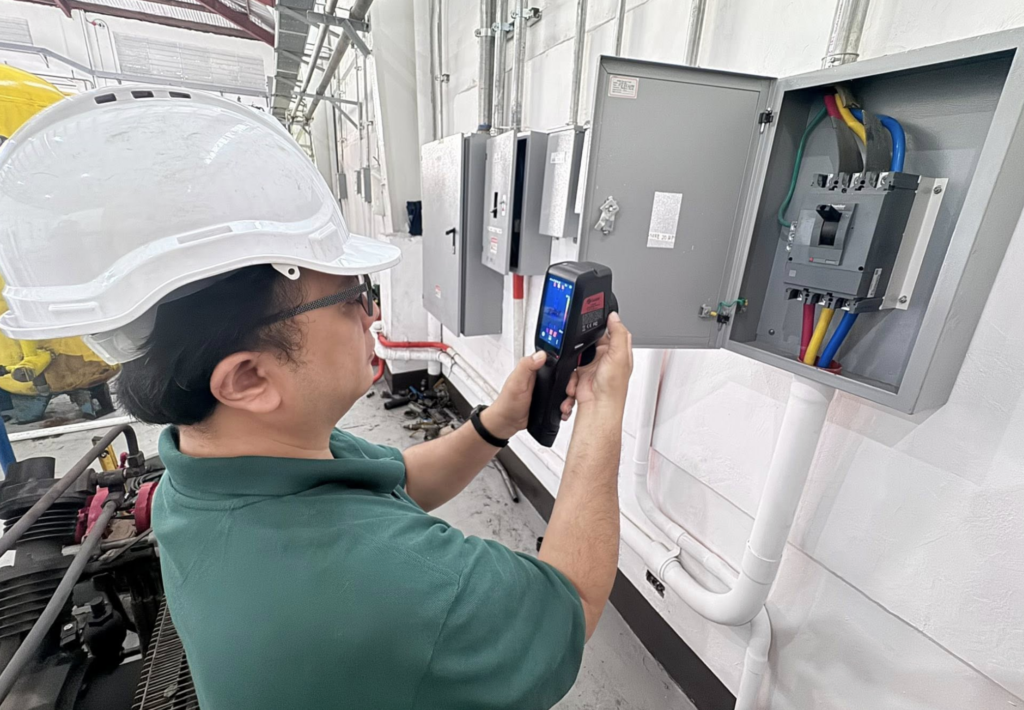
This is the feature that makes infrared thermal scanning uniquely valuable for operating factories: the inspection is conducted while your facility is running at normal load. There is no shutdown. No production stoppage. No de-energizing of panels. Your operations continue entirely normally while our engineers scan every component.
This matters for two reasons. First, practically — it removes the logistical barrier that often leads factory managers to delay maintenance. There is no need to schedule around a production window or negotiate a shutdown with your customer.
Second, technically — electrical components only show their true thermal signature under load. A panel board scanned while its circuits are idle tells you almost nothing useful. The problems reveal themselves when current is flowing. This is why thermal scanning is done live.
The 7 Most Dangerous Electrical Conditions Thermal Scanning Detects
1. High-Resistance Connections at Critical Points
Every connection in your electrical system — every terminal, every lug, every bus bar connection — is a potential source of increased resistance as it ages. Vibration from machinery loosens connections over time. The constant thermal cycling of daily operations causes differential expansion and contraction that works connections loose. Corrosion in the Philippine climate adds its own contribution to terminal degradation.
A loose or corroded connection at a main breaker feeding a major production line carries the entire load of that line through a degraded contact point. The heat generated can reach extreme temperatures — well above 100°C in severe cases. Left unaddressed, the insulation chars, the conductor degrades, and failure becomes inevitable.
Infrared thermal scanning identifies these connections precisely — showing not just that a connection is overheating, but by how much, allowing the severity to be assessed and the corrective action to be prioritized appropriately.
2. Overloaded Feeders and Branch Circuits
The electrical systems of most Philippine factories were designed at a specific time, for a specific load. But factories grow. Equipment is added. Production runs extend. New processes are introduced. Very rarely does the electrical system receive a corresponding upgrade.
The result is that feeders and branch circuits that were correctly sized for the original load are now carrying significantly more current than intended. The conductors and associated protective devices run hotter than they should. Thermal scanning reveals this clearly — an overloaded circuit shows as a uniformly elevated temperature across the entire conductor, visible to the thermal camera as a distinctive warm signature.
Catching this early allows a planned upgrade. Missing it allows the condition to persist until a breaker fails to trip under fault conditions — or the insulation simply gives way.
3. Phase Imbalance and Unequal Load Distribution
Three-phase power systems distribute load across three phases. When the distribution is uneven — which it commonly becomes as equipment is added and removed over time — one or two phases carry significantly more load than the other. The overloaded phases run hotter.
Phase imbalance is insidious because its effects extend well beyond the panel. Unbalanced three-phase supply degrades motors, shortens transformer life, and increases overall system losses. Thermal scanning makes phase imbalance immediately visible by comparing the temperatures of the three phases side by side in the thermal image.
4. Failing Protective Devices
Circuit breakers have a service life. They are designed to trip a certain number of times before their internal mechanisms begin to degrade. A breaker that has been subjected to repeated overloads, fault currents, or simply years of continuous service develops internal wear that changes its thermal characteristics.
A failing breaker typically shows as a device running significantly hotter than its neighbors at the same load level. This differential temperature is the early warning that the device is approaching the end of its reliable service life — and should be replaced before it fails to protect the circuit it is assigned to.
5. Deteriorating Electrical Insulation
Electrical insulation degrades over time, particularly in the hot, humid conditions characteristic of Philippine industrial environments. As insulation deteriorates, leakage current increases. Leakage current generates heat. Thermal scanning can identify areas of insulation deterioration in cables and conductors by the heat signature associated with increased leakage.
This is especially important in facilities where cables run through hot environments — near furnaces, kilns, dryers, or other high-temperature processes — where insulation degradation is accelerated by the ambient heat exposure.
6. Contaminated Bus Bars and Switchgear Internals
Manufacturing environments generate dust, oil mist, metallic particles, and chemical vapors. Over time, these contaminants accumulate on bus bars, switchgear contacts, and inside distribution panels. Contamination increases contact resistance at bus bar joints and switchgear connections, causing localized heating.
In some cases, conductive contamination creates partial discharge paths between conductors — a condition that can escalate rapidly to an arc flash event. Thermal scanning detects the associated heating before the escalation occurs.
7. Transformer Degradation
Distribution transformers serving industrial loads are among the highest-value and most failure-critical pieces of electrical equipment in any factory. Internal insulation deterioration, core overloading, and connection degradation all produce characteristic thermal signatures. Regular thermal scanning of transformers — including the terminations, bushings, and cooling surfaces — provides early warning of developing issues before they cause transformer failure.
Real Case Study — ETCZ Corp Inspection, Laguna 2025
During a routine thermography inspection at a food manufacturing plant in Laguna, our team identified a phase-A terminal connection on a 400A main breaker running at 87 degrees Celsius — approximately 62 degrees above the rated ambient. The client had experienced no previous electrical issues. The connection was tightened and cleaned on site. Temperature on the same connection after corrective action: 24 degrees Celsius. Estimated time to failure if left unaddressed: 4 to 8 weeks.

The Business Case for Infrared Thermal Scanning in Your Factory
Factory managers are practical people. The question is not whether thermal scanning finds problems — the evidence for that is overwhelming. The question is whether the cost is justified by the benefit. Let us examine that question directly.
The Cost of One Production Day
For a small manufacturing facility producing ₱500,000 to ₱1,500,000 in output per day, a single day of unplanned production downtime due to an electrical failure costs at minimum ₱500,000 in lost production — before accounting for emergency repair costs, potential equipment damage, expedited delivery penalties, or labor costs for idle workers.
For a mid-sized facility, the daily production value is typically ₱1,500,000 to ₱5,000,000 or more. A major electrical failure that requires part replacement and takes three to five days to fully restore represents a direct loss of ₱5,000,000 to ₱25,000,000 — not including the longer-term consequences of delayed orders and damaged client relationships.
The Cost of an Electrical Fire
An electrical fire in a production facility is not just a maintenance event. It is a business catastrophe. Beyond the physical damage — which can be total in a severe fire — the consequences include: full reconstruction costs (typically not fully covered by insurance), regulatory investigations and potential liability, loss of key equipment that may have long lead times, potential fatalities or serious injuries with accompanying legal and human consequences, and permanent loss of customer confidence. The cost of an electrical fire in a Philippine industrial facility is measured in tens of millions of pesos at minimum, and can be existential for a business.
The Cost of Preventive Thermography
The cost of a professional thermography inspection for a typical Philippine industrial facility is a small fraction of any of the above scenarios. For the protection it provides, thermal scanning is among the highest-return investments available in industrial maintenance.
📊 ROI Summary
A single infrared thermal scanning inspection that prevents one production day’s worth of unplanned downtime pays for itself many times over. A thermography program that prevents an electrical fire pays for itself many thousands of times over. The math is clear. The only question is why this inspection hasn’t been done sooner.
Understanding Your Thermal Scan Report: How to Read and Act on Findings
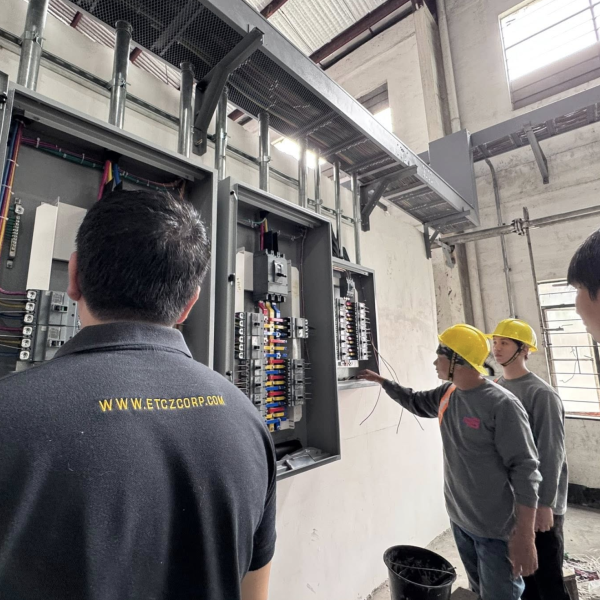
When ETCZ Corp delivers your thermography report, you will receive a comprehensive document that your maintenance team and your management need to be able to understand and act on. This section explains the key elements of a professional thermography report.
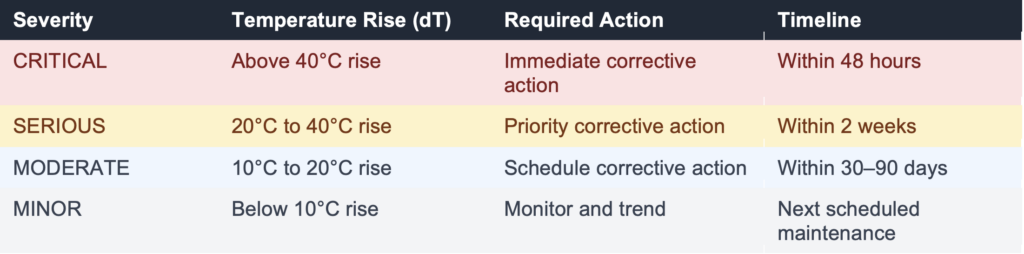
Temperature Rise Classification
Professional thermography reports classify findings based on the temperature rise above the ambient baseline — the delta-T (dT) between the component in question and a reference point. ETCZ Corp uses the following classification system aligned with international standards
What to Do After Receiving Your Report
The critical next step after receiving a thermography report is to act on the findings — specifically the Critical and Serious ones — with urgency. Many facility managers make the mistake of treating the report as a compliance document and filing it without taking action. That is exactly backward: the report is valuable only when the findings it documents are corrected.
ETCZ Corp’s process includes a post-report consultation where our engineers walk through every finding with your maintenance team, explain the recommended corrective actions in detail, and discuss whether those actions can be performed by your in-house team or require our intervention.
Infrared Thermal Scanning vs. Other Electrical Maintenance Approaches
Thermal Scanning vs. Scheduled Shutdown Maintenance
Traditional electrical maintenance involves periodic shutdowns during which the system is de-energized and components are inspected, cleaned, and tested. This approach has genuine value — it allows physical access to components and permits testing that cannot be done on live systems. But it has critical limitations: it only reveals the condition of components at the moment of inspection, not under operating load, and it is entirely blind to thermal anomalies that only manifest when current is flowing.
Thermal scanning complements scheduled maintenance by revealing conditions that are invisible during a physical inspection. The ideal maintenance program uses both: thermal scanning under normal operating conditions, combined with periodic physical inspection and cleaning during planned shutdowns.
Thermal Scanning vs. Power Quality Analysis
Power quality analysis — measuring voltage, current, harmonics, and power factor — provides information about the health of your electrical supply and its compliance with utility standards. It is a valuable tool for identifying certain categories of problems, particularly those related to harmonic distortion and power factor correction.
But power quality analysis does not show you where heat is building up in your connections. A facility can have excellent power quality while simultaneously having a connection running at 90°C that is three weeks from failure. Thermal scanning and power quality analysis address different aspects of electrical system health and are not substitutes for each other.
How to Prepare Your Facility for a Thermal Scanning Inspection
A few simple steps before your thermography inspection will help ensure that you get the most accurate and useful results:
- Ensure full operating load: Thermal scanning is most informative when systems are operating at or near their normal load. Coordinate your inspection to avoid scheduled downtime or periods of reduced production.
- Prepare access to electrical enclosures: Panel doors must be able to be opened safely. Ensure that all panel locations are accessible and that there is adequate working space in front of all panels.
- Gather your electrical documentation: If available, provide the inspector with your single-line diagram, panel schedules, and any known electrical issues. This helps the inspector focus attention on the highest-risk areas first.
- Brief your maintenance team: Your maintenance supervisor or electrician should accompany the ETCZ Corp team during the inspection. They know your system’s history and can provide context that improves the quality of the findings.
- Identify any areas of concern: If you have observed any unusual smells, sounds, heat, or tripping behavior from any part of your electrical system, make sure to mention these to the inspector. These are prioritized for careful examination.
Selecting an Infrared Thermal Scanning Provider in the Philippines: The 5 Non-Negotiables
- Professional-grade equipment: Industrial electrical inspections require cameras with adequate sensitivity and resolution. Ask your provider about their equipment specifications. A smartphone thermal attachment is not appropriate for industrial electrical inspection.
- Licensed electrical engineering expertise: The camera captures the thermal image; the engineer interprets it. Without electrical engineering expertise, a thermal image is just a pretty picture. ETCZ Corp’s inspections are conducted by PRC-licensed electrical engineers who can assess the full engineering significance of every finding.
- Comprehensive reporting: Require a full written report with thermal images, visible-light photographs, temperature readings, severity classifications, and corrective action recommendations. If a provider cannot commit to this level of reporting, they should not be your provider.
- End-to-end service capability: A provider who can both identify problems and perform the corrective work is significantly more valuable than one who only provides the inspection. ETCZ Corp handles the full cycle: inspection, documentation, corrective electrical work, and follow-up verification.
- Local presence and response: An electrical problem that is identified as Critical needs to be addressed quickly. Choose a provider who is based in your region and can respond promptly. ETCZ Corp is based in Antipolo City, Rizal, and serves all of Luzon.
Why Choose ETCZ Corp for Electrical Thermography?
ETCZ Corp is based in Antipolo City, Rizal and serves commercial and industrial facilities across Luzon. Our team includes PRC-licensed Electrical Engineers, a Certified Master Electrician, a DOE-certified Energy Auditor, and IIEE members. We provide professional-grade infrared thermography inspections with comprehensive written reports — and we perform all corrective work identified during the inspection
FAQ
Yes — in fact, older electrical systems benefit most from thermal scanning, because age increases the likelihood of connection degradation, insulation deterioration, and component failure. Thermal scanning provides valuable information regardless of the age of the system.
No. Thermal scanning is performed on live, operating systems with no production disruption required. The inspection team works alongside your operations without affecting them.
ETCZ Corp can typically schedule corrective work within a few days of the inspection for Critical and Serious findings. For the full schedule of corrective work, your dedicated project engineer will coordinate directly with your maintenance team.
Yes. Standard electrical inspections do not use thermal cameras and therefore do not detect the thermal anomalies that thermography identifies. The two types of inspection are complementary, not substitutes. A recent electrical inspection does not reduce the need for thermal scanning.



Gallery
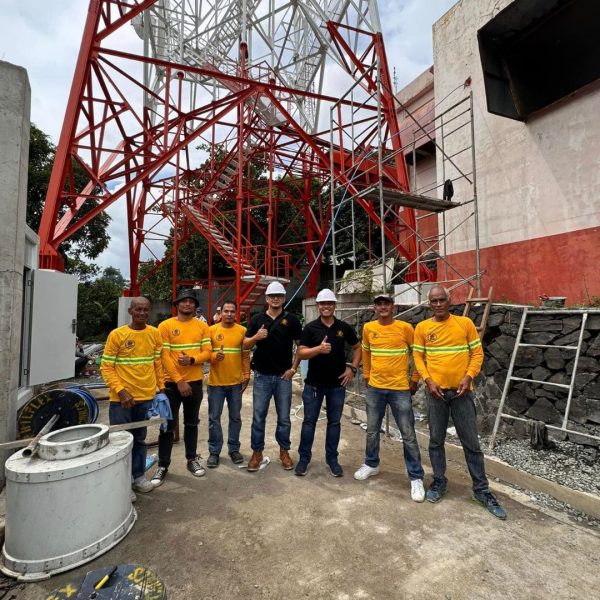
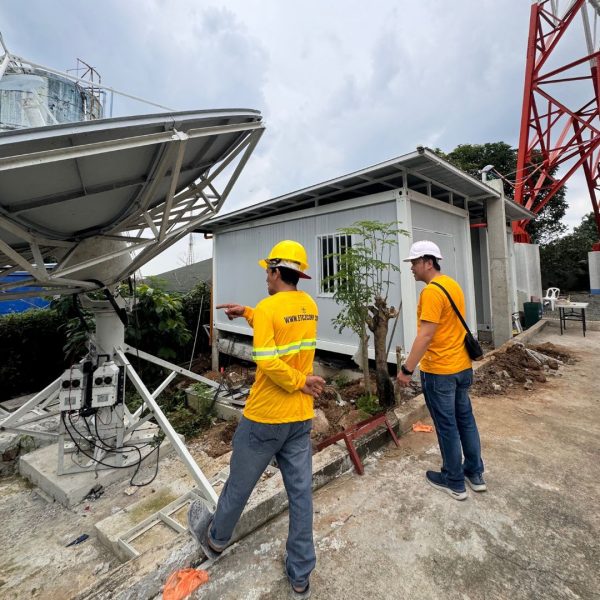
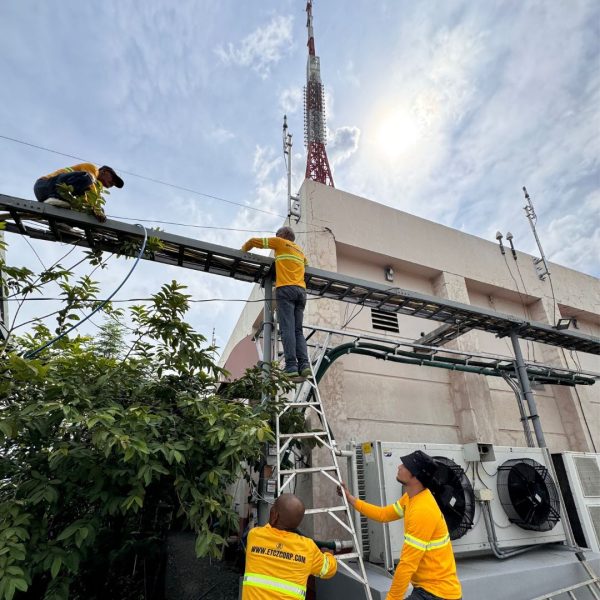
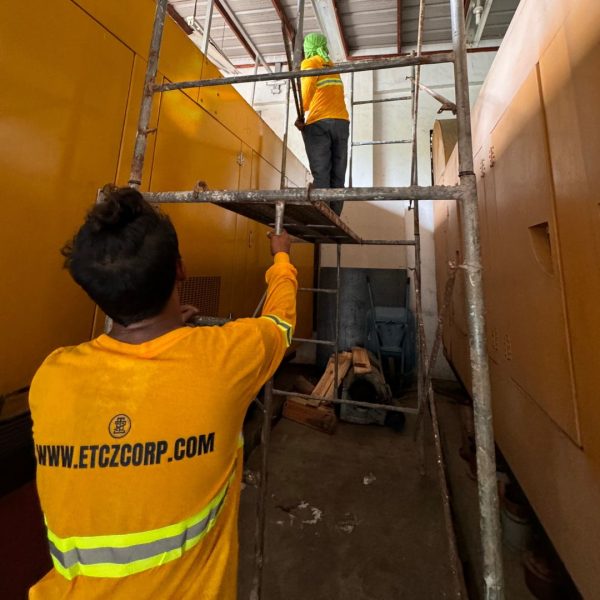
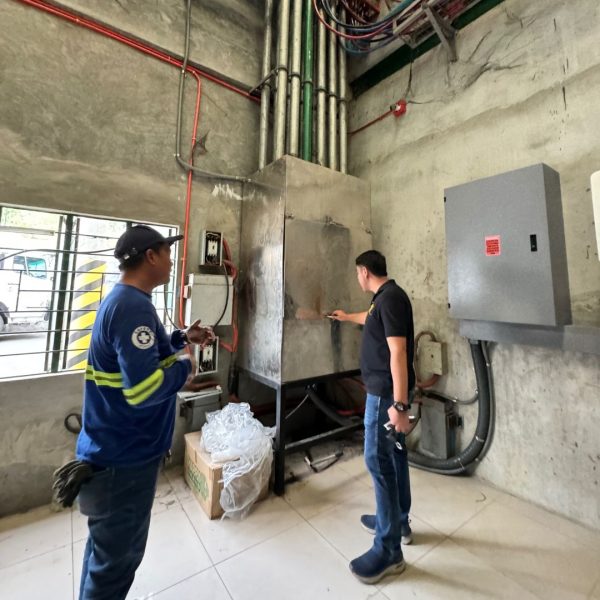
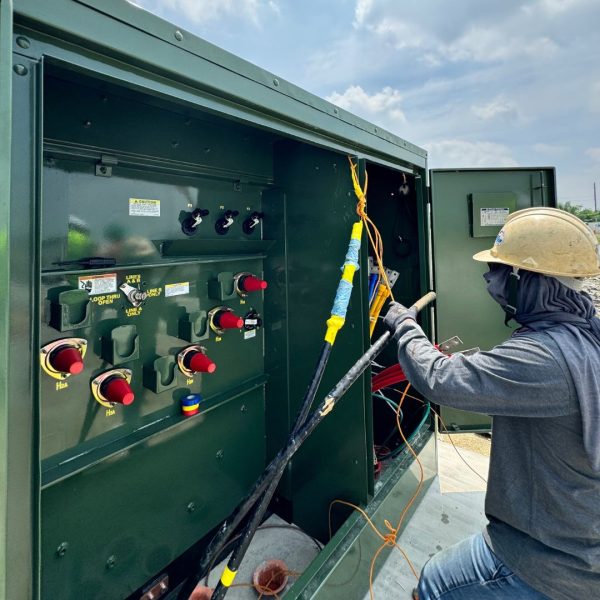
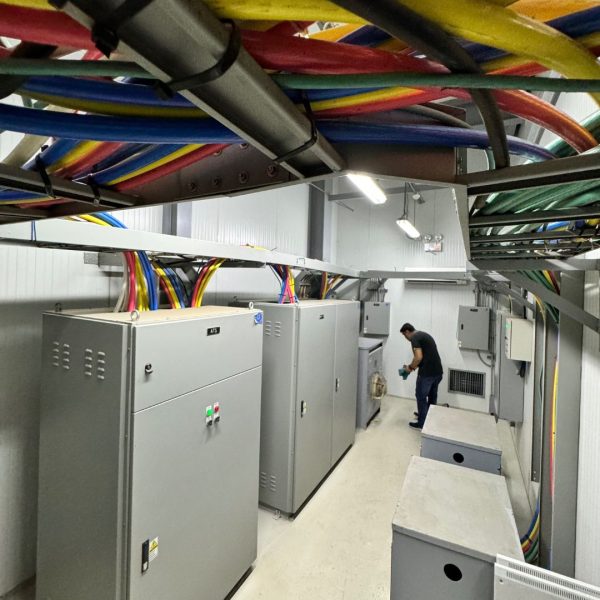
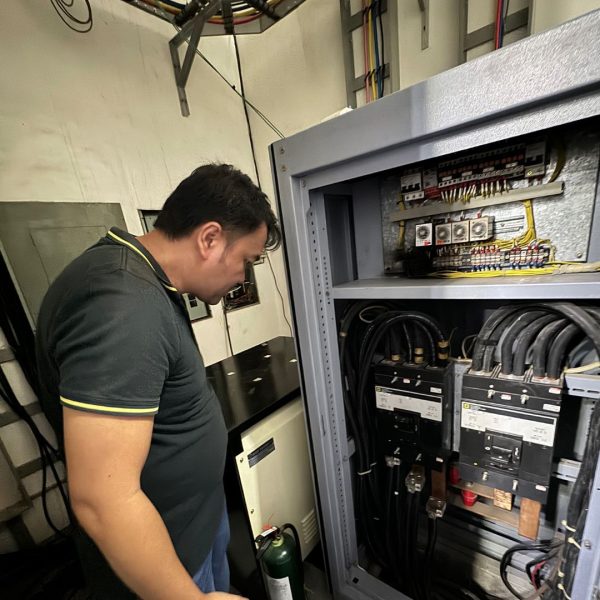
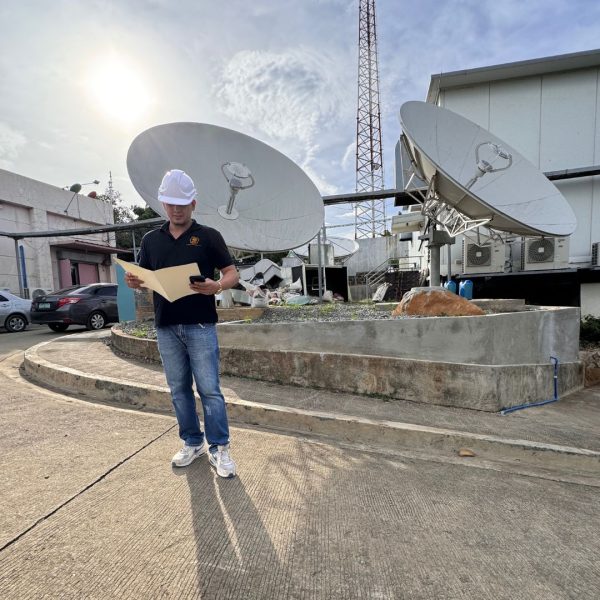
"We are thankful for the excellent service provided by ETCZ Corp. Their distribution transformers have enhanced the efficiency of our power network."
Your Partner for Electrical Success
Whether you are looking to design a new system, optimize an existing one, or address specific challenges, ETCZ Corp\u2019s electrical engineering services are your trusted solution. From initial planning to final implementation, we work closely with you to deliver efficient, reliable, and cost-effective results.

Expertise You Can Trust:
Backed by a team of seasoned professionals, we bring decades of collective experience to the table. Our electrical engineers are not only proficient in their craft but also passionate about delivering excellence in every project we undertake.

Comprehensive Services
Whether you’re in need of design consultation, project management, installation, or maintenance services, ETCZ Corp offers a comprehensive suite of solutions to meet your requirements. We work closely with our clients at every stage of the project, from conceptualization to completion, ensuring seamless execution and optimal outcomes.

Quality Assurance
Quality and safety are paramount in the work we do. At ETCZ Corp, we adhere to the highest standards of quality assurance, employing rigorous testing and inspection protocols to ensure that every project meets regulatory requirements and industry standards. Our dedication to quality is evident in the reliability and durability of our solution

Client-Centric Approach:
At ETCZ Corp, we prioritize our clients’ needs above all else. We take the time to understand their unique challenges, goals, and constraints, tailoring our services to deliver solutions that address their specific requirements. Our client-centric approach fosters long-lasting partnerships built on trust, transparency, and mutual success
Have any queries?
We're here to help.
- #52 M.L Quezon St. Villa Ligaya Subdivision Barangay Dela Paz, Antipolo City
- 09778411839
- [email protected]