

RA 11285 Compliance Guide for Philippine Businesses 2026
RA 11285 Compliance Guide for Philippine Businesses: What Every Designated Establishment Must Do in 2026
There is a law in the Philippines that thousands of commercial and industrial businesses are required to comply with — and a significant number of them still do not fully understand what it requires, when it applies, or what happens if they ignore it.
That law is Republic Act No. 11285, officially known as the Energy Efficiency and Conservation Act (EECA). Signed in 2019 and fully in effect today, RA 11285 is one of the most consequential pieces of business regulation for energy-intensive companies operating in the Philippines. It imposes mandatory energy management obligations, reporting requirements, and audit schedules on facilities classified as Designated Establishments (DEs) — and the penalties for non-compliance are real, enforceable, and escalating.
If you manage or own a factory, manufacturing plant, commercial building, hospital, hotel, mall, cold storage facility, or any other large energy consumer in the Philippines, this guide is written specifically for you.
By the time you finish reading, you will know exactly what RA 11285 requires, whether your facility qualifies as a Designated Establishment, what specific obligations apply to your DE type, what the deadlines and submission portals look like, and what it costs to be non-compliant — versus what it costs to get ahead of the law with the right certified energy audit partner.
What Is RA 11285? The Energy Efficiency and Conservation Act Explained
Republic Act No. 11285, signed on April 12, 2019, institutionalizes energy efficiency and conservation as a national policy. It promotes the efficient and judicious utilization of energy, encourages the development of new and alternative energy technologies, and provides a framework of obligations and incentives for energy-intensive industries across the commercial, industrial, transport, power, agriculture, and public works sectors. Espinovalencia
The law does not simply encourage businesses to save energy. It mandates that specific categories of energy consumers — called Designated Establishments — take active, documented, and verifiable steps to manage their energy consumption. These steps include hiring qualified energy professionals, conducting certified energy audits, submitting reports to the Department of Energy (DOE), and achieving measurable energy efficiency improvements over time.
The law is implemented through the DOE’s Implementing Rules and Regulations (IRR), first issued in November 2019, and subsequently updated through a series of Department Circulars — most recently revised in 2023 and 2024 — that refined the classification criteria and compliance obligations for Designated Establishments.
For Philippine businesses, RA 11285 is no longer a future obligation. It is a present legal requirement with active enforcement mechanisms, DOE inspection authority, and financial penalties for every year of non-compliance.
Who Is a Designated Establishment? Understanding DE Classification
The cornerstone of RA 11285 compliance is the concept of the Designated Establishment (DE). Your obligations under the law depend entirely on whether your facility qualifies as a DE — and if so, which type.
Designated establishments are private or public entities in the commercial, industrial, transport, power, agriculture, public works, and other sectors identified by the DOE as energy-intensive industries based on their annual energy consumption in the previous year or an equivalent annual index. Espinovalencia
DE Type Classifications
Businesses can fall into a Type 1, Type 2, or Type 3 Designated Establishment category based on annual energy consumption: Santos Knight Frank
Type 1 Designated Establishments are those with an annual energy consumption of 500,000 kilowatt-hours (kWh) to 4,000,000 kWh for the previous year. Supreme Court E-Library
Type 2 Designated Establishments are those with an annual energy consumption exceeding 4,000,000 kWh but below the threshold that places them in Type 3. For most Philippine industrial operators, this means facilities consuming between 4 million and approximately 10 million kWh annually — typical of mid-to-large manufacturing plants, large commercial buildings, and multi-tenant industrial complexes.
Type 3 Designated Establishments are the largest energy consumers — facilities with annual energy consumption above the upper threshold set by the DOE, typically large industrial complexes, refineries, large cement or steel plants, and major power-consuming industrial facilities.
It is important to note that the energy consumption thresholds for determining DE type shall be periodically reviewed and adjusted, if deemed necessary, by the DOE. Espinovalencia This means that thresholds can shift over time, and businesses near the threshold boundaries should monitor DOE issuances closely to ensure they remain properly classified.
How to Calculate Your Annual Energy Consumption
Your annual energy consumption for DE classification purposes includes all energy sources used by your facility: electricity (in kWh), fuel (converted to kWh-equivalent using DOE conversion factors), and any other energy input. The DOE prescribes specific conversion factors for different fuel types, and these should be applied when calculating your total annual energy consumption.
If your facility consumes electricity only, your Meralco or distribution utility billing statements for the past 12 months provide the basis for your annual consumption figure. If you use diesel, LPG, bunker fuel, or other fuels in your operations, those must be converted and added to your electricity consumption to arrive at your total annual energy figure.
When in doubt about your classification, a certified energy auditor — such as ETCZ Corp — can help you calculate your consumption figure accurately and determine your correct DE type before you register with the DOE.
The 8 Core Obligations of Every Designated Establishment Under RA 11285
Regardless of your DE type, all Designated Establishments share a set of core obligations under Section 20 of RA 11285. Supreme Court E-Library Here is a detailed breakdown of each obligation and what it means in practice for your facility.
Obligation 1: Register with the DOE Online Portal
All types of Designated Establishments are required to register online with the DOE in order to submit annual energy consumption reports and annual energy conservation reports. Espinovalencia
Registration is done through the DOE’s Designated Establishment Online Submission Portal. This is the gateway through which all mandatory reports — including the Annual Energy Utilization Report (AEUR), the Annual Energy Efficiency and Conservation Report (AEECR), and the Energy Audit Report (EAR) — are submitted.
Registration should be completed as early as possible. If your facility has been consuming energy above the DE threshold for the past year and you have not yet registered, you are already in a state of non-compliance.
What you need to register:
- Business registration documents (SEC, DTI, or CDA certificate)
- BIR Certificate of Registration
- Most recent 12 months of energy billing statements
- Contact details of your designated Energy Conservation Officer or Energy Manager
Obligation 2: Integrate an Energy Management System Policy
Designated Establishments must integrate an energy management system policy into their business operations based on ISO 50001 or any similar framework. Supreme Court E-Library
ISO 50001 is the international standard for Energy Management Systems (EnMS). While full ISO 50001 certification is not mandatory under RA 11285, your facility must have a documented energy policy and management system that follows its principles. This includes:
- A written Energy Policy signed by top management
- Appointment of a Management Representative for Energy
- Energy planning processes and targets
- Operational controls for energy use
- Internal monitoring and measurement
- Periodic management reviews of energy performance
For many Philippine businesses, particularly smaller manufacturing plants and commercial buildings, this level of structured energy management is new territory. A certified energy auditor can help you establish a compliant energy management framework as part of a post-audit implementation plan.
Obligation 3: Establish Energy Efficiency Programs and Targets
Designated Establishments must set up programs to develop and design measures that promote energy efficiency, conservation, and sufficiency — which may include the installation of renewable energy technologies — and set up annual targets, plans, and methods of measurement and verification for the implementation of energy efficiency and conservation projects. Espinovalencia
In practice, this means your facility must have:
- Documented annual energy efficiency targets (expressed as percentage reductions in specific energy consumption or total kWh)
- A program or plan for achieving those targets
- A measurement and verification (M&V) methodology to track progress
The DOE’s prescribed format for documenting these targets and programs is the Annual Energy Efficiency Investment Plan (AEEIP), which is one of the key submission documents under the law.
Obligation 4: Maintain Monthly Energy Consumption Records
Designated Establishments are required to keep records on monthly energy consumption data and other energy-related data. Espinovalencia
This obligation requires you to maintain organized records of your monthly electricity consumption (and fuel consumption, if applicable) for at least the current and previous year. These records form the basis of your AEUR submission and are subject to DOE inspection at any time.
A practical best practice is to maintain a structured energy consumption logbook or spreadsheet that records monthly kWh consumption, cost, and specific energy consumption (kWh per unit of production or per square meter of conditioned space). Your certified energy manager or CECO should be responsible for maintaining this record.
Obligation 5: Improve Specific Energy Consumption Annually
Designated Establishments must improve average specific energy consumption in accordance with the annual reduction targets established by the DOE. Espinovalencia
This is the performance obligation at the heart of RA 11285. It is not enough to simply file reports — you must demonstrate actual improvement in how efficiently your facility uses energy. The DOE sets Minimum Energy Performance (MEP) standards for different sectors, and your facility’s specific energy consumption must trend downward in alignment with these standards.
In August 2024, the DOE issued Department Circular DC2024-08-0024, prescribing the Minimum Energy Performance for the commercial, industrial, and transport sectors for compliance of Designated Establishments under the Energy Efficiency and Conservation Act. Pe2 This means the performance bar is not static — it is being raised as the law matures and as Philippine industry is expected to operate more efficiently over time.
Obligation 6: Conduct and Submit Certified Energy Audits
One of the most concrete compliance requirements is the periodic conduct and submission of a Certified Energy Audit Report (EAR) to the DOE. This audit must be conducted by a DOE-accredited energy auditor, and the report must meet DOE format and content requirements to be accepted through the online submission portal.
Under RA 11285 and its IRR, as well as the relevant Department Circulars DC2023-12-0036, DC2023-12-0037, and DC2023-12-0038, Designated Establishments are required to submit essential reports through the DE Online Submission Portal — including the Annual Energy Efficiency and Conservation Reports (AEECR), Annual Energy Utilization Reports (AEUR), and Energy Audit Reports (EAR). Department of Energy Philippines
The frequency of energy audit submission varies by DE type. Type 1 establishments generally submit energy audits less frequently than Type 2 and Type 3 establishments, which face more rigorous audit cycles given their larger energy footprints. Always check the latest DOE circular applicable to your sector for the current audit submission schedule.
ETCZ Corp is fully equipped to deliver DOE-compliant certified energy audit reports for all DE types, across all major industry sectors in Luzon.
Obligation 7: Employ a Certified Energy Conservation Officer (CECO) or Certified Energy Manager (CEM)
This is the obligation that catches many businesses off-guard. RA 11285 does not just ask you to manage energy — it requires you to have a qualified, certified person responsible for doing so.
Type 1 Designated Establishments must employ a Certified Energy Conservation Officer (CECO), while Type 2 Designated Establishments must employ a Certified Energy Manager (CEM). The CECO and the CEM may be chosen from within the organization or hired through external recruitment. Supreme Court E-Library
The distinction matters:
- A CECO (for Type 1 DEs) is certified through TESDA under a micro-credential program. In August 2024, the DOE issued DC2024-08-0027, prescribing the certification of Energy Conservation Officers through the TESDA Micro-Credential Program. Pe2
- A CEM (for Type 2 and Type 3 DEs) is a more senior credential. The CEM certification and assessment system for registered engineers is established by CHED, which offers professional certificate programs for energy managers in coordination with the DOE and TESDA. Supreme Court E-Library
If your facility does not currently have a CECO or CEM on staff or on retainer, this is likely your most urgent compliance gap. Sourcing, training, and certifying a CECO or CEM takes time, and facilities should initiate this process immediately if they have not already done so.
Designated Establishments must duly notify the DOE in writing on the appointment or separation from service of their respective CECOs or CEMs within ten (10) working days from the effectivity of these personnel actions. Espinovalencia
Obligation 8: Submit Annual Reports to the DOE
All Designated Establishments must submit the following annual reports through the DOE’s online portal:
Annual Energy Utilization Report (AEUR): A detailed accounting of your facility’s energy consumption by source, system, and month for the reporting year.
Annual Energy Efficiency and Conservation Report (AEECR): A report documenting the energy efficiency and conservation measures implemented during the year, the energy savings achieved, and progress toward annual reduction targets.
Non-submission or submission of incomplete or inaccurate reports is a direct violation of RA 11285. Energyauditorph Even if your facility is genuinely implementing energy efficiency measures, failing to submit proper documentation means you are still in violation — and subject to penalties.
Key DOE Reporting Documents: What You Need to Submit
To help Philippine businesses understand exactly what the compliance submission stack looks like, here is a clear breakdown of all the documents a Designated Establishment must prepare and submit:
Annual Energy Utilization Report (AEUR) Monthly energy consumption data by source. Submitted annually through the DOE’s online portal. This is essentially your energy data report — the raw numbers behind your facility’s performance.
Annual Energy Efficiency and Conservation Report (AEECR) Documents what your facility did during the year to improve energy efficiency. Includes implemented ECOs, verified savings, and performance vs. target. This is your narrative compliance document — it tells the DOE the story behind the numbers.
Energy Audit Report (EAR) The certified energy audit conducted by a DOE-accredited auditor. Must follow DOE-prescribed content and format requirements. Submitted at intervals determined by your DE type and sector circular.
Energy Management Plan (EMP) Your facility’s overarching plan for managing energy consumption. Documents your energy policy, organizational structure for energy management, and long-term conservation targets.
Annual Energy Efficiency Investment Plan (AEEIP) Your investment roadmap for energy efficiency — what projects are planned, what they will cost, and what savings they are expected to generate. Submitted annually.
DOE Inspection Authority: What to Expect
Many Philippine business owners are unaware that the DOE has direct authority to inspect their facilities for compliance purposes.
The DOE has the authority to visit Designated Establishments to inspect energy-consuming facilities, evaluate energy management systems and procedures, identify areas for efficiency improvement, and verify energy monitoring records and reports and other documents related to compliance requirements of the Act, within office hours and in the presence of an authorized representative of the Designated Establishment. Supreme Court E-Library
This means the DOE can, at any time during office hours, arrive at your facility and ask to review your energy records, inspect your equipment, evaluate your energy management system, and verify that your submissions match your actual operations. If your records are not in order — or if your reported consumption figures do not match your utility bills — you are exposed to administrative findings and penalties.
The practical implication is clear: compliance must be real, documented, and verifiable — not just a paper exercise.
Penalties for Non-Compliance: What RA 11285 Costs You
One of the most important things for Philippine business owners to understand is that the penalties under RA 11285 are serious, progressive, and enforceable. This is not a law with token fines. The financial consequences of sustained non-compliance can significantly exceed the cost of achieving compliance in the first place.
In May 2024, the DOE issued Department Circular DC2024-05-0015, prescribing the Rules of Procedure in Administrative Cases for Violations Under Republic Act No. 11285, formalizing the enforcement process and escalation procedures for non-compliant Designated Establishments. Pe2
Under the law and its IRR, penalties for violations include:
Administrative Fines: Fines ranging from ₱50,000 to ₱500,000 per violation, depending on the nature and severity of the infraction. Each reporting period of non-compliance can constitute a separate violation, meaning fines can accumulate rapidly across multiple years of non-submission.
Suspension of Business Permits: For persistent non-compliance, the DOE can coordinate with the LGU and relevant agencies to pursue the suspension of business permits, effectively threatening operational continuity.
Criminal Liability: For deliberate falsification of energy consumption reports or willful obstruction of DOE inspections, criminal liability provisions in the law may apply.
Reputational and Commercial Risk: Beyond direct penalties, non-compliance with RA 11285 increasingly affects a company’s ability to participate in PEZA-registered zones, access BOI incentives, and satisfy ESG-related requirements from multinational buyers and investors.
The cost-benefit calculation is stark. A Level 2 certified energy audit costs ₱80,000 to ₱200,000. Annual compliance management — with a CECO and proper report preparation — adds another ₱50,000 to ₱150,000 per year. Set against fines that can reach ₱500,000 per violation per year, and the potential loss of BOI incentives worth millions, compliance is the financially rational choice by a wide margin.
RA 11285 Incentives: The Compliance Upside Most Businesses Miss
Most discussions of RA 11285 focus on the penalties. But the law also contains a significant set of incentives for businesses that not only comply but invest meaningfully in energy efficiency.
Energy efficiency projects shall be included in the annual investment priorities plan of the Board of Investments (BOI) and, upon certification by the DOE, shall be entitled to incentives provided under existing investment incentive laws. Espinovalencia These incentives can include income tax holidays, duty-free importation of capital equipment, and other fiscal benefits that can offset a substantial portion of your energy efficiency investment costs.
For PEZA-registered companies and BOI-accredited firms, the combination of tax incentives and energy cost savings from a properly executed energy efficiency program can generate significant financial returns — often returning the full investment within 12 to 36 months.
This means that for many Philippine businesses, RA 11285 compliance is not just about avoiding penalties. It is about accessing a powerful incentive framework that rewards investment in energy efficiency with concrete fiscal benefits.
Updated 2024 Circulars: What Changed and What It Means for Your Business
The compliance landscape under RA 11285 has evolved significantly since the original 2019 IRR. Several important DOE circulars issued in 2023 and 2024 have clarified and updated requirements in ways that directly affect Designated Establishments today.
On December 27, 2023, three DOE circulars reclassifying Designated Establishments under RA 11285 in the commercial, industrial, and transportation sectors were officially published, along with updated compliance guidelines. In February 2024, the DOE issued an advisory on compliance following these changes. Enviliacne ASIA
These 2023 circulars — DC2023-12-0036 (commercial), DC2023-12-0037 (industrial), and DC2023-12-0038 (transport) — introduced revised classification criteria and updated compliance obligations for each sector. Key changes include updated specific energy consumption benchmarks, revised annual reduction targets, and refined reporting formats.
In May 2024, the DOE issued DC2024-05-0011: Rules on the Administration and Enforcement of the Obligations of Designated Establishments Under the Energy Efficiency and Conservation Act, further formalizing the enforcement framework. Pe2
What this means for your business in 2026:
If you classified yourself as a Designated Establishment under the original 2019 IRR, you should re-verify your classification against the updated 2023 sector circulars. The reclassification may have changed your DE type — and therefore your specific obligations, audit frequency, and energy reduction targets.
If you have been deferring compliance on the assumption that enforcement was not yet active, the 2024 enforcement rules signal that the DOE has moved beyond the grace period phase. Active enforcement is underway.
If your sector-specific circular prescribes new Minimum Energy Performance standards (as DC2024-08-0024 does for commercial, industrial, and transport sectors), you need to assess whether your current energy performance meets or falls short of these standards — and develop a plan to close any gap.
Step-by-Step: How to Achieve RA 11285 Compliance in 2026
Here is a practical, action-oriented roadmap for Philippine businesses that need to achieve or maintain RA 11285 compliance this year.
Step 1: Determine Your Annual Energy Consumption Pull your last 12 months of electricity bills and any fuel consumption records. Convert all energy to kWh-equivalent using DOE conversion factors. Determine whether you are above or below the 500,000 kWh DE threshold.
Step 2: Identify Your DE Type Based on your annual energy consumption and sector, determine whether you are a Type 1, Type 2, or Type 3 DE using the applicable 2023 sector circular for your industry. When in doubt, consult a certified energy auditor.
Step 3: Register with the DOE Online Portal If you are a DE and have not yet registered, do so immediately. Registration is the gateway to all compliance submissions. Gather your business registration documents, BIR certificate, and energy billing records before beginning.
Step 4: Appoint a CECO or CEM Type 1 DEs need a CECO; Type 2 and 3 DEs need a CEM. Determine whether you will certify an existing employee or hire externally. Initiate the certification process through TESDA (for CECO) or CHED (for CEM) immediately, as certifications take time to obtain. Notify the DOE within 10 working days of appointment.
Step 5: Commission a Certified Energy Audit Engage a DOE-accredited energy auditor to conduct a Level 2 certified energy audit of your facility. This is the foundation of your compliance documentation and your roadmap to energy savings. ETCZ Corp can conduct your certified energy audit and prepare a DOE-compliant Energy Audit Report for submission.
Step 6: Develop Your Energy Management Plan and AEEIP Using the audit findings as the basis, develop your Energy Management Plan (EMP) and Annual Energy Efficiency Investment Plan (AEEIP). These documents articulate your energy policy, management structure, annual targets, and investment roadmap.
Step 7: Implement Your Energy Management System Establish the ISO 50001-aligned energy management system required by the law. This includes documented energy policies, designated roles and responsibilities, monitoring procedures, and internal review processes.
Step 8: Submit Annual Reports Through the DOE’s online submission portal, submit your AEUR, AEECR, EMP, AEEIP, and EAR as required. Maintain submission records for your files.
Step 9: Maintain Records and Monitor Performance Keep monthly energy consumption records. Track your specific energy consumption performance against your annual targets. Be prepared for a DOE inspection at any time.
How ETCZ Corp Supports Your RA 11285 Compliance Journey
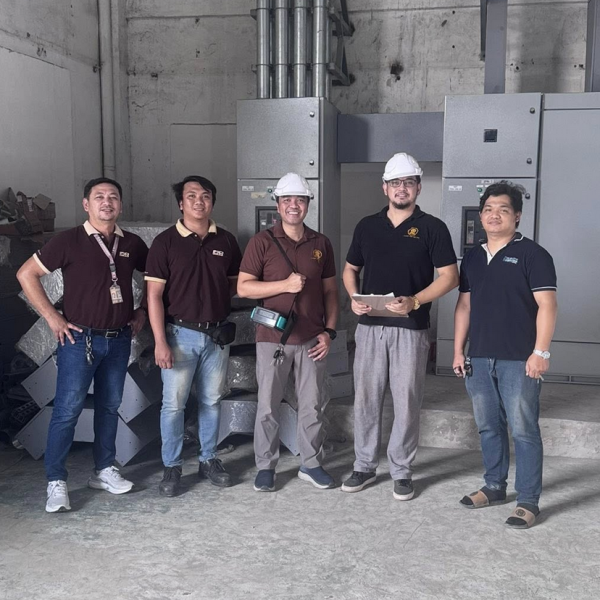
ETCZ Corp is a DOE-recognized certified energy auditor firm serving commercial and industrial clients across Luzon. We have helped factories, manufacturing plants, industrial parks, commercial buildings, and other facilities navigate the full RA 11285 compliance process — from initial DE classification through certified energy audit delivery and DOE report preparation.
Our RA 11285 compliance support services include:
- Annual energy consumption calculation and DE classification review
- Certified Level 2 energy audit (DOE-compliant report, ready for portal submission)
- Energy Management Plan (EMP) development
- Annual Energy Efficiency Investment Plan (AEEIP) preparation
- AEUR and AEECR report preparation and formatting
- CECO and CEM coordination support
- Post-audit Energy Conservation Opportunity (ECO) implementation
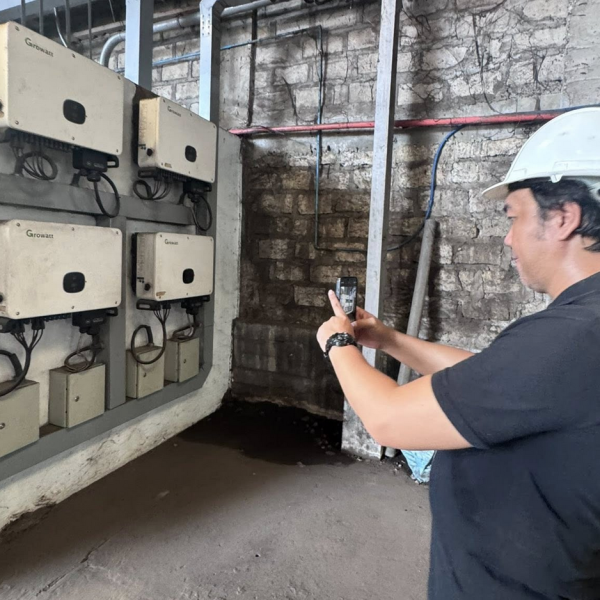
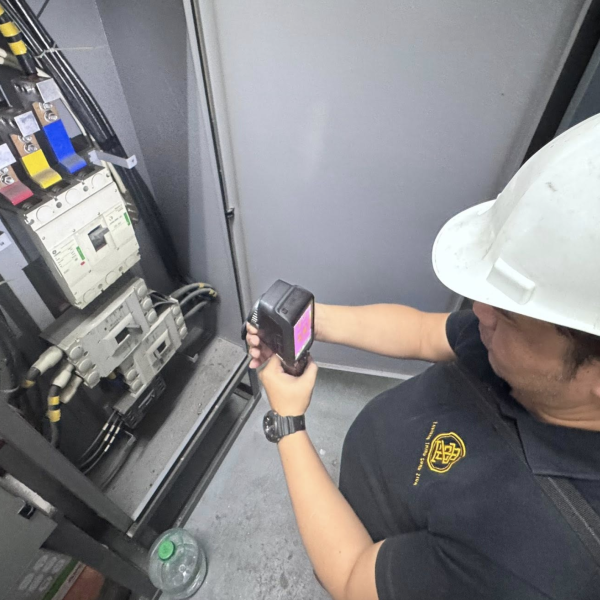
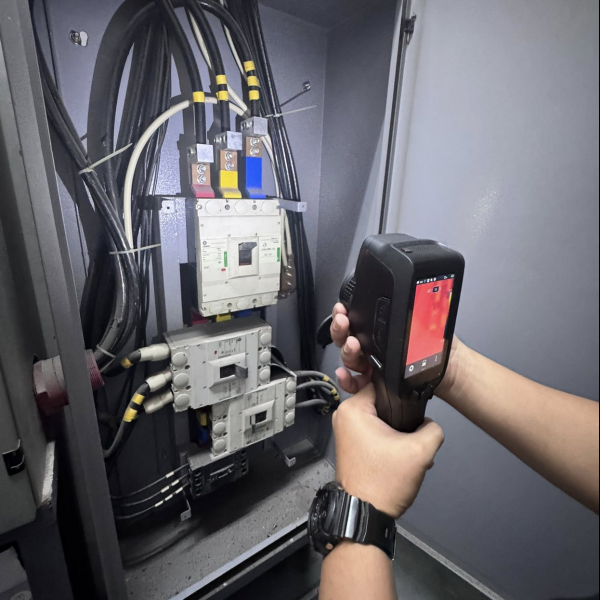
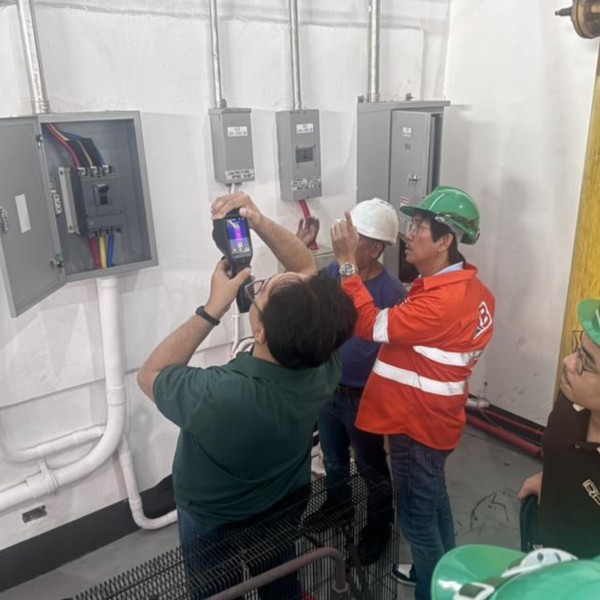
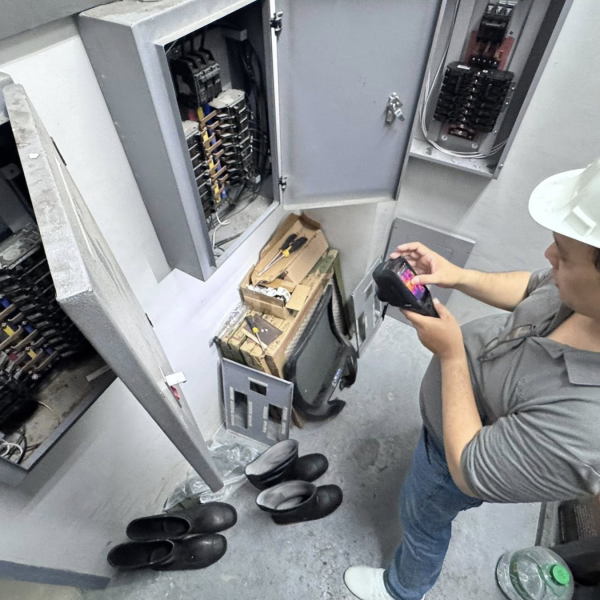
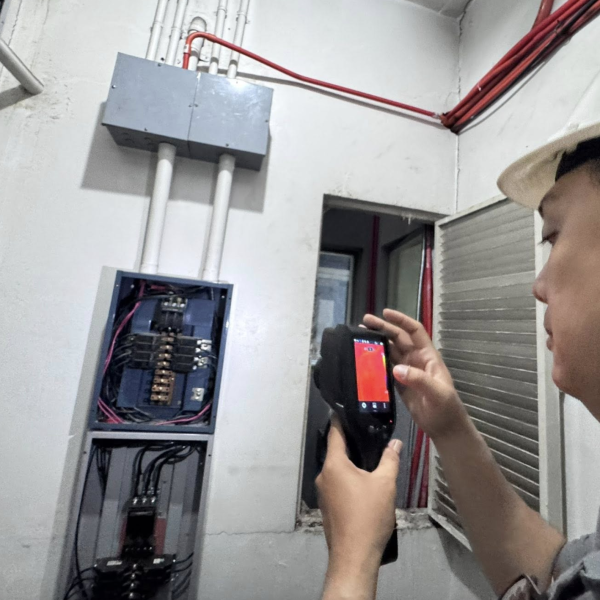
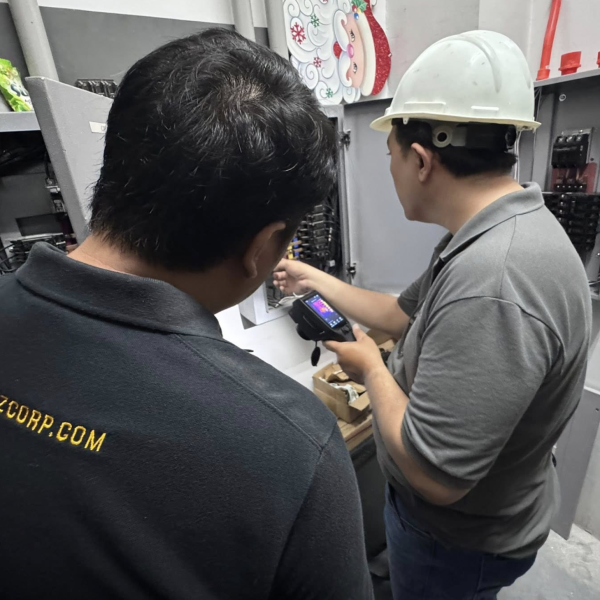
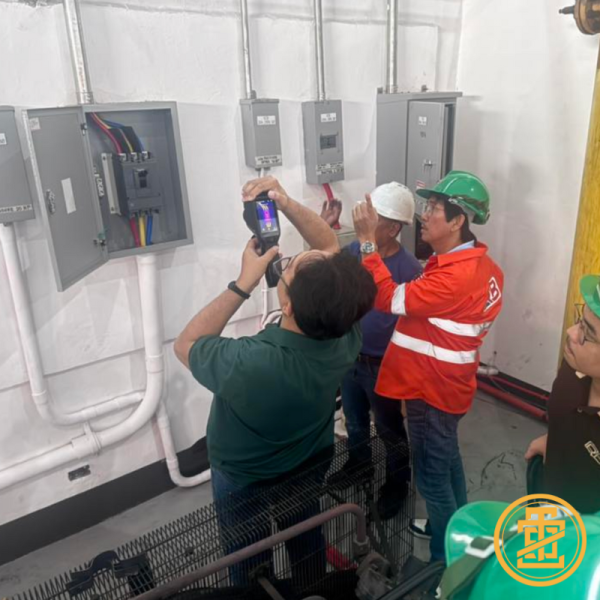
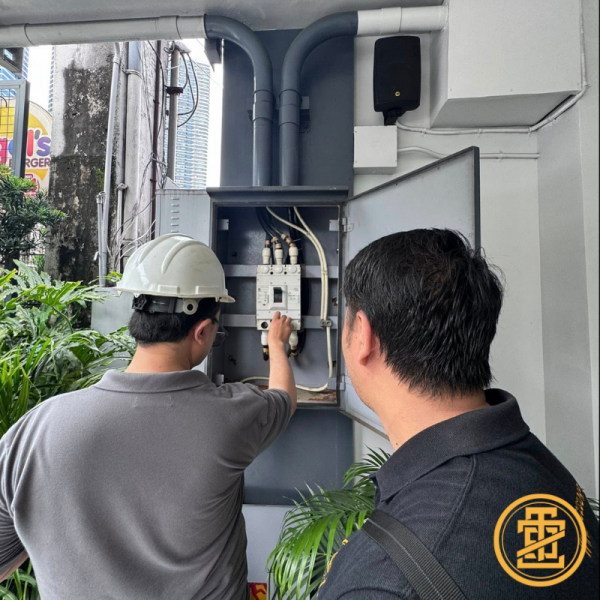
- Electrical PMS, thermography, and power quality services that directly support energy reduction targets
Whether you are a first-time registrant trying to achieve compliance for the first time, or an established DE looking to strengthen your energy management program and lower your electricity bills, ETCZ Corp has the expertise, the credentials, and the hands-on capability to support you.
Call us at 09778411839 or email [[email protected]](mailto:[email protected]) to schedule a free consultation. We serve clients across Rizal, Laguna, Cavite, Batangas, Bulacan, Pampanga, and throughout Luzon — including facilities in Laguna Technopark, Carmelray Industrial Park, First Philippine Industrial Park (FPIP), and PEZA-registered zones.
Energy Audit Frequently Asked Questions
RA 11285, the Energy Efficiency and Conservation Act, applies to any private or government-owned facility in the Philippines whose annual energy consumption meets or exceeds 500,000 kWh. These facilities are classified as Designated Establishments and are subject to mandatory energy management, audit, and reporting obligations under the law. The DOE enforces compliance and has the authority to inspect facilities and impose fines for violations.
Add up your facility’s total energy consumption for the previous 12 months — including electricity and any fuel sources, converted to kWh-equivalent using DOE conversion factors. If your total annual consumption is 500,000 kWh or more, you are a Designated Establishment. Your DE type (Type 1, 2, or 3) depends on your total consumption level and the sector-specific circular that applies to your industry. A certified energy auditor can help you determine your exact classification.
Non-compliance may result in penalties and increased operational risks.
Yes, many quick-win recommendations deliver fast savings.
Only qualified and certified energy auditors.
Gallery
Your Partner for Electrical Success
Whether you are looking to design a new system, optimize an existing one, or address specific challenges, ETCZ Corp’s electrical engineering services are your trusted solution. From initial planning to final implementation, we work closely with you to deliver efficient, reliable, and cost-effective results.

ETCZ Corp
Schedule Your Certified Energy Audit Today
If your facility requires a certified energy audit in the Philippines, work with professionals who understand both engineering and compliance. 👉 Book a FREE initial consultation with ETCZ Corp today. Our certified engineers will help you meet DOE requirements, reduce energy costs, and strengthen your electrical systems.

Call Now 09778411839
Have any queries?
We're here to help.
- #52 M.L Quezon St. Villa Ligaya Subdivision Barangay Dela Paz, Antipolo City
- 09778411839
- [email protected]