

RA 11285 for Philippine Manufacturing Plants: 2026 Guide
RA 11285 Compliance for Manufacturing Plants in the Philippines: An Industry-Specific Guide for 2026
Manufacturing is the backbone of the Philippine industrial economy. From food processing plants in Laguna and Batangas to electronics assembly facilities in PEZA-registered zones across Luzon, manufacturing facilities collectively represent one of the largest categories of energy consumers in the country. They are also — without exception — the sector most directly and rigorously affected by Republic Act No. 11285, the Energy Efficiency and Conservation Act.
For most manufacturing plant managers, factory owners, and facility engineers, the compliance requirements of RA 11285 are understood in broad strokes: commission an energy audit, hire a certified energy professional, submit reports to the DOE. But the details — the specific obligations that apply to manufacturing as an industrial-sector Designated Establishment, the audit rules that differ by DE type, the penalties that apply when factories fall short, and the practical steps needed to build a compliant energy management system inside a live production environment — are often poorly understood, inconsistently applied, or simply not acted upon.
That gap is exactly what this guide is designed to close.
This is not a generic overview of RA 11285. This is a manufacturing-specific compliance playbook — written for the people who run, manage, and own factories in the Philippines — that covers every obligation your facility has under the law, how those obligations were updated by the 2023 industrial-sector circular, what the DOE actually checks during inspections, and how ETCZ Corp can support your entire compliance journey from registration through certified energy audit delivery.

Why Manufacturing Plants Face the Strictest RA 11285 Obligations
RA 11285 categorizes establishments into Designated Establishments (DEs), requiring compliance based on annual energy consumption thresholds. DEs are further classified into categories ensuring comprehensive coverage of energy use across sectors. Energyauditorph
Manufacturing is the DOE’s highest-priority compliance target under RA 11285 for a simple reason: factories are the largest single category of energy-intensive operations in the Philippines, and the industrial sector accounts for a disproportionate share of the country’s total electricity consumption.
The residential, commercial, and industrial sectors are the major electricity users in the Philippines. For the commercial and industrial sectors, the Energy Efficiency and Conservation Act defined Designated Establishments as end-users consuming at least 500,000 kWh annually, mandated to set annual energy savings targets and implement them. Energytransitionpartnership
This makes manufacturing plants — especially those in food processing, electronics, garments, chemicals, metals, and cold storage — among the most regulated energy consumers in the Philippine private sector. Understanding exactly what the law requires from your factory is not optional. It is a management imperative.
The Governing Circular for Manufacturing: DC2023-12-0037 Explained
The most important regulatory document for Philippine manufacturing plants under RA 11285 is not the original 2019 law or its IRR. It is Department Circular No. DC2023-12-0037, signed on December 18, 2023 and effective January 11, 2024.
DC2023-12-0037 reclassifies Designated Establishments in the Industrial Sector, adjusts their thresholds, and provides compliance guidelines pursuant to the Energy Efficiency and Conservation Act. Pe2
This circular replaced and superseded the earlier classification framework for industrial DEs. It is the governing document for every manufacturing plant in the Philippines that qualifies as a Designated Establishment. If your facility’s compliance program was built around the pre-2024 rules, it needs to be reviewed and updated against DC2023-12-0037 immediately.
On December 27, 2023, three DOE circulars reclassifying Designated Establishments in the commercial, industrial, and transportation sectors were officially published, and in February 2024, the DOE issued an advisory on compliance following these changes. Enviliacne ASIA
The key changes introduced by DC2023-12-0037 for the industrial sector include updated DE classification thresholds, revised energy audit requirements by DE type, updated specific energy consumption benchmarks for different manufacturing subsectors, and new compliance guidelines that supersede the earlier MC2020-05-0001 memorandum circular.
Existing covered DEs — those with annual energy consumption of at least 100,000 kWh equivalent — were required to comply with the new thresholds and submit their Annual Energy Efficiency and Conservation Reports and Annual Energy Utilization Reports through the DE Online Submission Portal as per the updated requirements. Energyauditorph
How Manufacturing Plants Are Classified Under RA 11285
Under DC2023-12-0037, manufacturing plants in the Philippines are classified into DE types based on their annual energy consumption expressed in kWh-equivalent. The conversion to kWh-equivalent is important: it means that facilities using both electricity and fuel — diesel, LPG, bunker fuel, natural gas, coal — must convert all fuel consumption to kWh-equivalent using DOE-prescribed conversion factors before determining their DE type.
The classification for Designated Establishments shall be based on the annual energy consumption threshold expressed in kWh-equivalent as the standard unit of energy. Department of Energy Philippines
Manufacturing DE Classification Framework
Type 1 Industrial DE Annual energy consumption: 500,000 kWh-equivalent to 4,000,000 kWh-equivalent
This is the entry-level classification for manufacturing plants. A facility consuming approximately 500,000 kWh per month in electricity alone — which is typical for a small-to-medium light manufacturing or food processing facility — falls into this category. Type 1 manufacturing DEs have a defined set of obligations including employment of a Certified Energy Conservation Officer (CECO), periodic energy audit submission, and annual report filing.
Type 2 Industrial DE Annual energy consumption: above 4,000,000 kWh-equivalent up to the Type 3 threshold
This classification covers mid-to-large manufacturing plants — a food processing plant, a garment factory running 24/7, an electronics assembly facility, or a chemical plant consuming between approximately 350,000 and 1,000,000+ kWh per month. Type 2 manufacturing DEs face more rigorous obligations, including mandatory employment of a Certified Energy Manager (CEM), more frequent energy audit submissions, and tighter annual energy reduction targets.
Type 3 Industrial DE Annual energy consumption: above the upper threshold established by the DOE for Type 2
This covers the Philippines’ largest industrial energy consumers — major cement plants, refineries, large steel mills, and other heavy industrial facilities consuming in excess of 1,000,000 kWh per month. Type 3 DEs face the highest compliance burden and the tightest performance targets.
Special Classification: Single Address vs. Consolidated DEs
DEs are further classified into Single Address and Consolidated DEs, ensuring comprehensive coverage of energy use across sectors. Energyauditorph
For manufacturing companies that operate multiple production facilities in different locations, this distinction matters significantly. A Single Address DE is a facility at one physical location. A Consolidated DE allows a parent company to consolidate the energy consumption reports of multiple facilities under a single registration — but the obligations remain tied to each individual facility’s consumption level.
If your manufacturing group operates, say, three factories in different provinces — one in Laguna, one in Cavite, one in Pampanga — each factory must independently assess whether it meets the DE threshold. The group may register as a Consolidated DE, but compliance obligations flow from each plant’s individual energy consumption profile.
The 9 Core Compliance Obligations of Manufacturing Plants Under RA 11285
Here is the definitive, manufacturing-specific breakdown of what every industrial Designated Establishment must do under RA 11285 and its updated implementing circulars.
Obligation 1: Register with the DOE DE Online Submission Portal
The DE Online Submission Portal is an online platform developed by the DOE to facilitate the submission of required reports and documents under RA 11285. It is designed to reduce the administrative burden on businesses while ensuring accurate and timely compliance. Energyauditorph
Registration is the foundational step. Until your manufacturing plant is registered on the portal, you cannot legally submit any of the required reports — and your non-submission status will be visible to DOE compliance monitors.
For manufacturing facilities registering for the first time, you will need:
- Your DTI or SEC business registration certificate
- BIR Certificate of Registration
- Last 12 months of electricity billing statements from your distribution utility
- Documentation of any fuel consumption (diesel, LPG, bunker fuel, etc.)
- Contact details of the plant’s designated compliance officer
The portal registration also initiates your facility’s compliance clock — from the date of registration, DOE submission deadlines begin to apply.
Obligation 2: Calculate and Verify Your Annual Energy Consumption in kWh-Equivalent
This step is more complex for manufacturing plants than for purely commercial facilities, because most factories use both electricity and fuel.
Your annual energy consumption in kWh-equivalent must include:
- Total electricity consumption (kWh) from your utility meters for the previous 12 months
- Diesel consumption (liters) × DOE conversion factor for diesel
- LPG consumption (kg) × DOE conversion factor for LPG
- Bunker fuel, natural gas, coal, or any other energy source × applicable DOE conversion factors
The DOE publishes the conversion factors for all relevant fuels. Using current figures is important because the DOE periodically updates these factors. A certified energy auditor will calculate your kWh-equivalent total accurately, ensuring your DE type classification is correct and defensible in the event of a DOE inspection.
Getting this calculation wrong has real consequences. Underreporting your kWh-equivalent consumption — even unintentionally — can result in incorrect DE classification, submission of insufficient reports, and penalties when the discrepancy is discovered during a DOE audit or inspection.
Obligation 3: Employ a CECO (Type 1) or CEM (Type 2/3) and Notify the DOE
This is the personnel obligation that most manufacturing plants get wrong — either by not appointing anyone, by appointing someone without the proper certification, or by failing to notify the DOE after appointment.
A CECO is responsible for the supervision and maintenance of facilities of Type 1 Designated Establishments for the proper management of energy consumption and such other functions deemed necessary for the efficient and judicious utilization of energy. A CEM is chosen by Type 2 Designated Establishments to plan, lead, manage, coordinate, monitor, and evaluate the implementation of sustainable energy management within their organizations. Scribd
For Type 1 manufacturing DEs (500,000 to 4,000,000 kWh-equivalent annually):
- Must appoint a Certified Energy Conservation Officer (CECO)
- CECO certification is obtained through TESDA’s Micro-Credential Program
- DC2024-08-0027, issued in August 2024, prescribes the certification of Energy Conservation Officers through the TESDA Micro-Credential Program. Pe2
- The CECO may be an existing employee who obtains certification, or an externally hired certified professional
For Type 2 and Type 3 manufacturing DEs (above 4,000,000 kWh-equivalent annually):
- Must appoint a Certified Energy Manager (CEM)
- CEM certification is a higher-level credential established through CHED for registered engineers
- The CEM must have demonstrated competence in planning, managing, and evaluating energy management programs at the organizational level
For both types, the DOE must be formally notified of the appointment in writing within 10 working days of the appointment being made. Similarly, any departure or separation of the CECO or CEM from service must be reported to the DOE within 10 working days.
A critical compliance gap that ETCZ Corp frequently encounters during preliminary facility assessments: plants that have a CECO or CEM on paper but who is not actively performing energy management functions. The DOE’s inspection authority covers evaluating whether the energy management system is actually functioning — not just whether a named individual holds a certification. The CECO or CEM must be operationally engaged.
Obligation 4: Integrate an ISO 50001-Aligned Energy Management System
ISO 50001:2018 Energy Management Systems aims to improve an organization’s energy consumption. By maximizing the use of an organization’s energy sources and energy-related assets, lower energy consumption and energy costs can be attained in a systemized manner. Socotec-certification-international
RA 11285 requires manufacturing DEs to integrate an energy management system policy into their business operations based on ISO 50001 or any similar framework. Full ISO 50001 certification is not mandatory under RA 11285 — but the energy management system must follow the same foundational principles.
ISO 50001 follows the Plan-Do-Check-Act (PDCA) cycle. Most manufacturing plants can reach a certification-ready state within 9 to 18 months, depending on the size of the facility, the complexity of energy systems, and how much documentation already exists. OXMaint
For manufacturing plants, implementing an ISO 50001-aligned EnMS means establishing:
Energy Policy: A written, management-approved energy policy that commits the organization to achieving measurable energy performance improvements. This policy must be signed by the plant’s highest-level authorized manager and communicated across all production departments.
Energy Review: A systematic analysis of current energy use and consumption. This is essentially the analytical core of your certified energy audit — identifying your Significant Energy Uses (SEUs), the top 5 to 10 energy-consuming systems that account for approximately 80% of your factory’s total energy consumption.
Energy Baseline: A documented, data-verified baseline of your facility’s historical energy consumption, used as the reference point against which all future improvements are measured.
Energy Performance Indicators (EnPIs): Quantitative measures of your factory’s energy performance. For manufacturing plants, the most relevant EnPI is typically Specific Energy Consumption (SEC) — expressed as kWh per unit of production output. This is the metric that the DOE uses to assess whether your facility is meeting its annual energy reduction targets.
Operational Controls: Documented procedures for managing energy use in key production processes, HVAC systems, compressed air, lighting, and utilities — ensuring that operational best practices are followed consistently and not dependent on individual staff behavior.
Internal Auditing and Management Review: Periodic internal energy audits and management review meetings that assess progress against targets and trigger corrective action when performance falls short.
ISO 50001 ISO 50001-certified sites experienced nearly double the savings as non-certified sites over a four-year period, demonstrating that the structured management system approach delivers compounding energy performance improvements over time. Schneider Electric
Obligation 5: Set Annual Energy Efficiency Targets
Manufacturing plants must establish and document annual energy efficiency targets that align with the Minimum Energy Performance (MEP) standards prescribed by the DOE for the industrial sector.
DC2024-08-0024, issued in August 2024, prescribes the Minimum Energy Performance for the commercial, industrial, and transport sectors for compliance of Designated Establishments under the Energy Efficiency and Conservation Act. Pe2
The practical implication: your factory’s Specific Energy Consumption (kWh per unit of production) must decrease year over year in alignment with the DOE’s prescribed reduction rates for your manufacturing subsector. Meeting this obligation requires not just setting a number, but implementing actual energy conservation measures that drive measurable improvement in your facility’s energy intensity.
Annual targets are documented in your Annual Energy Efficiency Investment Plan (AEEIP), which specifies the projects and investments your plant will undertake to achieve the target reductions. The AEEIP is both a planning document and a compliance submission.
Obligation 6: Maintain Monthly Energy Consumption Records
Every manufacturing plant classified as a DE must maintain detailed monthly records of energy consumption by source. For a typical manufacturing facility, this means maintaining organized records of:
- Monthly electricity consumption in kWh (from Meralco or other distribution utility billing statements)
- Monthly diesel consumption in liters (from fuel purchase and delivery records)
- Monthly LPG, bunker fuel, or other fuel consumption in the applicable units
- Production output volume (units, kilograms, or other relevant production metric) corresponding to each month
These records serve as the data foundation for your AEUR submission and your SEC calculation. They are also the primary evidence the DOE will request during an on-site inspection. Records must be accurate, organized, and accessible — not buried in individual department files or reconstructed from memory.
ETCZ Corp’s certified energy audit process includes establishing a structured energy data collection template for your facility’s ongoing use, ensuring that your monthly records are maintained in the exact format required for DOE submissions.
Obligation 7: Conduct Certified Energy Audits at the Required Frequency
Type 1 DEs may conduct in-house energy audits through their own Certified Energy Auditor (CEA), which will be accepted by the DOE subject to evaluation. Type 2 and Type 3 DEs may conduct in-house energy audits by their own CEA, provided that a validation will be conducted by a DOE-registered or certified ESCO, CEA, or Firm, Partnership, Corporation, or Sole Proprietorship (FPCS). Energy Audit Reports that are validated by an ESCO, CEA, or FPCS shall have a validation certificate which shall include the date of validation, auditor’s name, signature, and certification number. Energyauditorph
This is a critical distinction that many manufacturing plant managers miss. The audit rules differ by DE type:
Type 1 Manufacturing DEs may use an in-house certified energy auditor, subject to DOE evaluation. This means a Type 1 DE that has a qualified CECO with Certified Energy Auditor credentials on its staff may technically conduct its own energy audit. However, in practice, most Type 1 DEs commission an external certified energy auditor to ensure objectivity, technical depth, and DOE acceptance of the report.
Type 2 and Type 3 Manufacturing DEs require external validation. Even if an in-house CEA conducts the audit, the resulting Energy Audit Report must be validated by an external DOE-registered ESCO, CEA, or Firm. The validation certificate must include the auditor’s name, certification number, signature, and date — and it is this validated report, not the in-house audit alone, that is submitted to the DOE.
For manufacturing companies that want certainty of acceptance and minimal compliance risk, engaging an experienced external certified energy auditor — such as ETCZ Corp — for the full audit process is the most reliable and cost-effective approach.
Obligation 8: Submit All Required Annual Reports Through the DOE Portal
Designated Establishments are required to submit the Annual Energy Efficiency and Conservation Report (AEECR) and Annual Energy Utilization Report (AEUR). Non-submission or submission of incomplete or inaccurate reports is a direct violation. Energyauditorph
The full annual submission stack for a manufacturing DE includes:
Annual Energy Utilization Report (AEUR): Monthly energy consumption data by source, production output volumes, and calculated Specific Energy Consumption figures. This is the raw data report — your factory’s energy performance numbers in DOE-prescribed format.
Annual Energy Efficiency and Conservation Report (AEECR): Documents what your factory actually did during the year to reduce energy consumption. Includes implemented Energy Conservation Opportunities (ECOs), verified savings achieved, comparison against annual targets, and explanation of any variance between targets and actual performance.
Energy Audit Report (EAR): Submitted at the frequency prescribed by DC2023-12-0037 for your DE type. The EAR is the certified energy audit report, prepared by a DOE-accredited auditor, covering your facility’s systems, energy balance, ECO identification, and savings recommendations.
Energy Management Plan (EMP): Your facility’s overarching energy management framework, documenting your energy policy, management structure, baseline, and long-term conservation strategy.
Annual Energy Efficiency Investment Plan (AEEIP): Your factory’s investment roadmap for energy efficiency improvements — projects planned, investment required, expected savings, and timeline.
All submissions are made through the DOE DE Online Submission Portal using your registered credentials.
Obligation 9: Be Prepared for DOE Inspections
Manufacturing plants must maintain readiness for unannounced DOE compliance inspections at any time during business hours. DOE inspectors have the authority to:
- Review all energy consumption records maintained by the facility
- Inspect energy-consuming equipment and systems on the production floor
- Evaluate the functioning of the energy management system
- Verify that submitted reports accurately reflect the facility’s actual energy performance
- Assess whether the CECO or CEM is actively performing their required functions
The practical preparation for a DOE inspection is straightforward: maintain clean, organized, and accurate energy records; ensure your CECO or CEM is present and can speak to the facility’s energy management program; and ensure that the energy conservation measures documented in your AEEIP and AEECR are actually implemented — not just written into a report.
Manufacturing-Specific Energy Audit Rules Under DC2023-12-0037
DC2023-12-0037 establishes specific energy audit requirements for industrial-sector DEs that differ in important ways from the generic audit rules in the original IRR. Here is what manufacturing plant compliance officers need to know.
Audit Level Requirements by DE Type
For Type 1 industrial DEs, the energy audit requirement aligns with a Level 1 or Level 2 audit, depending on facility complexity and the DOE’s evaluation of the submitted report. A detailed walk-through audit with measurement data is the practical minimum for acceptance.
For Type 2 industrial DEs, a Level 2 certified energy audit — with on-site measurements, power quality analysis, load profiling, and quantified ECO analysis — is the standard requirement. The audit report must be validated by an external DOE-registered auditor or ESCO before submission.
For Type 3 industrial DEs, the most rigorous audit standards apply, and DOE scrutiny of submitted reports is highest. Investment-grade Level 3 audits are typically appropriate for facilities in this category.
Audit Frequency
The audit cycle for industrial DEs is defined in DC2023-12-0037. Manufacturing plants should consult the specific provisions of the circular applicable to their DE type and subsector for the current audit frequency requirement. ETCZ Corp can advise your facility on the current cycle applicable to your DE classification.
What Must Be Covered in a Manufacturing Plant Energy Audit
A certified energy audit of a Philippine manufacturing plant must comprehensively assess all major energy-consuming systems. Based on ETCZ Corp’s industrial audit experience across Luzon, the following systems must be included in a complete manufacturing plant energy audit:
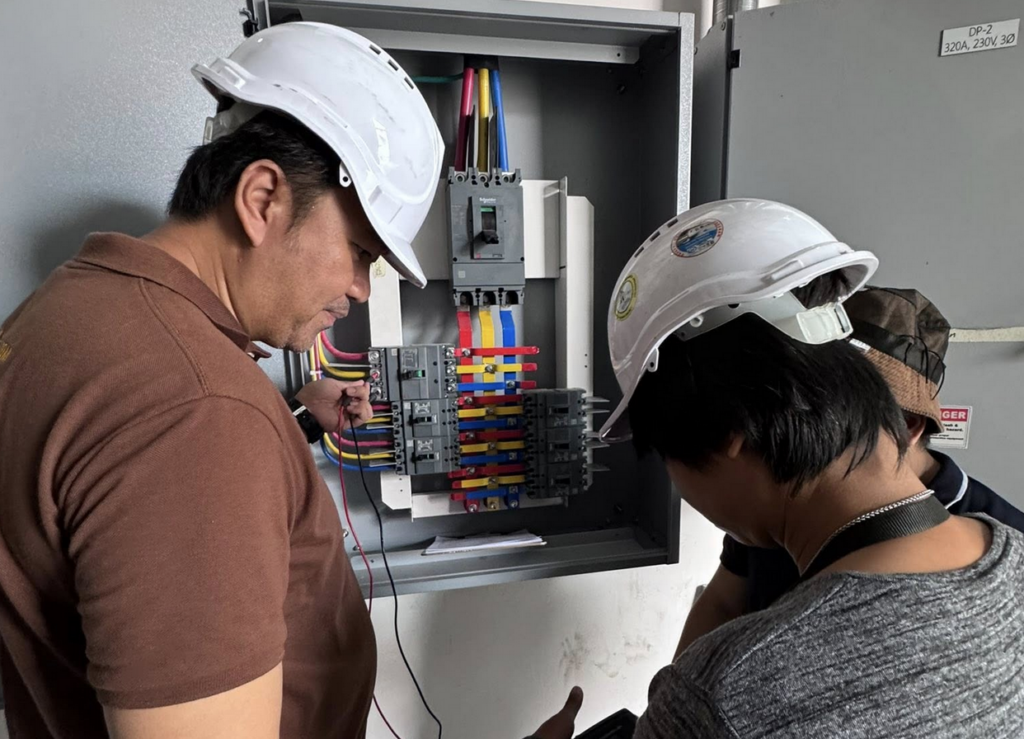
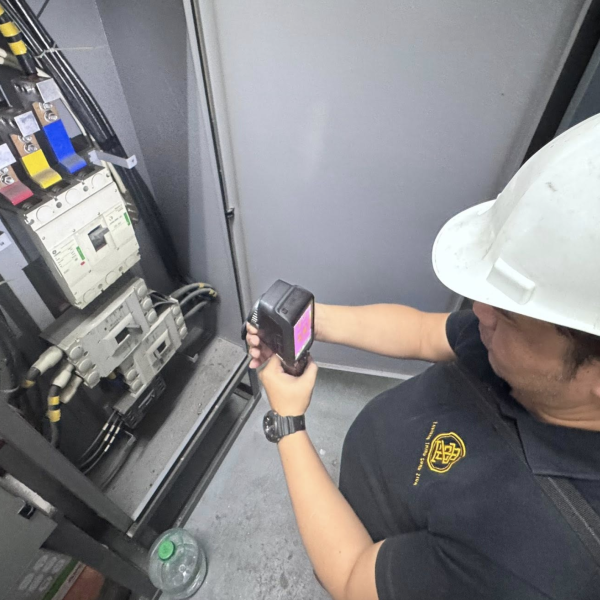
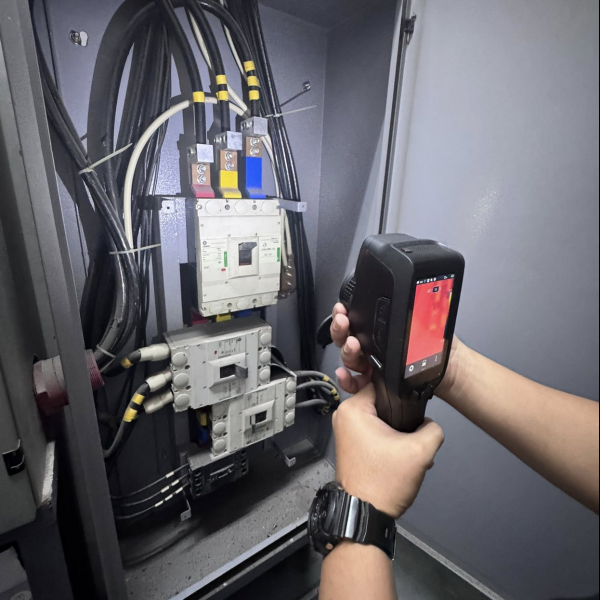
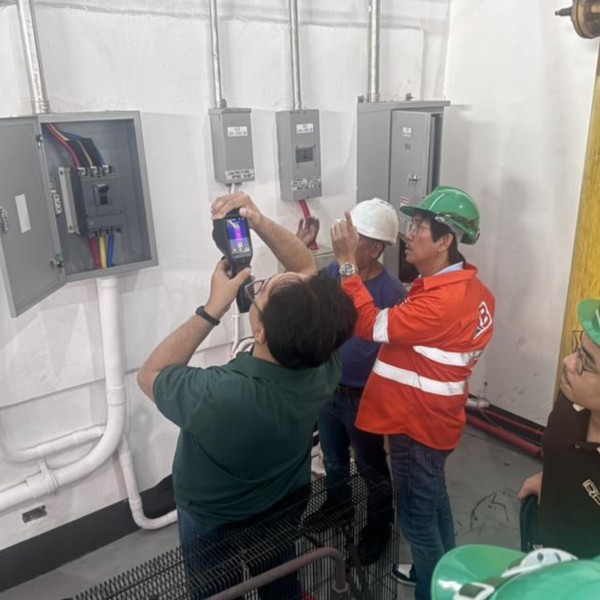
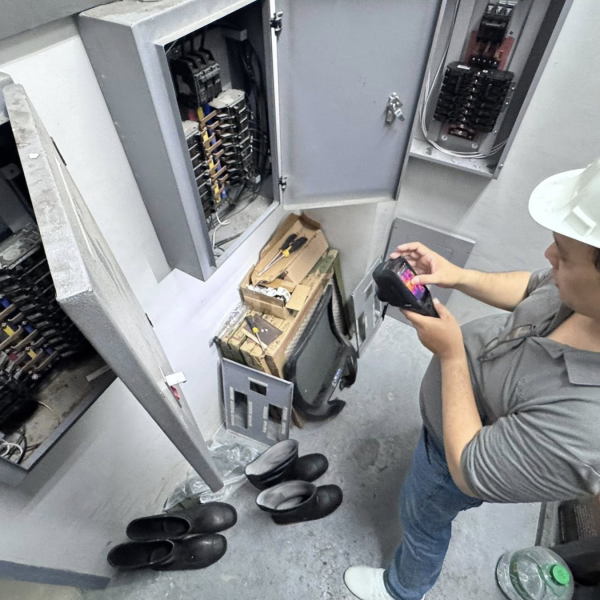
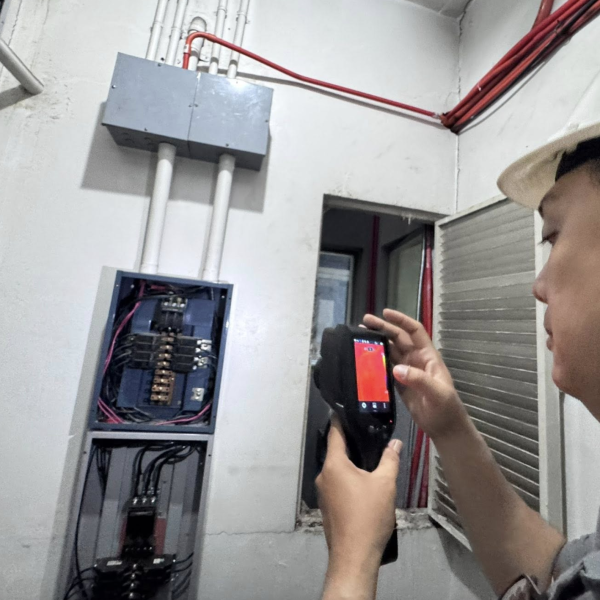
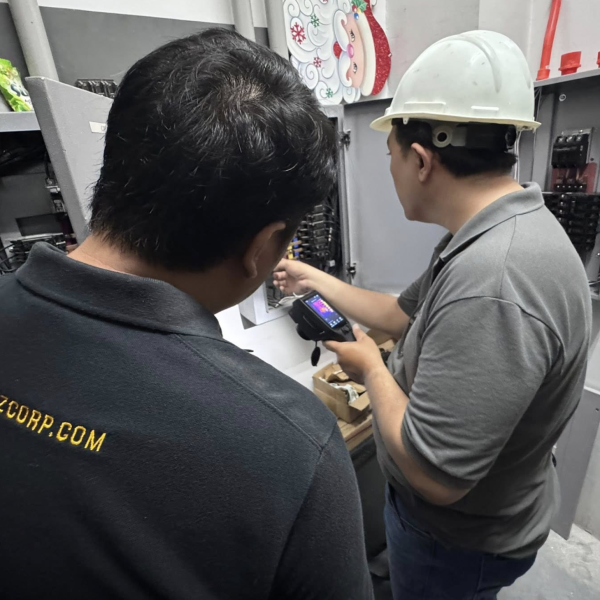
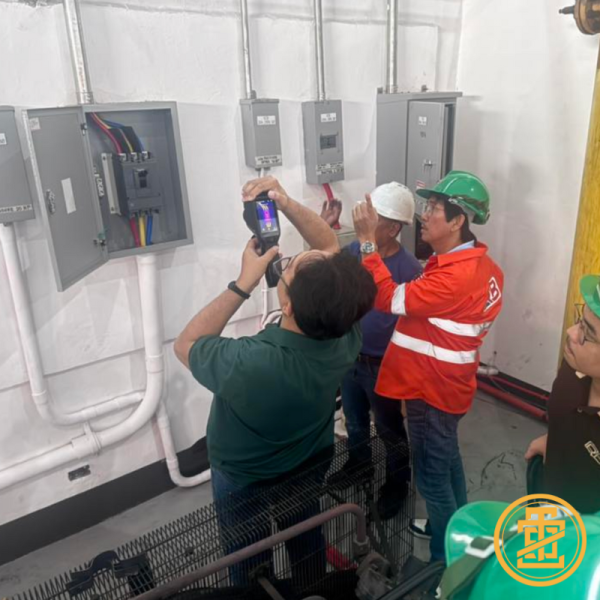
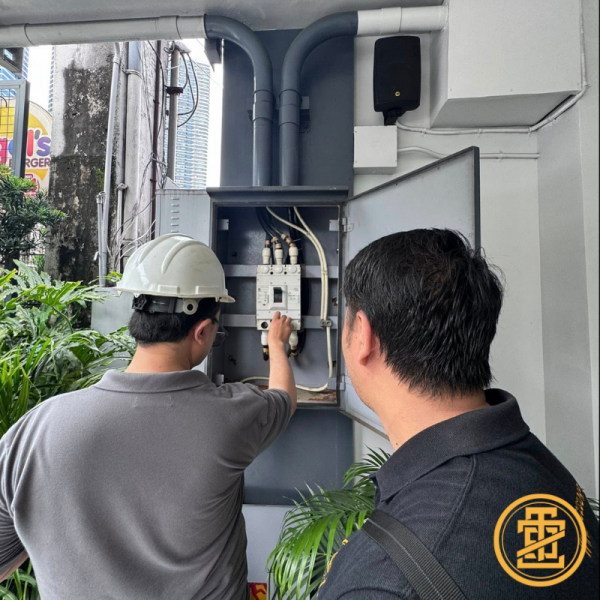
Electrical Distribution System: Power quality analysis (power factor, harmonics, voltage imbalance), transformer losses, panel board condition, and distribution system losses. Electrical thermography of panel boards and busbars is a key component of this assessment.
Motor and Drive Systems: Inventory and loading assessment of all motors above a defined kW threshold. Evaluation of VFD suitability for variable-load applications. Motor efficiency benchmarking against IE efficiency class standards.
Compressed Air Systems: Compressor loading profiles and efficiency, system pressure optimization, leak detection and quantification. In most Philippine manufacturing plants, compressed air is the second-largest electricity consumer after motors and offers consistent savings potential of 20% to 40%.
Lighting Systems: Illuminance measurement, fixture inventory, operating hours, and energy intensity benchmarking. LED retrofit potential assessment.
HVAC and Process Cooling: Loading profiles, refrigerant condition, coil cleanliness, temperature setpoints, and VFD retrofit potential for fans and pumps.
Production Equipment and Process Energy: Process-specific energy intensity benchmarking, idle running assessment, heat recovery potential, and process optimization opportunities.
Utility Systems: Steam, hot water, cooling tower, and other utility system efficiencies where applicable.
Building Envelope and Roof: Insulation and ventilation assessment, particularly for facilities in tropical Philippine conditions where solar heat gain significantly affects cooling loads.
Compliance Deadlines and Submission Calendar for Manufacturing Plants
Manufacturing plant compliance officers need a clear calendar for their RA 11285 obligations. Here is the standard annual cycle for industrial-sector DEs under the updated circulars:
Q1 (January–March): Review energy consumption data from the previous year. Calculate annual SEC performance against targets. Begin preparation of AEUR and AEECR. Verify that CECO/CEM is current and active.
Q1–Q2 Deadline (typically April 15): Submit AEUR and AEECR for the previous calendar year through the DOE DE Online Submission Portal. This is the primary annual submission deadline for most industrial DEs. Confirm the exact deadline for the current year through the DOE’s advisory, as specific dates may shift.
Ongoing: Maintain monthly energy consumption records. Track Specific Energy Consumption against annual targets. Implement AEEIP projects. Conduct internal energy management reviews.
Energy Audit Submission: Energy Audit Reports are due at the frequency prescribed by DC2023-12-0037 for your DE type. New DEs and DEs whose audit cycle falls in the current year must ensure their certified energy audit is commissioned, completed, and submitted by the applicable deadline.
Newly covered DEs were given a deadline of April 15, 2025 to submit energy audit reports. Existing covered DEs must adhere to energy audit report requirements per DC2023-12-0037. Energyauditorph
What Manufacturing Plants Risk by Not Complying
The compliance risk for Philippine manufacturing plants that ignore RA 11285 is not hypothetical. The DOE has established a formal enforcement framework, and the consequences of non-compliance are substantial across multiple dimensions.
Direct Financial Penalties: Fines from ₱50,000 to ₱500,000 per violation, with each year of non-submission potentially constituting a separate violation. A manufacturing plant that has not submitted for three consecutive years faces potential cumulative fines of ₱1,500,000 or more — on top of the compliance costs they would have incurred if they had simply complied.
Loss of BOI and PEZA Incentives: Manufacturing plants registered with the BOI or operating within PEZA economic zones face heightened compliance risk. Non-compliance with RA 11285 can jeopardize BOI registration and the fiscal incentives — income tax holidays, duty-free equipment importation — that many Philippine manufacturers depend on. BOI Memorandum Circular No. 2023-006 provides specific guidelines to register energy efficiency and conservation projects under RA 11285 for purposes of entitlement to incentives under the CREATE Act. Pe2 Non-compliance disqualifies a facility from accessing these registration-linked incentives.
ESG and Supply Chain Compliance: International buyers, particularly from Japan, South Korea, Europe, and the United States, are increasingly requiring their Philippine manufacturing partners to demonstrate energy management compliance and performance as part of supply chain sustainability requirements. A manufacturing plant that cannot produce DOE-compliant energy audit reports and AEECR submissions is at a competitive disadvantage in global supply chain relationships.
Operational and Reputational Risk: DOE-ordered business permit suspensions — which can be pursued for persistent non-compliance — represent an existential operational risk. Even the public record of a compliance violation can damage a manufacturing company’s relationship with PEZA, LGU authorities, and institutional customers.
The Philippine Energy Efficiency Alliance has noted that the recertification of energy efficiency practitioners and the linkage of their work to DE reporting and audit requirements demonstrates a growing commitment to strengthening compliance across the commercial, industrial, and transport sectors. BusinessWorld Enforcement is tightening, not loosening.
The ISO 50001 Connection: Why Manufacturing Plants Should Go Beyond Minimum Compliance
RA 11285 requires an ISO 50001-aligned energy management system — but it does not require full ISO 50001 certification. Many Philippine manufacturing plants treat this as a license to implement the minimum necessary documentation without building a functioning energy management culture.
That approach is a missed opportunity. Manufacturing plants running energy-intensive processes face a harsh reality: energy bills consume up to 40% of operating costs, yet most facilities still manage energy reactively. ISO 50001 changes that equation entirely by embedding a proactive energy management system into daily operations, cutting energy use by 12% within 15 months on average. OXMaint
For manufacturing plants operating in the Philippines’ high-electricity-cost environment — where effective rates often exceed ₱12.00 per kWh all-in — the financial return from a genuine, well-implemented ISO 50001-aligned energy management system is far larger than the compliance cost.
ISO 50001 certification helps organizations build a structured Energy Management System that transforms energy use into something measurable, manageable, and continuously optimized. Instead of guesswork, businesses track consumption, set targets, and improve performance using verified data and operational controls. MaxiCert
The manufacturing plants that will dominate the Philippine industrial landscape in the next decade are not the ones that do the minimum required by law. They are the ones that treat energy management as a genuine operational discipline — measuring, targeting, improving, and compounding savings year after year — while their less-disciplined competitors continue overpaying for every kWh of avoidable waste.
Industry-Specific Challenges: What Makes Manufacturing Compliance Different
Manufacturing plants face compliance challenges that are distinct from those of commercial buildings, hospitals, or hotels. Plant managers and energy officers navigating RA 11285 compliance in a factory setting need to understand these unique complications.
Multiple Energy Sources and Complex kWh-Equivalent Calculations Unlike an office building that runs on electricity alone, most Philippine manufacturing plants use electricity plus one or more fuels — diesel for backup generators, LPG for process heating, bunker fuel for boilers. Every fuel source must be converted to kWh-equivalent using current DOE conversion factors before total annual energy consumption can be determined. Errors in this calculation affect your DE type classification and all downstream compliance obligations.
Production Volume Variation and SEC Calculation Complexity Your Specific Energy Consumption (kWh per unit of production) is the core performance metric the DOE uses to assess your factory’s progress. But production volumes fluctuate with orders, seasonality, and market conditions — making SEC calculation more complex than it appears. A month with low production output will show a high SEC not because of inefficiency, but because of reduced utilization. Your compliance documentation must account for this, typically through normalized SEC calculations that adjust for production variability.
Shift-Based Operations and 24/7 Facilities Manufacturing plants running two or three shifts — particularly in electronics assembly, food processing, and pharmaceutical manufacturing — face different energy management challenges than single-shift facilities. Compressed air leaks that waste 1% of energy at one shift multiply to 3% waste over three shifts. Idle equipment running during shift changes and breaks represents a significant source of measurable, preventable waste. A well-designed energy audit will quantify these shift-specific losses and recommend operational controls to address them.
Production Line Isolation and Submetering Without submetering, manufacturing plant energy managers have no visibility into which production lines, departments, or equipment clusters are consuming disproportionate amounts of energy. RA 11285’s energy management requirements — setting targets, measuring progress, implementing controls — are nearly impossible to execute meaningfully without at least some level of submetering. Energy audits routinely recommend submetering as a foundational step for manufacturing plants that are serious about sustained compliance.
Multiple Facilities and Consolidated Reporting Manufacturing groups with multiple plants face the added complexity of managing DE registrations, CECO/CEM appointments, and energy audit schedules across different facilities simultaneously. A clear compliance calendar and centralized energy management coordination — ideally through a group-level CEM supported by plant-level CECOs — is the most effective organizational structure for multi-plant compliance.
Manufacturing Plant RA 11285 Compliance: A Practical Step-by-Step Roadmap
Use this manufacturing-specific roadmap to build or repair your facility’s RA 11285 compliance program.
Step 1: Audit Your Energy Sources List every energy source your facility uses: electricity (from your distribution utility), diesel (from fuel delivery records), LPG, bunker fuel, or any other fuel. Collect 12 months of consumption data for each source. Convert all fuel consumption to kWh-equivalent using current DOE conversion factors.
Step 2: Determine Your DE Type Sum your total annual energy consumption in kWh-equivalent. Compare against the thresholds in DC2023-12-0037 to determine your DE type (Type 1, 2, or 3). If you are near a threshold boundary, consult a certified energy auditor for a precise determination.
Step 3: Register on the DOE Online Submission Portal If your facility has not yet registered, do so immediately. Registration is the prerequisite for all compliance submissions. Gather your business registration documents, BIR certificate, and energy billing data before beginning.
Step 4: Appoint and Certify Your CECO or CEM Determine whether you need a CECO (Type 1) or CEM (Type 2/3). Identify whether an existing employee can be certified or whether external recruitment is needed. Initiate TESDA (CECO) or CHED (CEM) certification immediately — it takes time. Notify the DOE within 10 working days of appointment.
Step 5: Commission Your Certified Energy Audit Engage a DOE-accredited certified energy auditor to conduct a Level 2 energy audit of your manufacturing plant. Ensure the auditor has demonstrated experience in industrial facilities similar to yours in terms of size, process type, and energy system profile. The audit report is the technical foundation of your entire compliance documentation stack.
Step 6: Build Your Energy Management Documentation Using the certified energy audit findings as the basis, develop your Energy Management Plan (EMP), Annual Energy Efficiency Investment Plan (AEEIP), and energy baseline. Establish monthly data collection procedures for ongoing AEUR preparation. Document your ISO 50001-aligned energy management system policies and procedures.
Step 7: Submit Annual Reports on Schedule Submit your AEUR, AEECR, EMP, AEEIP, and EAR through the DOE portal by the applicable deadlines. Keep submission receipts and acknowledgment records on file for at least 5 years.
Step 8: Implement ECOs and Track Performance Execute the Energy Conservation Opportunities identified in your certified energy audit. Track your Specific Energy Consumption monthly against your annual targets. Document implemented measures and verified savings for inclusion in your AEECR.
Step 9: Maintain Inspection Readiness Ensure energy records are organized and current at all times. Ensure your CECO or CEM is operationally active and able to speak to your energy management program. Conduct periodic internal energy management reviews and keep minutes on file.
How ETCZ Corp Supports Manufacturing Plant Compliance Across Luzon
ETCZ Corp is a DOE-recognized certified energy auditor firm with deep experience in Philippine manufacturing facilities. We have conducted certified energy audits in food processing plants, electronics assembly facilities, cold storage operations, textile factories, and light-to-heavy manufacturing plants across Rizal, Laguna, Cavite, Batangas, Bulacan, Pampanga, and throughout Luzon — including facilities in Laguna Technopark, Carmelray Industrial Park, First Philippine Industrial Park (FPIP), and multiple PEZA-registered zones.
Our manufacturing compliance services include:
- Annual energy consumption calculation and DE type determination (kWh-equivalent)
- DOE-compliant Level 2 certified energy audit (manufacturing-specific scope)
- External validation services for Type 2 and Type 3 DE in-house audits
- Energy Management Plan (EMP) development
- Annual Energy Efficiency Investment Plan (AEEIP) preparation
- AEUR and AEECR report preparation and formatting
- CECO and CEM coordination support
- Electrical thermography of panel boards, busbars, and switchgear
- Power factor correction assessment and installation
- VFD suitability assessment and installation
- Submetering recommendations and installation
- Post-audit ECO implementation support
Whether you are registering as a Designated Establishment for the first time, catching up on deferred compliance, or strengthening an existing compliance program to withstand DOE scrutiny, ETCZ Corp has the expertise, accreditation, and industrial engineering capability to deliver.
Contact ETCZ Corp at 09778411839 or email [[email protected]](mailto:[email protected]) to schedule your free manufacturing plant compliance assessment today. The cost of compliance is a fraction of the cost of the penalties, missed incentives, and supply chain risks that come with ignoring it.
Energy Audit Frequently Asked Questions
Yes, under DOE energy efficiency regulations.
Typically every three years or after major system changes.
Non-compliance may result in penalties and increased operational risks.
Yes, many quick-win recommendations deliver fast savings.
Only qualified and certified energy auditors.
Gallery

Your Partner for Electrical Success
Whether you are looking to design a new system, optimize an existing one, or address specific challenges, ETCZ Corp’s electrical engineering services are your trusted solution. From initial planning to final implementation, we work closely with you to deliver efficient, reliable, and cost-effective results.

ETCZ Corp
Schedule Your Certified Energy Audit Today
If your facility requires a certified energy audit in the Philippines, work with professionals who understand both engineering and compliance. 👉 Book a FREE initial consultation with ETCZ Corp today. Our certified engineers will help you meet DOE requirements, reduce energy costs, and strengthen your electrical systems.

Call Now 09778411839
Have any queries?
We're here to help.
- #52 M.L Quezon St. Villa Ligaya Subdivision Barangay Dela Paz, Antipolo City
- 09778411839
- [email protected]