

Power Factor Meter Philippines 2026: How to Read Your MERALCO Bill's PF Clause
WHAT IS A POWER FACTOR METER — AND WHAT IS MERALCO'S PF CLAUSE
The MERALCO PF Billing Formula — Exact Definition
For GSD and LP rate schedule accounts, MERALCO applies:
Adjusted Billing kW = Peak kW Demand × (0.85 ÷ Average PF)
Where:
- Peak kW Demand = the highest 15-minute average kW demand recorded by MERALCO’s Interval Data Recorder (IDR) during the billing period
- Average PF = Total kWh consumed during the billing period ÷ Total kVAh consumed during the billing period (the billing-period average — not instantaneous, not peak-interval, not your panel meter reading)
- 0.85 = the ERC-approved power factor threshold below which a penalty applies and above which a credit applies
The Power Factor Adjustment line item on your Statement of Account represents:
PF Adjustment (₱) = (Adjusted Billing kW − Peak kW Demand) × kW Demand Charge Rate (₱/kW)
When Average PF < 0.85: Adjusted Billing kW > Peak kW Demand → positive PF Adjustment = penalty
When Average PF > 0.85: Adjusted Billing kW < Peak kW Demand → negative PF Adjustment = credit
When Average PF = 0.85 exactly: No adjustment — billing kW equals measured peak kW
▸ THREE-AGENCY REGULATORY DISTINCTION TABLE
Power factor metering and billing oversight in the Philippines involves three distinct regulatory bodies — each governing a different aspect of measurement, billing, and installation compliance.
| Regulatory Body | Legal Mandate | Role in PF Metering and Billing | Enforcement Tool |
|---|---|---|---|
| ERC / MERALCO | EPIRA (RA 9136); ERC-approved GSD and LP rate schedules; Distribution Services and Open Access Rules (DSOAR) | Sets the PF billing threshold (0.85) and adjustment formula through ERC-approved tariff provisions; mandates MERALCO’s use of calibrated IDR meters at large account metering points; governs the billing dispute process (MERALCO DSOAR complaint mechanism); sets meter accuracy standards for billing-grade instruments | Monthly PF Adjustment on Statement of Account; billing dispute process through MERALCO Commercial Operations; ERC complaint filing for unresolved disputes |
| DOE — Department of Energy | RA 11285 (EEC Act 2019); PEMP Rules; DOE Energy Audit Standards | Requires IEC 61000-4-30 Class A measurement for energy audits conducted at Designated Establishments (annual energy >500,000 kWh); audit reports that include PF analysis must document measurement methodology, instrument certification, and measurement point; PEMP targets must be supported by metered data — not estimated values | Mandatory audit report submission to DOE; rejection of non-compliant audit methodologies; administrative penalties for DEs failing to submit required reports |
| PRC / PEC / LGU / DOLE | RA 7920 (PEE Act); PEC 2017; LGU Ordinances; DOLE DO 198-18 / RA 11058 | Power quality analyzer installation at MERALCO CT secondaries requires coordination with MERALCO and must be performed by or under the direct supervision of a PRC-Licensed PEE; any permanent power factor monitoring system installed in the facility’s electrical distribution panel requires a PEC 2017-compliant design sealed by a licensed PEE and an LGU electrical permit for panel modifications | LGU electrical permit refusal; PRC disciplinary proceedings; DOLE inspection findings for unauthorized electrical modifications |
Practical Takeaway: MERALCO’s PF clause is enforced automatically by the billing system — you do not need to do anything for it to apply, and MERALCO does not need to notify you when it activates. The ERC provides a formal dispute mechanism if you believe the calculation is incorrect. DOE requires Class A measurement for compliant energy audit work. And any permanent monitoring instrumentation installed in your facility’s panels requires a licensed PEE and an LGU permit — even if the physical installation work seems minor.
▸ WHO NEEDS TO UNDERSTAND PF METERING AND THE MERALCO BILL
The Four Categories of Philippine Facilities That Must Act
Category 1 — GSD and LP Account Holders With Positive PF Adjustment on Any Bill (Act Immediately)
If the words “Power Factor Adjustment” appear as a positive line item on your MERALCO Statement of Account for any month in the past 12, your facility is actively being penalized for low power factor under the ERC-approved tariff provision. The penalty applies to every billing period where average PF falls below 0.85 — and it has been silently accumulating if you have not already addressed it.
Category 2 — Facilities with Panel PF Meters Reading “Normal” But Suspiciously High kVA Demand (Investigate)
If your panel power factor meters consistently show 0.88–0.92 during working hours, but your MERALCO bill shows a positive PF Adjustment — or if your peak kVA demand consistently runs 20–40% above your peak kW demand — there is likely a measurement discrepancy or a light-load PF problem that your panel instruments are not capturing. This is among the most common causes of “unexpected” MERALCO PF penalties in Philippine industrial facilities.
Category 3 — Facilities Planning Power Factor Correction Investment (Establish Accurate Baseline)
Any facility considering installation of an automatic power factor correction (APFC) system should first establish the accurate billing-basis PF — not from panel instruments, but from the same methodology MERALCO uses: billing-period average PF from kWh ÷ kVAh data. Correctly sizing an APFC system requires knowing the actual average PF across all operating modes, including night shift, weekend, and holiday loading — not just peak production-hours PF.
Category 4 — Finance and Operations Managers Reviewing Electricity Costs (Understand and Control)
Finance managers reviewing electricity cost-reduction opportunities frequently overlook the PF Adjustment line because it is not explained on the MERALCO SOA. A facility spending ₱80,000/month on PF penalty that a ₱400,000 APFC system would eliminate within 5 months represents a 190% return on investment in Year 1 — a financial case that is invisible to anyone who cannot read and verify the PF clause calculation.
▸ TECHNICAL BREAKDOWN
SYSTEM 1: TYPES OF POWER FACTOR METERS — A COMPLETE CLASSIFICATION FOR PHILIPPINE FACILITIES
Not all power factor meters are equal in accuracy, measurement methodology, or suitability for specific purposes. Understanding the instrument hierarchy is essential for choosing the right tool for billing verification, system monitoring, or engineering assessment.
Type 1 — Analog Panel-Mounted Power Factor Meters (Instantaneous Indication Only)
The oldest and most widely installed type in Philippine manufacturing plants built before 2010. These electrodynamic or moving-iron instruments display instantaneous displacement power factor on a circular scale, typically ranging from 0.5 lagging (left) through unity (center) to 0.5 leading (right). They require a current transformer (CT) connection and a voltage connection at the metering point.
Capabilities: Real-time visual indication of displacement PF only.
Limitations: No data logging; no demand interval recording; no harmonic analysis; accuracy typically ±2–3%; cannot distinguish between displacement PF and true PF; cannot produce the billing-period average required for MERALCO bill verification.
Appropriate use: Real-time operator indication of PF trend; visual confirmation that APFC system is maintaining setpoint during production.
Not appropriate for: Billing verification; APFC sizing; DOE energy audit documentation; MERALCO dispute support.
Type 2 — Digital Multifunction Power Monitors (Panel-Mounted, Real-Time + Short Logging)
Modern microprocessor-based panel instruments that simultaneously display voltage (V), current (A), real power (kW), reactive power (kVAR), apparent power (kVA), and power factor on an LCD or LED display. Many models offer RS-485 Modbus or Ethernet communication for SCADA integration. Examples common in Philippine industry: Schneider Electric PowerLogic PM series, Siemens SENTRON PAC, ABB B23 and M2M series, Carlo Gavazzi EM series.
Capabilities: Simultaneous multiparameter display; some models offer internal data logging for hours to days; Modbus communication for building management system (BMS) integration; ±0.5–1.0% accuracy for better-grade models.
Limitations: Internal logging capacity limited (hours to a few days); measurement accuracy falls short of IEC 61000-4-30 Class A requirements; typically does not record kVAh in the same format as MERALCO’s IDR; cannot be used as sole evidence in a MERALCO billing dispute.
Appropriate use: Ongoing operational PF monitoring; APFC controller performance verification; BMS integration for facility energy management; rapid diagnostics after APFC installation.
Not appropriate for: Billing-grade baseline measurement; DOE energy audit primary documentation; MERALCO dispute evidence (supportive only).
Type 3 — Portable Clamp-Type Power Quality Meters (Field Diagnostics, Short Duration)
Portable instruments used for field diagnostics, energy surveys, and spot-checks. Common models in the Philippine market: Hioki PW3360/PW3365, Fluke 435/437B, Kyoritsu KEW6310/6315. These clip-on or clamp-type instruments connect via current clamps (no circuit interruption required) and measure kW, kVA, kVAR, PF, and basic harmonic content simultaneously.
Capabilities: Portable; non-intrusive connection; fast field deployment; instantaneous and short-duration recording (hours); basic harmonic analysis on better models; useful for rapid site surveys and comparative measurements across different loads.
Limitations: Typically IEC 61000-4-30 Class S or below — not Class A; recording duration limited; measurement accuracy ±1–2%; not designed for 7-day continuous unattended deployment; cannot reproduce MERALCO’s kWh/kVAh cumulative energy method.
Appropriate use: Field load surveys; pre-assessment site visits; identifying specific loads contributing high kVAR; rapid verification after APFC commissioning; comparative measurements across feeder circuits.
Not appropriate for: Billing-grade evidence; MERALCO dispute support; formal energy audit primary instrumentation.
Type 4 — IEC 61000-4-30 Class A Power Quality Analyzers (Billing-Grade, Long-Duration)
The highest-accuracy class of power quality measurement instruments, complying with IEC 61000-4-30 Class A accuracy requirements. These instruments are the mandatory standard for billing-grade PF measurement in the Philippines. Common certified models: Fluke 1760/1748, Hioki PQ3198/PQ3100, Yokogawa CW500, Chauvin Arnoux CA8335, Dranetz HDPQ.
Capabilities: IEC 61000-4-30 Class A accuracy — ±0.1% voltage, ±0.1% current, ±0.05° phase angle; 15-minute demand interval recording synchronized to clock (matches MERALCO IDR intervals); cumulative kWh and kVAh recording (same quantities as MERALCO IDR); harmonic spectrum to the 50th order; 7+ day continuous unattended deployment; GPS time synchronization on premium models; tamper-evident sealed measurement sessions.
Limitations: Higher equipment cost (₱150,000–₱500,000+ to purchase; ₱25,000–₱48,000 per week to rent from qualified testing firms); requires qualified PEE or certified energy auditor to install, operate, and interpret results; must be connected at MERALCO CT secondaries for billing-comparable data.
Appropriate use: Billing-grade baseline measurement; MERALCO PF billing verification and dispute evidence; DOE energy audit primary instrumentation (RA 11285 compliant); APFC system sizing; post-installation performance verification; harmonic resonance risk assessment.
Type 5 — MERALCO’s Interval Data Recorder (IDR) — The Definitive Billing Instrument
MERALCO installs calibrated IDR meters at all large account metering points. The IDR is a dedicated revenue-grade electronic energy meter that records 15-minute demand intervals for kWh and kVAh (and often kW, kVA, kVARh by interval). IDR data is transmitted to MERALCO’s Automatic Meter Reading (AMR) system, and the billing engine applies the PF adjustment formula to the accumulated data at month’s end.
Key facts about IDR measurement:
- The IDR measures at the MERALCO CT/PT metering point — typically at the service entrance transformer secondary or at a dedicated metering cabinet
- IDR meters are calibrated per Philippine calibration standards and MERALCO’s meter testing protocols
- The IDR records cumulative kWh and kVAh — and it is from these cumulative totals that MERALCO calculates Average PF = Total kWh ÷ Total kVAh
- You can request 12 months of your IDR interval data from the MERALCO Business Center — this is the most valuable dataset available for understanding your PF billing history
SYSTEM 2: MERALCO STATEMENT OF ACCOUNT ANATOMY — THE PF CLAUSE LINE BY LINE
Locating the Relevant Data on Your MERALCO SOA
MERALCO Statements of Account for GSD and LP accounts contain significantly more information than residential bills. The following fields are essential for PF billing verification — their exact labels may vary slightly between SOA versions, but the data is present on every demand-billed account SOA:
| SOA Section | Field Name | What It Contains | Use for PF Verification |
|---|---|---|---|
| Meter Reading Section | Present/Previous kWh | Current and previous cumulative kWh meter reading | Subtract to get billing-period total kWh |
| Meter Reading Section | Present/Previous kVAh | Current and previous cumulative kVAh meter reading | Subtract to get billing-period total kVAh |
| Meter Reading Section | Peak kW Demand | Highest 15-minute average kW demand in billing period | The “Measured kW Demand” in the billing formula |
| Demand Charges Section | kW Demand Charge | Peak kW × demand charge rate (₱/kW) | The rate applied to PF Adjustment penalty kW |
| Adjustments Section | Power Factor Adjustment | Positive = penalty added; Negative = credit applied | The final result of the PF billing formula |
| Rate Schedule Section | Demand Charge Rate (₱/kW) | Per-kW rate from your approved tariff schedule | Required to reconstruct and verify the calculation |
The Six-Step Verification Calculation
Using only data from your MERALCO SOA, you can reconstruct MERALCO’s PF billing calculation from first principles:
Step 1: Total kWh = Present kWh Reading − Previous kWh Reading
Step 2: Total kVAh = Present kVAh Reading − Previous kVAh Reading
Step 3: Billing-Period Average PF = Total kWh ÷ Total kVAh
Step 4: Adjusted Billing kW = Peak kW Demand × (0.85 ÷ Average PF)
Step 5: Excess Billing kW = Adjusted Billing kW − Peak kW Demand
(Positive = penalty kW; Negative = credit kW)
Step 6: PF Adjustment (₱) = Excess Billing kW × kW Demand Charge Rate
Compare your calculated result to the PF Adjustment on your SOA. A match (within normal rounding tolerance of ±₱50) confirms MERALCO’s calculation is arithmetically correct. A significant discrepancy may indicate a meter reading error, an IDR fault, or a billing system error — any of which can be formally disputed through MERALCO’s commercial dispute process.
Worked Verification Example — Taytay Garments Factory:
| Data from SOA | Value |
|---|---|
| Present kWh reading | 1,847,420 kWh |
| Previous kWh reading | 1,623,890 kWh |
| Billing-period kWh | 223,530 kWh |
| Present kVAh reading | 2,419,610 kVAh |
| Previous kVAh reading | 2,126,840 kVAh |
| Billing-period kVAh | 292,770 kVAh |
| Average PF (kWh ÷ kVAh) | 223,530 ÷ 292,770 = 0.7635 |
| Peak kW demand | 310 kW |
| Adjusted billing kW | 310 × (0.85 ÷ 0.7635) = 310 × 1.1133 = 345.1 kW |
| Excess billing kW (penalty) | 345.1 − 310 = 35.1 kW |
| kW demand charge rate (approx. GSD 2025) | ₱870/kW |
| Calculated PF Adjustment | 35.1 × ₱870 = ₱30,537 |
| PF Adjustment on SOA | ₱30,580 |
| Discrepancy | ₱43 — within rounding tolerance ✅ |
MERALCO’s calculation is confirmed correct. This facility’s billing-period average PF is 0.7635 — well below the 0.85 threshold — despite any panel meter readings during production hours that may have shown higher values.
Why Your Panel PF Meter Can Read High While MERALCO Bills Penalty
The billing-period average PF of 0.7635 in the example above is the average across every minute of every day in the billing month — including night operations, weekends, and all light-load periods when induction motors run unloaded, compressors cycle at partial flow, and transformer magnetizing kVAR accounts for a larger fraction of total apparent power.
A facility with PF 0.92 during 10-hour production shifts but PF 0.65 during the remaining 14 hours of light load will have a weighted billing-period average PF significantly below what the panel meter shows during production. Only the billing-period kWh ÷ kVAh calculation reveals the true billing exposure.
▸ SPECIFICATION TABLES — METER ACCURACY CLASSES AND MEASUREMENT STANDARDS
Power Quality Meter Classification Comparison
| Parameter | Analog Panel Meter | Digital Power Monitor | Portable Clamp Meter | Class A Analyzer | MERALCO IDR |
|---|---|---|---|---|---|
| Accuracy standard | None (±2–5%) | ±0.5–1.0% | IEC 61000-4-30 Class S | IEC 61000-4-30 Class A | Revenue-grade, calibrated |
| PF measurement type | Displacement only | Displacement only | Displacement + basic true PF | Displacement + true PF + harmonics | Derived from kWh/kVAh ratio |
| Data logging | None | Hours (limited) | Hours–days | 7+ days continuous | Monthly cumulative + 15-min intervals |
| Harmonic analysis | None | None | Limited (some models) | Full spectrum, 50th order | None |
| kVAh recording | No | Some models | Some models | Yes — cumulative and interval | Yes — billing basis |
| Billing dispute suitability | None | Supportive only | Supportive only | Yes — primary evidence | Definitive (MERALCO’s own data) |
| DOE audit compliance | No | No | No | Yes — RA 11285 compliant | N/A |
| Philippine market purchase cost | ₱3,000–₱15,000 | ₱25,000–₱120,000 | ₱45,000–₱180,000 | ₱150,000–₱500,000+ | N/A (MERALCO-owned) |
| Rental cost (7-day deployment) | N/A | N/A | N/A | ₱25,000–₱48,000 | N/A |
MERALCO IDR vs. Class A Analyzer — Key Measurement Differences
| Measurement Aspect | MERALCO IDR | IEC 61000-4-30 Class A Analyzer |
|---|---|---|
| Measurement point | MERALCO metering cabinet (CT/PT) | Typically same — MERALCO CT secondaries for billing-comparable data |
| PF derivation method | Average PF = cumulative kWh ÷ cumulative kVAh per billing period | Both instantaneous PF and cumulative kWh ÷ kVAh (configurable) |
| Demand interval | 15-minute kW and kVA demand | 15-minute demand (configurable; set to match MERALCO 15-min intervals) |
| Harmonic recording | Not typically recorded by IDR | Full harmonic spectrum — additional diagnostic capability |
| Time synchronization | Synchronized to MERALCO billing system clock | GPS-synchronized on premium models; manual clock synchronization on others |
| Calibration | MERALCO meter testing laboratory | Independent calibration certificate required; renew per ISO 17025 schedule |
| Data access | Via MERALCO Business Center (written request) | Direct — field engineer downloads from instrument |
▸ STEP-BY-STEP PROCESS
How to Read, Verify, and Act on Your MERALCO PF Billing Clause
Step 1 — Locate and Understand the PF Adjustment on Your SOA
Open your MERALCO Statement of Account. Find the section labeled “Adjustments,” “Power Factor Adjustment,” or “PF Adjustment.” Note:
- Is the figure positive (penalty — you pay more) or negative (credit — you pay less)?
- What is the peso amount?
- Has this line appeared on bills from previous months? Pull 12 months and note every occurrence and amount.
If no PF Adjustment line appears at all, your account may be billed under a rate schedule that does not include demand-based PF adjustment (small accounts on flat energy rates), or your PF consistently sits exactly at 0.85 (extremely rare in practice). If you are on GSD or LP and see no line — call MERALCO commercial operations to confirm your billing rate schedule.
Step 2 — Extract the Meter Reading Data From Your SOA
Locate the meter readings section. Record:
- Present kWh reading and previous kWh reading → calculate billing-period kWh
- Present kVAh reading and previous kVAh reading → calculate billing-period kVAh
- Peak kW demand for the billing period
- The kW demand charge rate (₱/kW) — typically found in the rate schedule breakdown section
If kVAh readings do not appear on your SOA, your account may be on an older meter without kVAh recording, or the SOA format used by your MERALCO district office omits them from the printed bill. Contact MERALCO Business Center to request a detailed billing data printout including kVAh totals.
Step 3 — Reconstruct the PF Calculation and Verify
Apply the six-step verification from System 2:
- kWh = Present − Previous kWh reading
- kVAh = Present − Previous kVAh reading
- Average PF = kWh ÷ kVAh
- Adjusted Billing kW = Peak kW × (0.85 ÷ Average PF)
- Excess Billing kW = Adjusted Billing kW − Peak kW
- PF Adjustment (₱) = Excess Billing kW × Demand Charge Rate (₱/kW)
Compare to SOA. Discrepancies within ±₱100 are attributable to rounding in MERALCO’s billing system. Discrepancies above ±₱500 warrant a formal inquiry.
Step 4 — If Discrepancy Found: Initiate MERALCO Billing Inquiry
If your independently calculated PF Adjustment differs significantly from MERALCO’s SOA figure:
- Compile your calculation with all source data from the SOA
- Contact your assigned MERALCO Key Account Specialist (for LP accounts) or MERALCO Business Center (for GSD accounts) in writing — email is preferred for documentation
- Request a meter data printout including 15-minute interval kWh and kVAh data for the disputed billing period
- Request verification of IDR meter calibration records
- MERALCO’s DSOAR-mandated response time for billing disputes is 45 days from formal complaint receipt — if unresolved, file a formal complaint with the ERC
Step 5 — If No Discrepancy: Assess Your Actual PF Exposure
A verified billing calculation confirms MERALCO’s arithmetic is correct — but it also tells you your actual average PF for the billing period. If this average PF is below 0.85, deploy a Class A power quality analyzer at your MERALCO CT secondaries for a minimum 7-day continuous measurement to:
- Identify which time periods drive down your billing-period average PF
- Determine whether the penalty is driven by night/weekend light-load low PF, by specific high-kVAR loads during production, or by a combination
- Size the APFC or fixed correction system to address the actual profile — not just the daytime production profile
Step 6 — Post-Correction Monitoring: Verify the Penalty Has Disappeared
After APFC installation and commissioning, deploy your Class A analyzer again for 7 days. Calculate the projected average PF from the post-installation data using the same kWh ÷ kVAh method. Verify that the projected average PF exceeds 0.85 — preferably 0.92–0.95 — across all operating modes including overnight and weekend light-load. On the first MERALCO SOA following commissioning, verify the PF Adjustment has become a negative (credit) figure.
▸ PRE-ASSESSMENT CHECKLIST
Before conducting a PF meter assessment or MERALCO bill verification, ensure the following:
Documentation:
☐ 12 months of MERALCO Statements of Account — all pages including meter readings and adjustment itemizations
☐ MERALCO 15-minute interval data printout for the disputed or target billing period (request from MERALCO Business Center in writing)
☐ Copy of your MERALCO service contract and approved rate schedule (GSD, LP, or other) — confirms which tariff’s PF clause applies
☐ Nameplate data for your MERALCO service entrance transformer (kVA rating) and IDR meter (model and serial number)
☐ Panel meter calibration records (if any permanent instruments are installed) — establishes baseline instrument credibility
☐ Previous power quality study reports and APFC commissioning records (if any correction equipment is installed)
Instrument Preparation for Class A Field Measurement:
☐ Confirm Class A analyzer calibration certificate is current (calibration valid within 12 months for most ISO 17025-compliant labs)
☐ Confirm current transformer (CT) clamp ratings match the service entrance conductor current range
☐ Confirm laptop or tablet with analyzer software is charged and configured for 15-minute demand interval recording
☐ Confirm GPS synchronization or manual clock calibration to Philippine Standard Time (PST = UTC +8)
☐ Confirm measurement point: MERALCO CT secondary terminal block — coordinate MERALCO metering cabinet access with MERALCO district office before deployment
☐ Lockout/tagout (LOTO) authorization from facility safety officer per RA 11058 before working near metering equipment
▸ TOP 10 BILLING INTERPRETATION ERRORS AND METERING MISTAKES
| # | Error or Misconception | Frequency | Correct Interpretation and Action |
|---|---|---|---|
| 1 | “Our panel PF meter reads 0.90 — we can’t be getting a penalty” | ★★★★★ | Panel meters read instantaneous production-hours PF. MERALCO bills billing-period average PF (kWh ÷ kVAh). Light-load overnight PF can drop to 0.65–0.72, pulling the monthly average below 0.85 regardless of daytime readings. |
| 2 | “The PF Adjustment has no formula behind it — MERALCO just picks a number” | ★★★★☆ | The formula is ERC-approved and deterministic: Adjusted Billing kW = Peak kW × (0.85 ÷ Average PF). Every peso of PF Adjustment can be independently verified from kWh, kVAh, and Peak kW data on your SOA. |
| 3 | “We don’t have kVAh readings on our SOA, so we can’t verify the calculation” | ★★★★☆ | kVAh readings may not appear on your printed SOA but are recorded by your IDR meter. Request a detailed meter data printout from MERALCO Business Center — you are entitled to this data under DSOAR provisions. |
| 4 | “Our clamp meter measured 0.88 PF at the main panel — that’s our official baseline for the audit” | ★★★☆☆ | A single clamp meter reading is not a baseline. Billing-grade baseline requires 7-day continuous Class A measurement yielding cumulative kWh and kVAh totals from which average PF is derived — the same methodology MERALCO applies. |
| 5 | “We installed an APFC system but the PF Adjustment didn’t disappear from our next bill” | ★★★☆☆ | Three common causes: (a) APFC was commissioned after the billing period cutoff and the first full post-installation period hasn’t been billed yet; (b) APFC is undersized for the total kVAR load including light-load overnight conditions; (c) APFC is overcorrecting during the day but not active at night, leaving overnight PF unaddressed. |
| 6 | “MERALCO’s PF Adjustment is based on our peak kVA demand moment, not monthly average PF” | ★★★☆☆ | The billing formula uses the billing-period average PF (kWh ÷ kVAh) applied to the peak kW demand. These are two different data points from the IDR — peak kW demand from the interval data, and average PF from cumulative energy totals. |
| 7 | “We can use our BMS/SCADA power monitoring data as evidence in a MERALCO billing dispute” | ★★★☆☆ | BMS and SCADA data from digital power monitors is supportive evidence at best. Formal MERALCO billing disputes require either the IDR data (from MERALCO) or an IEC 61000-4-30 Class A analyzer report with calibration certificate to carry substantive weight. |
| 8 | “A negative PF Adjustment means we have a billing error in our favor — we should flag it” | ★★☆☆☆ | A negative PF Adjustment is a legitimate billing credit — MERALCO is correctly crediting your account for operating above the 0.85 PF threshold. It is not an error; it is the correct operation of the tariff provision. |
| 9 | “Power factor meters measure kVAR — we just need to reduce whatever kVAR the meter shows” | ★★☆☆☆ | Power factor meters measure the ratio of kW to kVA (or equivalently kW and kVAR) at the measurement point. Correction actions must be based on the actual kVAR demand profile across all operating modes, not just the instantaneous kVAR reading at one meter during production. |
| 10 | “If MERALCO’s calculation checks out, there’s nothing we can do — it’s just a cost of operations” | ★★☆☆☆ | A verified PF penalty simply confirms the financial baseline for a power factor correction investment. An APFC system that eliminates a ₱60,000/month penalty typically pays back in under 12 months — making the penalty elimination one of the highest-return investments available in facility electrical management. |
▸ BUDGET REFERENCE TABLE
Power Factor Measurement: Instrument Costs for Philippine Facilities
| Measurement Approach | Purpose | Estimated Cost | Accuracy for Billing Verification |
|---|---|---|---|
| Analog panel PF meter (installed) | Operator visual reference only | ₱5,000–₱18,000 installed | Not suitable |
| Digital multifunction power monitor (Modbus, panel-mount) | Operational monitoring + BMS integration | ₱30,000–₱150,000 installed | Supportive only |
| Portable clamp-type power quality meter (purchase) | Field diagnostics and load surveys | ₱45,000–₱180,000 | Not suitable as primary evidence |
| Class A analyzer rental (7-day deployment, with PEE) | Billing-grade baseline + dispute evidence | ₱45,000–₱90,000 per deployment (rental + labor) | Fully suitable — primary evidence |
| Class A analyzer purchase (for recurring assessments) | In-house assessment capability for multi-facility operators | ₱150,000–₱500,000 | Fully suitable |
| MERALCO interval data request | Billing verification (no instrument needed) | ₱0 (formal written request) | Definitive — MERALCO’s own IDR data |
| Full PF assessment by licensed PEE (7-day Class A + report) | Engineering-grade report for APFC sizing + dispute support | ₱65,000–₱120,000 total | Fully suitable — PEE sealed report |
The Hidden Cost of Unaddressed PF Penalties Over Time
| Monthly PF Penalty | 6 Months | 1 Year | 2 Years | 5 Years |
|---|---|---|---|---|
| ₱20,000/month | ₱120,000 | ₱240,000 | ₱480,000 | ₱1,200,000 |
| ₱50,000/month | ₱300,000 | ₱600,000 | ₱1,200,000 | ₱3,000,000 |
| ₱80,000/month | ₱480,000 | ₱960,000 | ₱1,920,000 | ₱4,800,000 |
| ₱150,000/month | ₱900,000 | ₱1,800,000 | ₱3,600,000 | ₱9,000,000 |
A facility spending ₱50,000/month in PF penalty from 2021 to 2026 has transferred ₱3,000,000 in avoidable electricity costs to MERALCO — costs that an APFC system investment of ₱350,000–₱500,000 in 2021 would have eliminated in full within 7–10 months.
▸ 10 INSIDER TIPS FROM ETCZ CORP’S FIELD ENGINEERS
Tip #1 — Request Your 12-Month IDR Interval Data Before Engaging Any Contractor
The single highest-value zero-cost action a facility manager can take is submitting a written request to MERALCO Business Center for 12 months of 15-minute interval demand data from their IDR meter. This dataset shows actual kW and kVA demand for every 15-minute period across 12 months — revealing exactly when PF is worst, which production shifts or days drive the penalty, and how large the correction investment needs to be. Any PF contractor who quotes a system without requesting this data is guessing.
Tip #2 — Calculate Your Own Average PF Before Accepting Any Vendor’s “Measured PF” Claim
Before signing any APFC supply-and-install contract, calculate your 12-month average billing PF from your own SOA data: sum 12 months of kWh readings, sum 12 months of kVAh readings, divide. This is the billing-basis average PF — the number that actually governs your MERALCO penalty. If a vendor’s “PF measurement” during their site visit shows a higher value than your billing-basis calculation, they measured during production hours only and are underestimating your overnight/weekend kVAR exposure.
Tip #3 — Overnight and Weekend Load Is the Hidden Driver in Most Philippine Penalty Cases
In ETCZ Corp’s field experience across Rizal Province industrial facilities, the single most common cause of “unexpected” PF penalties in facilities with operational APFC systems is inadequate correction during light-load periods: overnight security and HVAC, weekend standby, holiday minimum operations. Transformer magnetizing current and idling motor reactive demand become dominant at light load — and if the APFC controller switches off all capacitor steps below a minimum load threshold, the overnight hours contribute heavily to the low billing-period average PF.
Tip #4 — Verify That Your APFC System Is Active 24 Hours a Day, 7 Days a Week
After any APFC installation, check the controller’s operating schedule configuration. Some APFC controllers are programmed by installers with an “off” schedule during non-production hours (to prevent overcorrection when load is minimal). This programming, while well-intentioned, may leave overnight PF uncorrected — contributing low-PF hours to the billing-period average that ultimately triggers the MERALCO penalty. Set your APFC controller to operate continuously and size the minimum step to handle light-load reactive demand without overcorrection.
Tip #5 — The kVAh Reading Is Your Most Important Meter Number — Protect It
Most Philippine industrial facilities track their kWh consumption meticulously — it drives their energy cost analysis. Few track kVAh with equal rigor. From this day forward, record both your kWh and kVAh readings every month, calculate the ratio (billing-period average PF), and track it as a key performance indicator. A declining monthly average PF is an early warning system for developing motor problems, increasing light-load reactive demand, or a failing capacitor bank — all identifiable before the MERALCO penalty appears.
Tip #6 — Challenge Billing Discrepancies in Writing Within 30 Days
MERALCO’s billing dispute mechanism requires a formal written complaint. Verbal complaints to MERALCO customer service do not establish a formal dispute record and do not trigger the DSOAR-mandated 45-day response obligation. If your verification calculation shows a significant discrepancy (above ₱500), submit a written dispute to MERALCO Commercial Operations immediately — and note the date. Unchallenged billing errors become progressively harder to recover as time passes and IDR data is archived.
Tip #7 — A Class A Analyzer at the MERALCO CT, Not at Your Main Switchboard
When deploying a power quality analyzer for billing verification purposes, the measurement point matters critically. Your main distribution switchboard may be downstream of the MERALCO metering point by one or more panel sections — and any current drawn by in-panel loads between the MERALCO CT and your switchboard main busbar will not be captured by your instrument. Always connect the Class A analyzer at the MERALCO CT secondary terminals — the identical point where MERALCO’s IDR measures. Any other measurement point produces data that cannot be directly compared to MERALCO’s billing figures.
Tip #8 — Understand the Rate Schedule Before Drawing PF Correction Conclusions
Not all MERALCO rate schedules apply the same PF clause terms. The GSD and LP schedules include the 0.85-threshold adjustment formula. Other schedules (small power, residential, specific interruptible service contracts) may have different or no PF adjustment provisions. Before investing in power factor correction infrastructure, confirm which rate schedule your account uses and verify that the 0.85-threshold bilateral adjustment formula applies to your account specifically.
Tip #9 — Use the Credit Zone Strategically for Expansion Planning
When your APFC system drives your average billing PF to 0.92–0.95, the billing credit represents permanently reduced demand charges for the same real power consumption. This reduced billing kW can absorb additional real load — from production expansion, new equipment additions, or increased operating hours — without triggering a proportional increase in demand charges, until the new load pushes the billing kW back to the original pre-correction level. Factor this “invisible capacity” into your capital expenditure planning for production expansion.
Tip #10 — A Failing Capacitor Bank Looks Exactly Like No Capacitor Bank on Your MERALCO Bill
Capacitors that have degraded to 80% of rated capacitance deliver only 64% of rated kVAR correction (kVAR is proportional to capacitance × V²). A 250 kVAR bank that has silently degraded to 160 kVAR effective correction may no longer be sufficient to maintain the billing-period average PF above 0.85 — and the penalty will reappear on your SOA without any visible equipment failure, alarm, or tripping event. Regular infrared thermography and capacitance testing of installed capacitor banks is the only early-warning system against this silent drift back into the penalty zone.
▸ ETCZ CORP CTA BLOCK
Is Your MERALCO PF Adjustment Correct — And Can You Prove It? ETCZ Corp Gives You the Answer.
A power factor penalty on your MERALCO bill is not an abstract electrical engineering problem. It is a specific, verifiable, arithmetically reconstructable billing charge that either matches the correct calculation — in which case it points directly to a correctable engineering problem — or it does not, in which case you have grounds for a formal billing dispute and potential refund.
ETCZ Corp provides the complete engineering service that takes you from uncertainty about a line on your electricity bill to either verified correction or documented dispute evidence — with PEE-sealed reports that MERALCO and the ERC recognize as authoritative.
Our Engineering Credentials:
- ✅ PRC-Licensed Professional Electrical Engineers (PEEs) — signed and sealed measurement reports and electrical designs accepted by MERALCO, LGUs across Rizal Province and Metro Manila, and the ERC dispute process
- ✅ DOE-Certified Energy Auditor — IEC 61000-4-30 Class A power quality measurement; RA 11285-compliant reporting; PEMP documentation
- ✅ Certified Master Electrician — compliant installation of any APFC system specified from the assessment findings
- ✅ IIEE Members — current on PEC 2017, MERALCO tariff provisions, and ERC billing standards
- ✅ Former MERALCO Rizal Province Inspector (10 years) — we know exactly how MERALCO’s IDR meters work, what the billing system reads, and how disputes are evaluated internally
What We Deliver:
- 📊 MERALCO bill verification: independent reconstruction of your PF billing calculation with identification of any discrepancy
- 📋 7-day IEC 61000-4-30 Class A power quality measurement at your MERALCO CT secondaries — billing-grade, dispute-ready
- 📐 PEE-sealed engineering report: average PF by time-of-day, specific penalty drivers identified, APFC sizing recommendation
- ⚡ Supply, design, and installation of IEC 60831-compliant APFC systems with AC6b contactors and detuned reactors where required
- 🗂️ LGU electrical permit processing and DOLE coordination for all installation works
- ✅ Post-installation verification: confirmed credit on your next MERALCO Statement of Account
Service Area: Antipolo City · Cainta · Taytay · Angono · Binangonan · San Mateo · All of Rizal Province · Metro Manila · All of Luzon
📞 Contact ETCZ Corp — We Calculate Your MERALCO PF Penalty on Your First Call, Free
📧 [Insert ETCZ Corp contact email]
🌐 www.etczcorp.com
“Bring your last MERALCO bill to your first call. In 10 minutes, we can tell you exactly what your PF penalty is, whether MERALCO’s calculation is correct, and what an APFC system would save you annually.”
→ Power Factor Correction Philippines: Complete ERC Penalty Guide & Capacitor Bank Installation 2026
→ Understanding kW vs. kVA vs. kVAR: The Power Triangle for Philippine Industry 2026
→ Complete 5-Step Power Factor Audit for Philippine Industrial Facilities 2026
▸ 5-QUESTION FAQ + SCHEMA MARKUP
Q1: What is the power factor clause on my MERALCO bill and where do I find it?
The power factor clause is an ERC-approved tariff provision within MERALCO’s General Service Demand (GSD) and Large Power (LP) rate schedules that adjusts your billing kW demand based on your facility’s average power factor during the billing period. On your MERALCO Statement of Account, it appears as a line item labeled “Power Factor Adjustment” or “PF Adjustment” in the Adjustments section. A positive figure means MERALCO is adding a penalty charge because your billing-period average power factor fell below 0.85. A negative figure means you are receiving a credit because your average PF exceeded 0.85. The adjustment is calculated using the formula: Adjusted Billing kW = Peak kW Demand × (0.85 ÷ Average PF), where Average PF = total kWh ÷ total kVAh for the billing period.
Q2: How do I verify if MERALCO’s power factor adjustment calculation is correct?
Using only data from your MERALCO Statement of Account, extract: (1) billing-period total kWh (present minus previous kWh reading); (2) billing-period total kVAh (present minus previous kVAh reading); (3) peak kW demand; and (4) the kW demand charge rate (₱/kW). Then calculate: Average PF = kWh ÷ kVAh; Adjusted Billing kW = Peak kW × (0.85 ÷ Average PF); Excess kW = Adjusted Billing kW − Peak kW; PF Adjustment = Excess kW × Demand Rate. Compare your result to MERALCO’s SOA figure. Discrepancies within ±₱100 are normal rounding. Discrepancies above ±₱500 should be formally reported to MERALCO Business Center in writing, requesting your IDR interval data printout for the disputed period.
Q3: Why does my panel power factor meter show a good PF reading but MERALCO still charges a PF penalty?
Panel power factor meters — whether analog or digital — display instantaneous or short-interval power factor during the period when you are looking at them, which is almost always during active production hours. MERALCO’s billing clause uses the billing-period average PF, calculated as total kWh divided by total kVAh across the entire month — including nights, weekends, and holidays when induction motors run unloaded, compressors cycle at light load, and transformer magnetizing current accounts for a larger fraction of apparent power. This light-load PF can drop to 0.65–0.72, pulling the monthly average well below 0.85 even if daytime production PF consistently shows 0.90–0.93. Only a 7-day continuous IEC 61000-4-30 Class A measurement capturing all operating modes reveals the actual billing-basis PF profile.
Q4: What type of power factor meter do I need for a MERALCO billing dispute?
To support a formal MERALCO billing dispute, you need either MERALCO’s own IDR interval data (requested from MERALCO Business Center in writing — the most definitive evidence), or an independently conducted measurement report using an IEC 61000-4-30 Class A power quality analyzer, signed and sealed by a PRC-Licensed Professional Electrical Engineer. The Class A analyzer must be connected at the MERALCO CT secondary terminals — not at your main switchboard — and must record for a minimum of seven continuous days capturing both cumulative kWh and kVAh totals plus 15-minute demand interval data. Measurements from digital panel monitors, clamp meters, or BMS systems may be submitted as supportive evidence but are typically insufficient as primary dispute evidence.
Q5: Can ETCZ Corp help me dispute a MERALCO power factor billing error?
Yes. ETCZ Corp provides the complete billing verification and dispute support service for Philippine industrial and commercial facilities. Our process begins with a desk review of your MERALCO SOA data to independently reconstruct the PF adjustment calculation and identify any arithmetic discrepancy. If a field measurement is required, our DOE-Certified Energy Auditors deploy IEC 61000-4-30 Class A power quality analyzers at your MERALCO CT secondaries for a minimum 7-day continuous measurement period, producing a PEE-signed and sealed report that meets MERALCO commercial dispute and ERC complaint standards. For disputes confirmed as MERALCO errors, we assist in preparing the formal written dispute submission to MERALCO Commercial Operations. For confirmed correct penalties, our engineering report immediately serves as the technical basis for APFC system sizing and installation — turning the dispute process into the first step of a correction project.
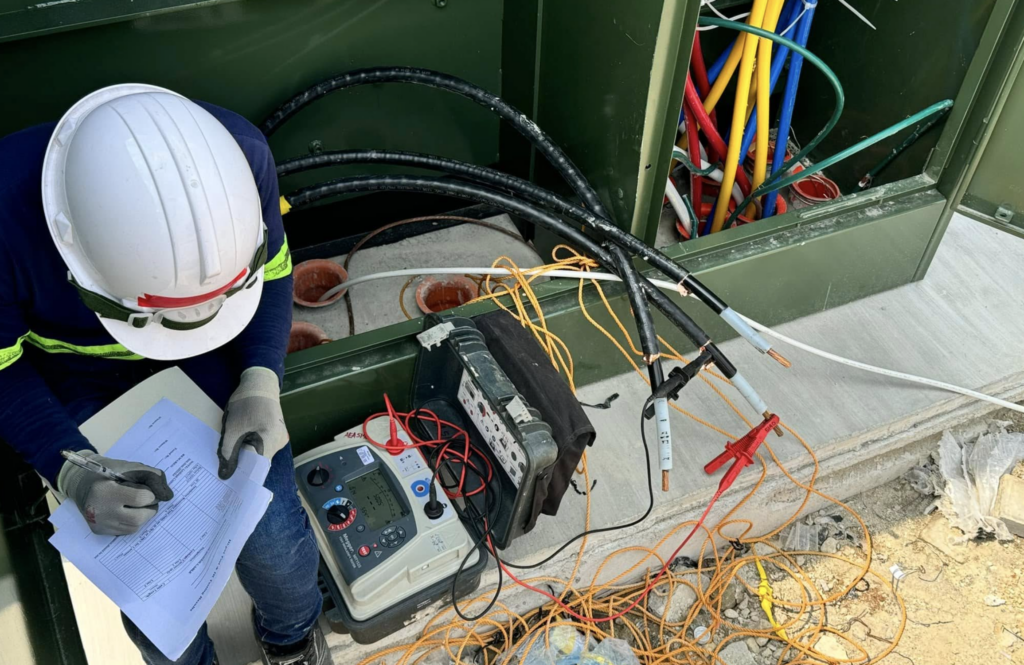
What Is a Power Factor Audit — and How Does It Differ from Other Assessments?
A power factor audit (also called a power quality survey or reactive power assessment) is a formal engineering evaluation of a facility’s electrical system that measures actual reactive power consumption at the billing meter, quantifies the financial impact of any power factor deficiency under the ERC-approved adjustment formula, characterizes the harmonic environment that governs correction equipment selection, and delivers an actionable corrective action plan with engineering specifications, cost estimates, and ROI projections — signed and sealed by a PRC-licensed Professional Electrical Engineer.
It is distinct from three other assessments that Philippine facility managers commonly encounter:
Power Factor Audit vs. DOE Energy Audit (RA 11285)
A DOE energy audit under RA 11285 is a comprehensive assessment of all energy end uses: lighting, HVAC, motors, process equipment, building envelope, compressed air systems, and reactive power. Power factor is typically one finding within a DOE energy audit, not its exclusive subject. A dedicated power factor audit measures reactive power with greater precision, performs harmonic spectrum analysis in greater depth, and produces a more detailed equipment specification than a full DOE energy audit generally provides. For Designated Establishments under RA 11285, a power factor audit finding should be formally incorporated into the facility’s Programmed Energy Management Program (PEMP). Full DOE audit guidance is available at: DOE Energy Audit Philippines: Industrial & Commercial Complete Guide 2026.
Power Factor Audit vs. MERALCO Power Quality Survey
MERALCO provides power quality measurement services to large customers. A MERALCO-conducted survey identifies voltage quality issues and provides basic power factor data — but it serves MERALCO’s grid management purposes, not the facility’s financial optimization. An independent power factor audit conducted by a licensed PEE provides analysis framed around the facility’s billing exposure, includes harmonic resonance calculations specific to the proposed correction system, and produces an engineering design basis that a MERALCO survey does not.
Power Factor Audit vs. Supplier “Free Assessment”
Many capacitor bank suppliers offer complimentary assessments as a pre-sales activity. These typically involve a brief site visit, a clamp meter reading during a single production shift, and a sizing recommendation produced the same day. This is not an audit. Single-point measurements cannot capture seasonal load variation, cannot characterize the harmonic environment adequately, and cannot identify overcorrection risk during light-load periods. Supplier assessments systematically overestimate required kVAR to maximize equipment sales, or underestimate harmonic complexity to avoid specifying the cost of detuned reactors. An independent audit conducted by a licensed PEE serves the facility’s interest — not the equipment supplier’s.
What a proper power factor audit covers:
- Measurement of kW, kVAR, kVA, and PF at the MERALCO billing meter across a complete 7-day production cycle using IEC 61000-4-30 Class A equipment
- Harmonic spectrum analysis — identification of dominant harmonic orders, magnitudes, and probable sources
- MERALCO billing impact quantification — exact monthly and annual penalty from the ERC-approved formula, cross-validated against historical billing data
- Resonance risk assessment — resonant frequency calculation between proposed correction system and facility source impedance
- Correction kVAR sizing from measured data (not nameplate estimates)
- Equipment specification: fixed capacitor bank, APFC panel, or detuned APFC with justified recommendation
- ROI analysis: correction investment range, monthly savings, payback period, 10- and 15-year net saving
- PEE-signed corrective action plan: permit pathway, installation sequence, commissioning requirements
Three-Agency Regulatory Framework for Power Factor Audits in the Philippines
Understanding which Philippine regulatory body governs your power factor situation — and what each requires — prevents compliance gaps, wasted audit scope, and permit submission failures.
| Regulatory Body | Primary Legal Instrument | Authority Over Power Factor Assessment | Enforcement Mechanism |
|---|---|---|---|
| Energy Regulatory Commission (ERC) | RA 9136 (EPIRA, 2001); ERC-approved MERALCO Distribution Tariff | Approves the PF billing adjustment clause in MERALCO’s rate schedules (0.85 lagging threshold; Adjusted Billing kW formula); the power factor audit quantifies what this clause is costing the facility each month | Penalty is self-executing — applied automatically by MERALCO’s billing system every period; no inspector visit, no warning letter, no hearing; the audit’s function is to quantify the loss and provide the engineering basis to stop it |
| Department of Energy (DOE) | RA 11285 (EEC Act, 2019); DOE DC 2020-07-0011 (PEMP Implementing Rules) | Designated Establishments (≥ 500,000 kWh/year) must conduct periodic energy audits by DOE-accredited energy auditors; reactive power / power factor assessment is a required component of a compliant DOE energy audit | DOE compliance orders; mandatory PEMP filing with implementation commitments; administrative penalties for Designated Establishments that fail to implement audit-identified measures within committed timelines |
| PRC / PEC / LGU | RA 7920 (New Electrical Engineering Law); PEC 2017 Art. 4.60; Local Government Code | Any corrective installation recommended by the audit (capacitor banks, APFC panels, detuned reactors) must be designed and certified by a PRC-licensed PEE; LGU electrical permit required before physical installation begins | LGU permit process; DOLE Permit to Operate Annex D inspection; RA 7920 administrative and criminal liability for unlicensed industrial electrical work |
The regulatory logic for Philippine facilities:
- GSD/LP accounts below 500,000 kWh/year: No DOE audit mandate. The audit is financially motivated — the ERC penalty is generating a real monthly loss. The audit quantifies the loss and provides the corrective action engineering basis.
- Designated Establishments (≥ 500,000 kWh/year): Audit is both financially motivated AND a DOE compliance requirement. A power factor audit conducted under DOE-certified Energy Auditor credentials satisfies the reactive power component of the RA 11285 audit mandate and supports the PEMP filing.
- Facilities approaching DOLE Permit to Operate renewal: If the audit recommends a new capacitor bank installation, that installation must be completed under LGU permit and PEE certification before the DOLE electrical safety inspection (Annex D). The audit finding triggers a compliance action, not just a financial recommendation.
Who Needs a Power Factor Audit — and When?
Immediately — financial and compliance case is clear:
- Any MERALCO GSD or LP account where the “Billing Power Factor” field on the monthly statement reads below 0.85 in any of the last 12 months
- Any facility that has been on a GSD or LP account for more than 2 years and has never conducted a power quality survey
- Designated Establishments under RA 11285 overdue on their DOE audit cycle — the power factor audit should be scoped into the full DOE audit
- Facilities whose existing capacitor bank is more than 5 years old with no maintenance performance measurement
Before any capital investment — the audit de-risks the decision:
- Facilities planning their first capacitor bank installation — the audit is the engineering sizing basis; installing correction equipment without measured kVAR data is an engineering error, not an engineering solution
- Facilities expanding production capacity (new lines, additional compressors, HVAC upgrades) — the new inductive load may push PF below the 0.85 threshold; an audit before commissioning the expansion establishes the baseline and sizes correction for the new load profile
- Facilities that have retrofitted VFDs on motors as part of an energy efficiency program — VFDs introduce harmonic currents that interact destructively with existing non-detuned capacitor banks; an audit post-VFD installation confirms whether existing correction equipment requires series reactors
Strongly recommended — early intervention is financially rational:
- Any industrial facility with monthly MERALCO demand charges exceeding ₱50,000 — at this scale, a 3-month delay in identifying and correcting a 0.78 PF condition costs ₱15,000–₱30,000 in avoidable penalties before an auditor is even engaged
- Commercial buildings exceeding 2,000 sqm GFA with central HVAC — chiller compressors, air handling unit motors, cooling towers, and elevator traction drives regularly push building PF below 0.85 during peak cooling months
- Facilities in industrial parks where a common distribution transformer serves multiple tenants — reactive current from one tenant’s uncorrected loads affects transformer loading and voltage quality for all tenants
Industries in Rizal Province and the Luzon corridor with consistent audit findings:
Plastics extrusion and injection moulding · Cold storage and refrigeration · Garment and textile manufacturing · Food processing and beverage production · Printing and packaging · Construction supply and hardware warehouses · Commercial malls with escalators and HVAC · Hospitals (medical imaging equipment, HVAC, laundry drives) · Data centers (UPS systems, precision cooling)
Technical Breakdown — Two Systems Every Auditor Must Master
System 1: Power Quality Measurement — Standards, Equipment, and Parameters
The engineering credibility of any power factor audit rests entirely on the quality of its measurement data. Philippine industrial facilities that accept sizing recommendations based on uncalibrated instruments, inadequate measurement duration, or incorrect meter placement are the same facilities that end up with correction systems that fail to move their billing power factor above 0.85 — despite the time and cost of installation.
The governing standard: IEC 61000-4-30 Class A
IEC 61000-4-30 is the international standard for power quality measurement methods. It defines two measurement accuracy classes:
- Class A: The highest accuracy class, specifically designed for measurements where contractual applications — including billing verification, power quality compliance testing, and engineering design basis — require the highest precision. Class A specifies 10-cycle aggregation intervals for 50 Hz systems, defined measurement uncertainty limits, and strict synchronization requirements.
- Class S: A lower-accuracy class appropriate for survey purposes and statistical power quality assessments where billing-grade precision is not required.
For power factor audits in Philippine industrial facilities — where the objective is to quantify the MERALCO billing impact and produce a validated engineering sizing basis — Class A measurement is mandatory, not optional and not negotiable. A Class S measurement cannot accurately replicate the 30-minute integrated demand and power factor values that MERALCO’s interval data meter records, because the aggregation method and measurement uncertainty do not match MERALCO’s metering standard. An audit report based on Class S measurement data contains a structural credibility gap: the measured billing PF and the actual MERALCO-billed PF may differ by a margin sufficient to invalidate the sizing recommendation and the projected ROI.
Required measurement parameters for a Philippine power factor audit:
| Parameter | Why It Is Critical for the PF Audit |
|---|---|
| Active power (kW) — 30-min integrated | Matches MERALCO billing interval; establishes the measured peak demand baseline that the billing adjustment formula acts upon |
| Reactive power (kVAR) — 30-min integrated | Primary sizing input for the capacitor bank; 7-day kVAR profile reveals peak reactive demand (sizing basis) and minimum reactive demand (overcorrection risk) |
| Apparent power (kVA) — 30-min integrated | Transformer and cable loading assessment; confirms whether transformer is being overloaded by reactive current |
| Power factor — per 30-min interval | Direct comparison to MERALCO billing PF; identifies which specific production conditions trigger the penalty and at what severity |
| Voltage THD (%) — per phase | Total harmonic distortion; PEC 2017 and IEEE 519-2022 limit is 5% at point of common coupling (PCC) |
| Current THD (%) — per phase | Quantifies harmonic current injection from facility loads into the grid; governs whether detuned reactors are required |
| Harmonic spectrum — to 50th order | Identifies the dominant harmonic orders and their magnitudes; the essential input for resonance risk calculation |
| Voltage magnitude — per phase | Confirms grid voltage is within permissible limits (380V ± 10% three-phase); needed to assess overcorrection-induced voltage rise risk |
| Voltage unbalance (%) | Identifies supply-side or facility-side phase imbalance that increases motor reactive demand and reduces motor efficiency |
| 30-min demand profile — full 7-day record | Captures production schedule, shift patterns, and low-load periods — the complete picture that a single-shift measurement cannot provide |
Minimum measurement duration: 7 continuous days (non-negotiable)
Seven days captures one complete production week — including weekday peak production shifts, evening or overnight reduced-load periods, and weekend or scheduled shutdown conditions. This duration is non-negotiable because:
MERALCO’s billing peak demand is the single highest 30-minute interval in the entire billing month. This peak typically occurs on a weekday during maximum production throughput. Measuring only during one representative shift may — and frequently does — miss the actual billing condition. The power factor at the billing peak interval is the billing PF for that month. A measurement that does not capture that interval produces a billing penalty estimate that is systematically understated.
Weekend and off-shift low-load conditions reveal overcorrection risk: if a fixed bank remains energized during a production shutdown, leading power factor is produced — which MERALCO penalizes identically to lagging low PF under the ERC-approved tariff. An undersized measurement period cannot identify this risk.
Measurement point: At the MERALCO billing meter CT secondaries
The power quality analyzer must be connected at the MERALCO interval data meter current transformer (CT) secondaries — or as close as technically possible to that point. Measuring at a downstream subdistribution board introduces metering error from loads served between the billing meter and the measurement point. For the audit to accurately predict post-correction billing PF, the measurement must replicate what MERALCO’s IDM is recording — because that IDM is the instrument on which the billing penalty calculation is based.
System 2: The 5-Step Power Factor Audit Framework — Overview
The ETCZ Corp power factor audit follows a structured five-step sequence. Each step builds on the findings of the previous step; omitting any step produces a technically incomplete assessment whose sizing recommendations carry unquantified engineering risk.
| Step | Name | Primary Activity | Key Deliverable |
|---|---|---|---|
| Step 1 | Preliminary Document Review and Billing Analysis | Collect 12 months of MERALCO bills; extract billing PF history; calculate monthly and annual penalty from billing data | Preliminary Billing Penalty Report — first written quantification of the financial loss |
| Step 2 | Site Walk-Through and Load Inventory | Physical facility inspection; identify all major inductive loads, existing correction equipment, harmonic sources, and billing meter location | Load Inventory Table — structured estimate of reactive power by load category; meter access confirmed |
| Step 3 | Class A Power Quality Measurement — 7-Day Continuous | Deploy IEC 61000-4-30 Class A analyzer at billing meter; record for 7+ days; capture kW, kVAR, PF, harmonic spectrum | Raw 7-day power quality dataset with measurement validity confirmation |
| Step 4 | Data Analysis, Harmonic Assessment, and Correction Sizing | Analyze kVAR profile; calculate billing penalty from measured data; assess harmonic environment; perform resonance calculation; size correction system | Technical Analysis Report — validated penalty figure, harmonic classification, resonance determination, sizing recommendation with justification |
| Step 5 | Formal Audit Report and Corrective Action Plan | Compile PEE-signed engineering report; prepare executive summary; deliver ROI analysis and implementation roadmap | Power Factor Audit Report (PEE-signed and sealed) — the primary deliverable, ready for DOE PEMP submission, LGU permit application, and management approval |
Specification and Reference Tables for Philippine Power Factor Audits
Table A — Power Factor Audit Measurement Parameters and Compliance Thresholds
| Parameter | Compliant Range | Philippine Reference | Required Audit Action When Limit Is Exceeded |
|---|---|---|---|
| Billing power factor | ≥ 0.85 lagging (no penalty); 0.92–0.95 target (credit range) | ERC-approved MERALCO GSD/LP rate schedules | Quantify monthly and annual penalty; recommend correction sized to reach 0.92–0.95 target |
| Voltage THD at PCC | ≤ 5.0% total | PEC 2017 / IEEE 519-2022 Table 1 | Flag for harmonic mitigation; passive detuned bank or active harmonic filter depending on severity |
| Individual voltage harmonic (any order) | ≤ 3.0% of fundamental | PEC 2017 / IEEE 519-2022 Table 1 | Identify harmonic source load; specify detuned reactors if capacitor bank is part of the corrective action |
| Current THD at PCC | ≤ 8.0% (for ISC/IL ≥ 20; verify per IEEE 519-2022 Table 2 for facility SCR) | IEEE 519-2022 Table 2 | Flag for harmonic study; assess impact on transformer and motor loading; determine whether detuned reactors or AHF is required |
| Voltage unbalance | ≤ 2.0% (NEMA MG1 motor operation limit) | PEC 2017 / NEMA MG1 | Notify MERALCO if supply-side; investigate facility load balance if facility-side; unbalance increases motor reactive demand |
| Transformer loading (demand ÷ transformer kVA) | ≤ 85% continuous | PEC 2017 transformer loading guidelines | Flag transformer overloading; distinguish real kW overload from apparent kVA overload caused by reactive current — correction may resolve apparent overload without transformer replacement |
| Displacement PF (fundamental component only) | ≥ 0.85 lagging | ERC tariff threshold (displacement component) | If displacement PF ≥ 0.85 but total PF < 0.85 due to harmonic distortion power, standard capacitor bank will not correct the deficiency — active harmonic filter is the appropriate recommendation |
Table B — Harmonic Order Reference Guide for Philippine 50 Hz Industrial Systems
| Harmonic Order | Frequency | Typical Philippine Industrial Source | Detuned Reactor Specification |
|---|---|---|---|
| 3rd | 150 Hz | Single-phase rectifier loads; unbalanced three-phase loading; magnetic fluorescent ballasts | 14% reactor (f_res ≈ 134 Hz) — required for 3rd harmonic dominant environments |
| 5th | 250 Hz | Three-phase VFDs (six-pulse — the dominant harmonic source in Philippine industry); industrial UPS systems; three-phase rectifiers | 7% reactor (f_res ≈ 189 Hz) — the standard Philippine industrial specification; protects against 5th harmonic and above |
| 7th | 350 Hz | Three-phase VFDs (six-pulse); large motor soft starters | 7% reactor provides adequate protection |
| 11th | 550 Hz | 12-pulse rectifier drives; large industrial DC drives | Standard 7% detuning adequate; verify with resonance calculation |
| 13th | 650 Hz | 12-pulse rectifier drives | Standard 7% detuning adequate |
| 17th–50th | 850–2,500 Hz | High-frequency switching power supplies; high-speed drives; modern EV chargers | Passive detuning insufficient; active harmonic filter (AHF) required if these orders dominate |
The 5-Step Power Factor Audit — Detailed Process Guide
What follows is the step-by-step process for conducting a professional power factor audit in a Philippine industrial facility — the specific actions, responsible parties, tools, timing, and deliverables at each stage.
Step 1: Preliminary Document Collection and Billing Analysis
(Duration: 2–3 business days)
Before deploying any field equipment, the auditor collects and reviews existing documentation to define the scope and establish the financial baseline.
Documents required:
(a) 12 consecutive months of MERALCO billing statements — the actual printed bills or official PDF statements, not payment confirmation emails; the billing power factor and demand calculation section must be legible; (b) existing facility single-line electrical diagram (as-built, if available — even outdated diagrams help locate the billing meter, existing capacitor banks, and major load distribution); (c) equipment schedule: all motors (kW rating, quantity, operating duty), HVAC equipment (kW, type), air compressors, VFDs, welding machines, UPS systems, transformers (kVA, location); (d) any previous power quality reports, capacitor bank installation records, or MERALCO correspondence.
Billing penalty analysis:
For each of the 12 billing months, extract and tabulate: measured peak demand (kW) and billing demand (kW) as printed on each bill; billing power factor field value; applicable demand tariff rate (₱/kW); calculated adjustment factor (billing kW ÷ measured kW); monthly penalty cost (adjustment difference × tariff rate). Sum 12 months to produce the annual penalty figure. Calculate the average monthly penalty and identify the months with the highest and lowest penalty — seasonal variation identifies which production period represents the true billing peak.
Deliverable:
Preliminary Billing Penalty Analysis — a one- to two-page table summarizing 12 months of billing PF, monthly penalty calculation, and total annual overpayment. This document is the first formal quantification of the financial loss and is typically sufficient to secure management approval to proceed with the full field audit.
Step 2: Site Walk-Through and Load Inventory
(Duration: Half day to full day on site)
A physical inspection of all production areas, mechanical rooms, and electrical rooms — conducted with the plant engineer or maintenance supervisor present.
Inspection objectives:
For each major load category, record: equipment description; quantity; rated kW or kVA; nominal operating power factor (from nameplate or manufacturer specification); operating schedule (continuous, intermittent, shift-based, seasonal); estimated load factor during normal production.
Specifically identify and document: (a) all existing capacitor banks — rated kVAR, estimated age, switching type (fixed or APFC), operational status (energized or tripped), and any maintenance history; (b) all VFDs and variable speed drives — brand, rated kW, installation year; these are the primary harmonic current sources in modern Philippine industrial facilities; (c) welding equipment, induction heaters, arc furnaces; (d) UPS systems and battery charger banks; (e) generator sets and automatic transfer switches — these must be noted because generator operation during the measurement period introduces significant PF distortion.
Billing meter inspection:
Locate the MERALCO interval data meter and its current transformer (CT) enclosure. Confirm physical access for installing power quality analyzer CT clamps. Record the CT ratio — typically printed on the CT enclosure nameplate or in the MERALCO metering diagram; the CT ratio is required to correctly scale the analyzer’s current measurement. Confirm phase rotation and meter orientation.
Deliverable:
Load Inventory Table — a structured listing of all major loads with estimated reactive power contribution, calculated as: kVAR_estimated = kW_rated × (sin(arccos(PF_nameplate)) ÷ PF_nameplate) × load factor. This estimate cross-checks the Step 3 measurement data for gross errors but is not used as the correction sizing basis.
Step 3: Class A Power Quality Measurement — 7-Day Continuous Deployment
(Duration: 7–10 days on site)
Analyzer installation:
Install the IEC 61000-4-30 Class A power quality analyzer at the MERALCO billing meter CT secondaries. Use CT clamps rated for the meter’s CT secondary current — standard MERALCO CT secondaries are 5A or 1A; confirm before selecting clamp size. Connect voltage sensing leads to the secondary terminals of the MERALCO voltage transformer (VT), or directly to the main bus bars upstream of the primary circuit breaker when no VT is installed. Confirm three-phase connection (phases A, B, C) with correct phase rotation sequence. Verify CT polarity with a current direction check before leaving the analyzer on site — incorrect CT polarity reverses the sign of measured kVAR and produces spuriously leading power factor readings that invalidate the entire dataset.
Analyzer configuration:
Set demand aggregation interval to 30 minutes — this matches MERALCO’s billing integration period exactly. Configure harmonic recording to capture per-order spectrum up to at least the 50th harmonic (2,500 Hz for a 50 Hz system) with 10-cycle resolution. Enable continuous kW, kVAR, kVA, and PF recording. Enable waveform capture on transient events (threshold: voltage exceeding 110% or dropping below 85% of nominal, or current transient exceeding 150% of nominal, sustained for ≥ 1 cycle). Synchronize analyzer clock to UTC+8 (Philippine Standard Time) via GPS or network time protocol — time synchronization accuracy is required for billing period correlation.
7-day monitoring period:
Leave the analyzer installed for a minimum of 7 continuous days covering one complete production week — Monday through Sunday. Brief the plant manager and maintenance supervisor: do not power off the analyzer, do not disturb the CT clamps, and maintain a site logbook recording any significant production events during the measurement period: equipment startups or shutdowns outside the normal schedule, emergency outages, new equipment commissioning, generator transfers, and scheduled production changes. The site logbook allows the measured PF profile to be correlated with specific operating conditions — identifying which production states produce the worst power factor at the billing meter.
Optional mid-period verification (Day 4):
Perform a brief in-person or remote check to confirm the analyzer is recording without errors. Review preliminary data for obvious CT connection issues — asymmetric per-phase current readings (which may indicate a polarity error or open CT), or kVAR values with an unexpected sign during known inductive production periods.
Deliverable:
Raw 7-day power quality dataset — CSV or proprietary binary data file from the analyzer, provided to the client as a project deliverable. Measurement validity confirmation: ≥ 95% of the 7-day period must be gap-free, with no single data gap exceeding 2 continuous hours; gaps longer than 2 hours require an extension of the measurement period.
Step 4: Data Analysis, Harmonic Assessment, and Correction Sizing
(Duration: 5–7 business days)
Power factor and demand analysis:
Import the 7-day dataset into power quality analysis software. Generate 30-minute kW, kVAR, and PF trend charts for the full 7-day period. Identify: the single 30-minute interval with the highest integrated kW demand — this is the billing demand interval, since MERALCO’s billing system uses the same interval-maximum methodology; the power factor recorded at that specific interval — this is the billing PF; the production conditions during that peak interval, from the site logbook; daily minimum, maximum, and average PF; weekend and off-shift PF (to assess overcorrection risk for any fixed or slow-response correction system).
Cross-validation against MERALCO billing: multiply the measured peak demand by the calculated adjustment factor (0.85 ÷ measured billing PF) and compare to the MERALCO-billed demand for the most recent billing period. Agreement within 5% confirms measurement validity; discrepancies greater than 5% require investigation of CT ratio settings, measurement point position, or billing period boundary alignment before the analysis proceeds.
Harmonic analysis:
Extract voltage and current THD per phase. Generate harmonic bar charts showing per-order magnitude as a percentage of the fundamental for both voltage and current. Identify dominant harmonic orders. Flag any harmonic component exceeding: 3% of the fundamental for voltage (PEC 2017 individual harmonic limit); harmonic current limits per IEEE 519-2022 Table 2 for the facility’s short-circuit ratio (ISC/IL). Classify the harmonic environment:
- Mild: Voltage THD < 5%; no individual harmonic > 2% of fundamental
- Moderate: Voltage THD 5–10%; dominant 5th or 7th harmonic present at 3–8% of fundamental
- Severe: Voltage THD > 10%; multiple harmonic orders present above 5% of fundamental
Identify probable harmonic sources from the measured spectral signature: 5th and 7th harmonic dominance is the characteristic signature of six-pulse VFDs and industrial rectifiers — by far the most common harmonic pattern in Philippine manufacturing facilities.
Resonance risk calculation:
Using the proposed correction kVAR from the preliminary sizing and the facility transformer kVA, calculate:
f_res = 50 Hz × √(Transformer kVA ÷ Proposed Correction kVAR)
If f_res falls within ±15% of any harmonic order present at greater than 2% of the fundamental in the measured spectrum, detuned reactors are required in the capacitor bank specification — no exceptions. Document the reactor tuning factor: 7% for 5th harmonic dominant (f_res ≈ 189 Hz); 14% for 3rd harmonic dominant or severe mixed-harmonic environments.
Correction sizing:
From the 7-day kVAR profile: (a) identify peak kVAR demand at the billing peak demand interval — this is the design basis for maximum correction capacity; (b) identify minimum kVAR demand during off-shift or weekend low-load periods — this governs the minimum step size to prevent overcorrection; (c) calculate the kVAR required to bring PF from the measured billing PF to the target of 0.93 at peak demand; (d) select APFC panel stages — individual stage size should not exceed 15% of transformer kVA to limit per-step bus voltage variation; (e) confirm that total installed kVAR at full bank output does not exceed 80% of transformer kVA, to prevent leading PF overcorrection if all stages happen to be switched on simultaneously during a sudden production shutdown.
Deliverable:
Technical Analysis Report (internal working document, incorporated into the formal audit report) — 7-day measured data summary tables, PF trend charts, harmonic analysis findings, resonance calculation with detuned reactor determination, correction kVAR sizing with stage configuration.
Step 5: Formal Power Factor Audit Report and Corrective Action Plan
(Duration: 5–8 business days for report preparation and review)
The formal Power Factor Audit Report is the primary professional deliverable — an engineering document signed and sealed by the PRC-licensed Professional Electrical Engineer of record. It is structured for three audiences simultaneously: the facility’s technical team (engineering content); the facility’s management or CFO (executive summary and financial analysis); and regulatory bodies (DOE PEMP submission, LGU permit application, DOLE inspection records).
The complete report contains the following sections:
1. Executive Summary (1 page): Billing power factor finding; monthly and annual penalty; recommended correction system type and size; estimated investment range; payback period; 15-year net saving — all in plain-language bullet points written for a non-technical executive audience.
2. Scope and Methodology (1–2 pages): Facility description; audit scope; measurement standard (IEC 61000-4-30 Class A); analyzer make, model, and calibration certificate; measurement period; measurement point; CT ratio confirmation; cross-validation methodology and results.
3. Power Factor Performance Findings (2–3 pages): 7-day PF trend chart; 30-minute demand profile; identification of billing peak interval and associated billing PF; comparison to the 0.85 ERC threshold and the 0.92–0.95 credit target; seasonal and operational PF patterns.
4. Billing Penalty Quantification (1–2 pages): Applied ERC-approved adjustment formula; measured monthly penalty calculation; 12-month billing history penalty summary; total cumulative overpayment estimate for the years the facility has been operating below 0.85 (where billing history data supports this calculation).
5. Harmonic Analysis Findings (2 pages): Per-phase voltage and current THD values; per-order harmonic bar charts; harmonic classification (mild / moderate / severe); identification of probable harmonic sources from spectral signature; compliance assessment against PEC 2017 and IEEE 519-2022 limits.
6. Resonance Risk Assessment (1 page): Resonant frequency calculation with all inputs shown; detuned reactor determination (required / not required, with engineering justification); recommended tuning factor if reactors are required.
7. Correction Sizing and Equipment Specification (2–3 pages): Required correction kVAR; recommended equipment type (fixed / APFC / detuned APFC) with full engineering justification; number of stages and stage sizes; contactor duty rating (AC6b confirmed); minimum capacitor voltage rating (440V); enclosure IP rating; APFC controller setpoint recommendation (0.92–0.95 with deadband specification); capacitor feeder cable sizing (135% of rated capacitor current per PEC 2017 Art. 4.60.4).
8. Financial Analysis (1–2 pages): Estimated correction investment range (supply, installation, permit, commissioning); calculated monthly and annual savings after correction; simple payback calculation; 10-year and 15-year net saving; sensitivity analysis at low-case and high-case demand tariff rates.
9. Corrective Action Plan (1 page): Recommended implementation sequence; LGU electrical permit application requirements; PEE certification scope; equipment procurement lead time estimate; installation and commissioning schedule.
10. PEE Certification Page: Signed, sealed, and dated by the PRC-licensed Professional Electrical Engineer of record — the legal certification that makes this audit report a credible professional engineering document acceptable to DOE, LGU Building Officials, and DOLE inspectors.
Pre-Audit Preparation Checklist
Complete these items before the auditor arrives on site. Thorough preparation reduces audit duration, improves data quality, and prevents scheduling delays.
☐ 12 months of MERALCO billing statements collected — actual bills or official PDF statements, not payment confirmations; billing PF field must be visible
☐ “Billing Power Factor” field read and noted for each of the 12 billing months — confirm which months show PF below 0.85
☐ MERALCO interval data requested from MERALCO Business Center for the most recent 3 billing periods (optional but recommended — enables billing cross-validation in Step 4)
☐ Facility single-line electrical diagram located and copied for auditor (as-built preferred; design drawings acceptable if no as-built is available)
☐ Equipment list prepared: motors (kW, quantity, duty cycle, VFD or direct-on-line), HVAC units (kW, type), compressors, welding machines, UPS systems, transformers (kVA, location)
☐ Existing capacitor bank documentation located: rated kVAR, installation year, brand, last maintenance date, current operational status (energized / tripped)
☐ Plant engineer or maintenance supervisor designated as on-site contact for walk-through and site logbook maintenance during measurement period
☐ MERALCO billing meter location confirmed — physical access to CT enclosure verified
☐ MERALCO CT ratio confirmed (from metering diagram or CT nameplate label) — required for analyzer current scaling configuration
☐ Production schedule for the 7-day measurement period provided to auditor — including any planned shutdowns, overtime, holiday schedules, or equipment commissioning activities
☐ Site logbook prepared for facility personnel to record production events during the 7-day measurement period (timestamps, equipment startups/shutdowns, outages)
☐ Generator test runs scheduled OUTSIDE the 7-day measurement period, or flagged in site logbook with precise start and stop timestamps if unavoidable
☐ Any scheduled MERALCO supply interruptions communicated to auditor — gaps exceeding 2 hours may require measurement period extension
☐ Safety clearance obtained for auditor access to billing meter room, main distribution board room, and CT enclosure
☐ Management briefed on audit timeline — 3 to 4 weeks from site walk-through to report delivery; billing penalty financial case pre-communicated to CFO or finance team
Top 10 Power Factor Audit Findings in Philippine Industrial Facilities
These findings are documented from ETCZ Corp power factor audits conducted across Rizal Province and Metro Manila. Frequency ratings reflect the proportion of audited facilities where each finding was observed.
| # | Audit Finding | Frequency | Typical Impact |
|---|---|---|---|
| 1 | Billing PF persistently below 0.80 — facility unaware — facility has operated a GSD/LP account for 3–10+ years without correction; management assumed the billing demand figure was normal | ★★★★★ Very Common | Annual overpayment of ₱300,000–₱3,000,000 depending on scale; cumulative loss typically exceeds correction investment by 5–20× before the audit is commissioned |
| 2 | Existing capacitor bank undersized — bank was specified from transformer nameplate or visual estimate; measured peak kVAR exceeds bank capacity during production peak | ★★★★☆ Common | PF improved to 0.80–0.84 but remains below the 0.85 threshold; full penalty continues; facility manager believes the correction was done correctly and does not investigate further |
| 3 | APFC controller setpoint error — target PF set to 0.99 or 1.00; bank overcorrects to leading PF during off-peak and weekend periods | ★★★★☆ Common | Leading PF triggers identical MERALCO billing adjustment; some billing months show penalty for overcorrection even when production-period correction is working; voltage rises above acceptable limits during low-load periods |
| 4 | VFDs present — no detuned reactors in existing capacitor bank — facility has retrofitted VFDs on motors; existing capacitor bank has no series reactors | ★★★★☆ Common | Harmonic resonance between capacitors and VFD-generated 5th harmonic; capacitors run at elevated temperature; capacitor service life shortened to 3–5 years instead of the rated 15–20 years; risk of harmonic amplification event |
| 5 | Capacitor bank tripped and not reset by maintenance — aging bank suffered a fault, was switched off, and was never returned to service; facility PF degraded to uncorrected baseline | ★★★★☆ Common | Full penalty resumed from the date of the trip; in many cases the bank had been out of service for 6–18 months before the audit identified the cause of renewed billing penalty |
| 6 | Strong seasonal PF variation — system undersized for peak season — billing PF is compliant at 0.87–0.90 in cool months but falls to 0.76–0.80 during summer months when HVAC reactive demand peaks | ★★★☆☆ Occasional | Correction system sized for average conditions is inadequate during March–May HVAC peak; annual billing penalty is concentrated in 3–4 summer months and often overlooked in the annual average |
| 7 | Three-phase voltage unbalance exceeding 2% — either MERALCO supply imbalance or facility single-phase load concentration causing uneven motor loading | ★★★☆☆ Occasional | Increased motor reactive demand per kW of output; accelerated motor winding degradation; correction system must be sized for the unbalanced reactive demand profile, not the balanced equivalent |
| 8 | Voltage THD exceeding PEC 2017 limits — facility THD above 5% total at the point of common coupling, driven by VFD harmonics or nonlinear loads | ★★★☆☆ Occasional | Potential MERALCO notification regarding grid harmonic injection; transformer and motor overheating from harmonic losses; misoperation of sensitive electronic controls; active harmonic filter (AHF) may be required in addition to standard PF correction |
| 9 | Capacitor bank connection point is downstream of billing meter — bank is installed at a remote subdistribution board; reactive current from loads between the billing meter and the bank is not compensated at the MERALCO meter | ★★★☆☆ Occasional | MERALCO billing PF partially improved but remains below 0.85; penalty continues; the bank must be relocated or supplemented with an additional bank connected directly at the billing meter MDB |
| 10 | Billing demand consistently and significantly higher than operational expectation — facility manager noticed an unexplained demand discrepancy over months and assumed MERALCO billing error; no formal investigation | ★★☆☆☆ Less Common | In every ETCZ Corp audit where this was the presenting concern, the discrepancy was entirely explained by the power factor adjustment formula; once the arithmetic was shown, management approved the correction project at the same meeting |
Budget Reference — Power Factor Audit Cost vs. Ongoing Penalty Cost
Indicative 2026 Philippine market rates. Actual costs vary by facility size, audit scope, and report complexity.
| Audit Type | Scope | Indicative Cost | Typical Turnaround |
|---|---|---|---|
| Preliminary Billing Analysis Only | 12-month billing review; penalty calculation; preliminary sizing estimate. No field measurement deployed. | ₱0–₱5,000 (some firms offer as a pre-qualification step at no charge) | 2–3 business days |
| Standard Power Factor Audit | Full 7-day Class A measurement; harmonic analysis; correction sizing; ROI report; PEE-signed formal report | ₱15,000–₱35,000 | 3–4 weeks from site walk-through |
| Power Factor Audit + DOE RA 11285 Energy Audit (combined scope) | PF audit scope integrated into full DOE energy audit covering lighting, HVAC, motors, envelope, compressed air — all systems | ₱65,000–₱160,000 depending on facility scale | 6–10 weeks |
| Post-Correction Verification Audit | 7-day Class A re-measurement after capacitor bank installation; billing PF confirmation; formal verification report | ₱8,000–₱18,000 | 2–3 weeks |
| Annual PF Performance Monitoring | Annual 3-day measurement to confirm ongoing correction performance; capacitor bank capacitance check; APFC controller verification | ₱10,000–₱22,000 per year | Recurring |
Financial reality — the cost of the audit relative to the penalty being paid:
For a medium industrial facility paying ₱40,000/month in power factor penalties:
- Standard audit cost: ₱25,000
- Monthly penalty amount: ₱40,000
- The audit cost equals 18 days of ongoing monthly penalty
- Delaying the audit by one additional month costs more than the audit itself
For a large LP account paying ₱150,000/month in penalties:
- Audit cost: ₱35,000
- The audit cost equals less than 8 days of ongoing penalty
- Every week of delay in commissioning the audit costs the facility ₱37,500
For facilities that have been paying a penalty for years before discovering it, the audit also produces a quantified historical loss figure. For one ETCZ Corp client — a cold storage operator in Antipolo City — the historical penalty figure from 7 years of sub-0.85 power factor exceeded ₱3.8 million. The audit cost was ₱28,000. The correction investment was ₱380,000. The combined audit-plus-correction cost was recovered in 3.1 months of eliminated penalty. The 15-year net saving projection exceeded ₱26 million.
The power factor audit is not an expense. It is the lowest-cost engineering action a Philippine industrial facility can take — because it either confirms no penalty exists (eliminating the need for a correction system), or it quantifies a loss far exceeding the audit cost and provides the complete engineering roadmap to stop it permanently.
10 Insider Tips for Power Factor Audits in the Philippines
Tip #1: Read Your Last 12 Bills Before Calling Anyone
The single most powerful first step is a 20-minute review of 12 months of MERALCO billing statements. Find the “Billing Power Factor” field on each bill. If that field shows any value below 0.85 in any month, you have a confirmed, active power factor penalty. You can calculate the approximate monthly penalty yourself: subtract the measured peak demand from the billing demand (both are printed on GSD/LP bills), then multiply the difference by the demand tariff rate. This calculation takes 5 minutes and gives you a financial case before you spend anything on engineering services. Do this first. Always.
Tip #2: Request Your MERALCO Interval Data Before Deploying Field Equipment
GSD and LP account holders can request 30-minute interval data from MERALCO’s Business Center — this is the same data MERALCO’s billing system uses to calculate your demand and power factor. For facilities with stable, predictable loads, a PRC-licensed PEE can analyze 3 months of this interval data and produce a preliminary sizing recommendation that reduces or eliminates the need for a 7-day field measurement deployment. Request the interval data for the most recent 3 billing periods the moment you decide to investigate your power factor situation. It costs nothing, it is your data, and it can accelerate the audit timeline by 1 to 2 weeks.
Tip #3: A Two-Hour Measurement Is Not an Audit
If a supplier or contractor offers a free power factor assessment based on a 2- to 3-hour site visit with a handheld clamp meter, politely decline as a sizing basis. A 2-hour reading cannot capture load variation across shifts, cannot identify seasonal PF patterns, cannot characterize the harmonic environment, and frequently misses the actual billing peak demand interval by hours. The measurement result from a 2-hour visit is a snapshot of one production moment — it is not an engineering basis for a ₱150,000–₱600,000 capital investment. A professional power factor audit requires 7 continuous days of Class A measurement. There is no valid shortcut.
Tip #4: Schedule Your Audit During Your Peak Production Season
The measurement period must cover your most demanding production conditions — not the most convenient week for scheduling. If your facility runs maximum throughput from October through December, schedule the audit in those months. If your peak HVAC load occurs from March through May, measure during summer. A 7-day measurement taken during a slow period or partial shutdown systematically underestimates peak kVAR demand and produces an undersized correction recommendation. The billing penalty is also worst during your peak season — measuring during that period captures both the problem and the solution at their most significant scale.
Tip #5: Always Include the Maintenance Supervisor in the Site Walk-Through
The maintenance supervisor knows things that do not appear in any documentation: the capacitor bank that tripped 10 months ago and was never reset; the motor that was replaced with a different kW rating; the new VFD installed on the compressor last quarter without updating the electrical drawings; the generator that runs every Tuesday morning for a test and distorts the power factor readings for 20 minutes. All of this information is essential to the audit’s accuracy and to the interpretation of the 7-day measurement data. Include the maintenance supervisor in the walk-through, not just the plant manager.
Tip #6: Demand the Raw Measurement Data — Not Just the Final Report
A reputable audit firm provides the raw CSV or binary data file from the power quality analyzer as a formal project deliverable, alongside the engineered report. This raw data file is your asset. It enables independent verification of the audit findings, serves as contemporaneous evidence in any billing dispute with MERALCO, and provides the historical baseline against which post-correction measurements are compared. If an audit firm declines to provide the raw data — offering only a summary or chart — ask why. You paid for the measurement. The data belongs to you.
Tip #7: Ask the Auditor to Identify Harmonic Sources — Not Just Harmonic Levels
A basic power quality report states: “Voltage THD is 8.2%, exceeding the PEC 2017 limit of 5%.” A professional power factor audit goes further: the 5th and 7th harmonic dominance with characteristic six-pulse sidebands identifies the source as VFD-controlled motors; the location of those motors (Production Line 2 conveyor drives) is documented; and the implication for correction equipment selection (7% detuned reactors mandatory on all capacitor stages) is explicit in the specification. Harmonic source identification is what transforms a measurement into an engineering recommendation. Insist on it.
Tip #8: Verify Both PEE License and DOE Auditor Accreditation Before Signing an Engagement
Two credentials matter for a Philippine power factor audit. For all facilities: the report must be signed and sealed by a PRC-licensed Professional Electrical Engineer (PEE). Verify the PEE’s license status and current annual registration via the PRC online verification portal (prc.gov.ph) — use the license number, not just the printed name. For Designated Establishments under RA 11285: the auditor conducting the energy audit component must hold DOE accreditation as an energy auditor — verify with the DOE Energy Efficiency and Conservation Bureau (EECB). Both credentials are non-negotiable for regulatory purposes. An audit report signed by an REE or CME, or by a non-DOE-accredited technician, has no standing with an LGU Building Official or DOE evaluator.
Tip #9: Use the Audit Report as Your Board-Level Financial Justification Document
The formal Power Factor Audit Report — with its quantified monthly penalty, 12-month billing history, correction investment estimate, and payback calculation — is a ready-made capital expenditure justification for management approval. For facilities where the correction investment requires board or CFO sign-off, the audit report eliminates the need for internal advocacy: it is an independent, PEE-signed engineering document that quantifies both the ongoing loss and the return on eliminating it. Request that the audit report include a standalone one-page Executive Summary written for a non-technical audience — this is the document you present to your CFO on the same day the full report is received.
Tip #10: Begin the Correction Project the Day You Receive the Report — Not After Review Is Complete
A common and costly delay pattern: the audit report is delivered; management reviews the findings; the correction investment is approved in principle; then nothing happens for 8–12 weeks while procurement processes, contractor selection panels, and budget approval cycles proceed. Every additional month of delay is another full month of penalty — at whatever rate the audit documented. The audit report contains the complete engineering specification for the correction system, the LGU permit requirements, and the corrective action plan. The day you receive the report, initiate three actions in parallel: (1) begin the LGU electrical permit application; (2) request equipment quotations from at least two suppliers using the audit’s PEE-stamped specification; (3) engage a PEE-led contractor to confirm implementation scope and timeline. These three actions proceed simultaneously and save 4–8 weeks of elapsed project time.
ETCZ Corp — Power Factor Audits That Pay for Themselves Before the Report Is Filed
You do not need to guess whether your facility is paying a power factor penalty. You need a measurement, a harmonic analysis, and a written engineering report from a licensed professional who knows precisely how MERALCO’s billing system calculates the adjustment and what it requires to make it stop.
ETCZ Corp conducts professional power factor audits for industrial and commercial facilities across Rizal Province, Metro Manila, and all of Luzon. Our audit reports are signed and sealed by PRC-licensed Professional Electrical Engineers, formatted for DOE PEMP submission, accepted by LGU Building Officials for permit applications, and built around IEC 61000-4-30 Class A measurement data — because measurement quality is the foundation that makes every subsequent engineering recommendation defensible.
Why the ETCZ Corp Power Factor Audit Is Different:
🔴 PRC-Licensed Professional Electrical Engineers (PEEs) — Every audit report is signed and sealed. We meet the RA 7920 standard for industrial electrical engineering work. Our reports are accepted without revision by LGU Building Officials and DOE evaluators.
🔴 DOE-Certified Energy Auditor — For Designated Establishments under RA 11285, our power factor audit satisfies the reactive power component of the mandatory DOE energy audit. Findings are formatted for direct integration into your PEMP filing.
🔴 Former MERALCO Rizal Province Inspector (10 years) — We understand exactly how MERALCO’s IDM meters record demand and power factor, how the billing system applies the ERC-approved adjustment formula, and how to distinguish a metering anomaly from a genuine reactive power deficiency. Our billing penalty calculations are consistently validated by the MERALCO billing statement that follows commissioning.
🔴 Certified Master Electrician + IIEE Members — Qualified site supervision; current on PEC 2017 amendments and Philippine grid standards.
What Every ETCZ Corp Power Factor Audit Delivers:
✅ 7-day IEC 61000-4-30 Class A continuous measurement at MERALCO billing meter
✅ 12-month billing penalty quantification — your exact monthly overpayment in writing, cross-validated against MERALCO billing data
✅ Harmonic spectrum analysis — dominant harmonic identification, source attribution, and detuned reactor determination
✅ Resonance risk calculation — mathematical confirmation of whether series reactors are required for your proposed correction system
✅ Correction kVAR sizing based on measured data (not nameplate estimates)
✅ Equipment specification: type, stages, contactor rating, capacitor voltage class, enclosure IP, APFC setpoint
✅ ROI analysis: payback period, 10-year and 15-year net saving, sensitivity analysis
✅ PEE-signed and sealed formal audit report — accepted by DOE, LGU, DOLE, and management
✅ Raw measurement dataset provided to client as a project deliverable
✅ Corrective action plan: implementation sequence, permit pathway, procurement timeline
📍 Primary Service Area: Antipolo City · Cainta · Taytay · Angono · Binangonan · Morong · Teresa · Rizal Province
📍 Extended Service Area: Pasig · Mandaluyong · Marikina · Taguig · BGC · Makati · Quezon City · Metro Manila | All of Luzon
📞 Contact ETCZ Corp today for a free preliminary billing analysis. Send us your last 3 MERALCO billing statements. We will calculate your power factor penalty and tell you — in writing, at no charge — whether the financial case justifies a full audit. In our experience, the answer is almost always yes.

Energy Audit Frequently Asked Questions
A power factor audit is a focused engineering assessment of a facility’s reactive power consumption — designed to measure actual power factor at the MERALCO billing meter, quantify the ERC-approved billing penalty being incurred, analyze the harmonic environment that governs correction equipment selection, and produce a PEE-signed specification for corrective equipment with ROI analysis. A DOE energy audit under RA 11285 is a broader assessment covering all energy end uses — lighting, HVAC, motors, building envelope, compressed air — with reactive power addressed as one component within a larger multi-system report. A dedicated power factor audit provides significantly greater technical depth on reactive power than a full DOE energy audit typically includes: 7-day Class A measurement, per-order harmonic spectrum analysis, and resonance risk calculation are audit-specific deliverables that a standard DOE audit scope may not encompass. For Designated Establishments under RA 11285, the power factor audit findings can be formally incorporated into the full DOE energy audit report to satisfy the reactive power component of the PEMP requirement.
A standard professional power factor audit for a Philippine industrial facility takes 3 to 4 weeks from initial site engagement to formal report delivery: 2–3 days for preliminary document collection and site walk-through; 7 continuous days for Class A power quality measurement; 5–7 business days for data analysis, harmonic assessment, sizing calculations, and report preparation. The indicative cost for a standard audit (7-day Class A measurement, harmonic analysis, correction sizing, PEE-signed formal report) ranges from ₱15,000 to ₱35,000 depending on facility complexity. For context: a medium industrial facility paying ₱40,000/month in power factor penalties recovers the entire audit cost in less than one additional billing cycle of delay. Commissioning the audit one month later than necessary costs more than the audit itself — every month.
A formal power factor audit report that will serve as the engineering basis for installing correction equipment — and that will be submitted for LGU electrical permit, DOLE inspection, or DOE PEMP compliance — must be signed and sealed by a PRC-licensed Professional Electrical Engineer (PEE) under RA 7920 (New Electrical Engineering Law of the Philippines). A Certified Master Electrician (CME) and a Registered Electrical Engineer (REE) are not authorized to sign or seal industrial electrical engineering documents of this scope. A report signed by either — without a PEE’s seal — will be rejected by an LGU Building Official in the permit application process and by a DOE evaluator in the PEMP review. Verify any prospective auditor’s PEE license status through the PRC online verification portal (prc.gov.ph) using their license number before engaging. For Designated Establishments under RA 11285, additionally verify DOE Energy Auditor accreditation through the DOE Energy Efficiency and Conservation Bureau.
Yes — if any of the following applies, a power factor audit is recommended regardless of whether a capacitor bank is already installed: (1) Your MERALCO billing statements show billing power factor below 0.85 in any recent month despite the bank being in operation — this confirms the existing bank is undersized, incorrectly connected, or has an APFC controller configuration error; (2) VFDs or variable speed drives have been added to the facility since the bank was installed — the changed harmonic environment may require detuned reactors on the existing bank; (3) Production capacity has expanded significantly — new inductive loads may exceed the existing bank’s kVAR capacity; (4) The bank is more than 8 years old with no performance verification — capacitance degradation of 20–35% from nominal is common by this age, reducing effective kVAR output below the correction target. An annual or post-major-change power factor audit is the professional maintenance standard for facilities where the correction system represents ₱150,000 or more in equipment investment.
Gallery

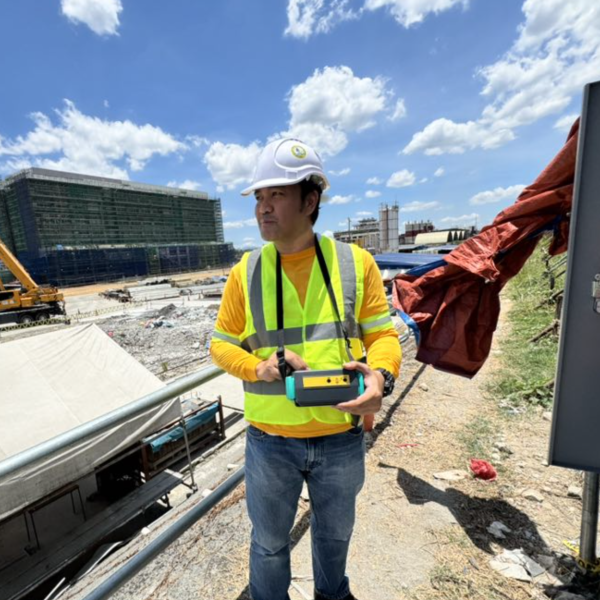


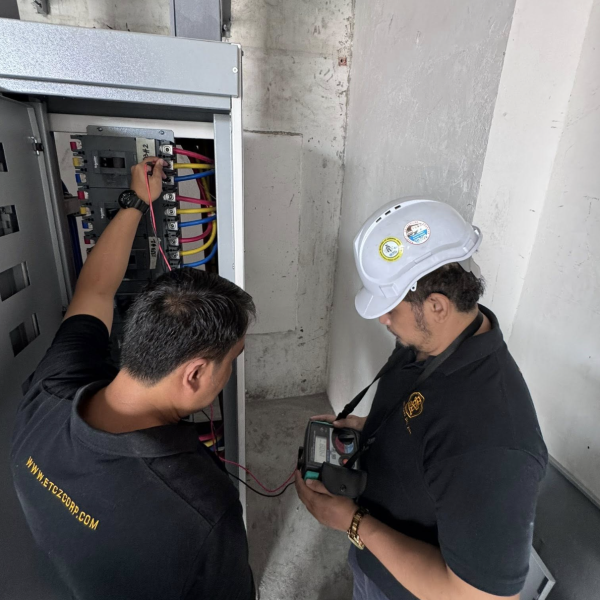
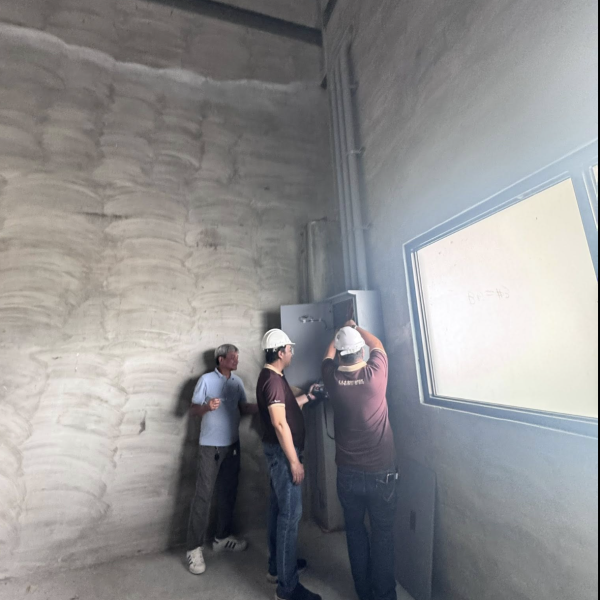


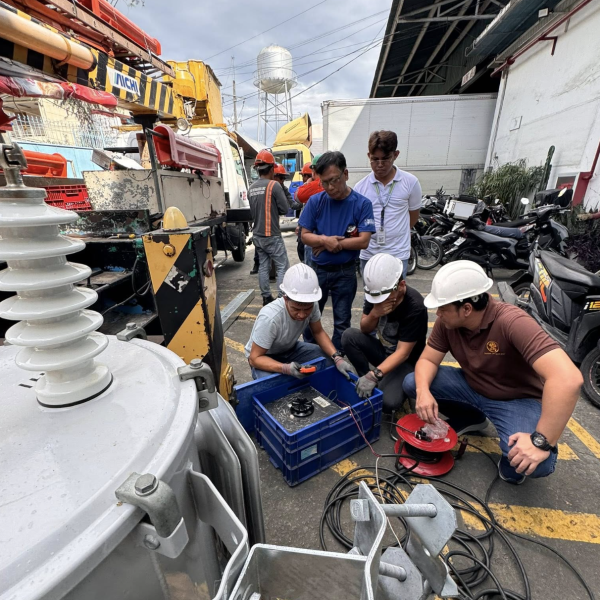


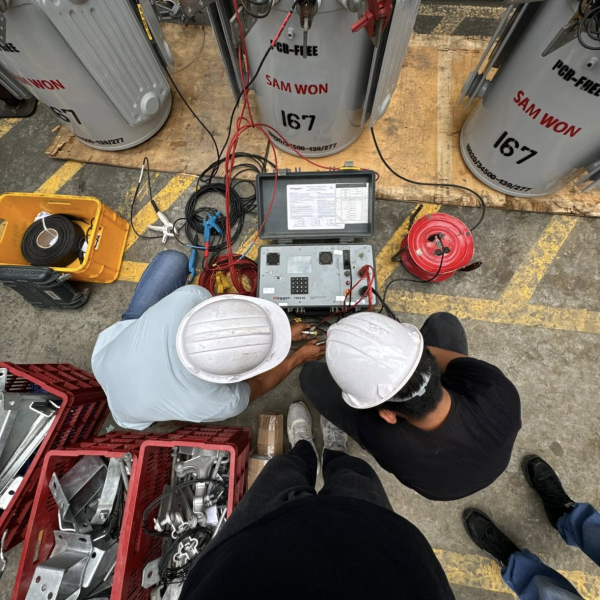


Your Partner for Electrical Success
Whether you are looking to design a new system, optimize an existing one, or address specific challenges, ETCZ Corp’s electrical engineering services are your trusted solution. From initial planning to final implementation, we work closely with you to deliver efficient, reliable, and cost-effective results.

If you need a professional electrical contractor in the Philippines for commercial or industrial projects:
Schedule a FREE initial consultation with ETCZ Corp today.
Our certified engineers will assess your requirements and deliver safe, scalable, and cost-efficient electrical solutions. ETCZ Corp – Your Trusted Commercial & Industrial Electrical Contractor. ⚡

Call Now 09778411839
Have any queries?
We're here to help.
- #52 M.L Quezon St. Villa Ligaya Subdivision Barangay Dela Paz, Antipolo City
- 09778411839
- [email protected]